Top Podcasts
Consensus 2023 Interviews: Redeem, Sandbox, Snail Games, And Near
The industry is thriving with exciting cutting-edge advancements continuing to shape the future of blockchain technology. What better way to showcase the brilliance than the recent Consensus 2023 held at Austin, Texas? Consensus brings together developers, investors, founders, policymakers, brands and others to find solutions to crypto’s thorniest challenges. In this episode, Jeff Kelley, Eathan Janney, and Josh Kriger give you not one, not two, but FOUR exclusive interviews from the event! They sit down with the CEO of Redeem, Toby Rush, to talk about how they are simplifying and accelerating the path to Web3 experiences. The Sandbox’s Sebastien Borget also shares how they are empowering gaming communities in the metaverse. Matthew Harper of Snail Games tells us about their newest title, Project Hermes, and their transition from Web2 to Web3. Finally, the CPO of NEAR, Alex Chiocchi, lets us in on their blockchain operating system, where they bring together builders and super fans into a two-sided market. Tune in to this special episode and relive the magic from the Consensus 2023!
Listen to the podcast here
Consensus 2023 Interviews: Redeem, Sandbox, Snail Games, And Near
Get ready for this special episode as we bring you not 1, not 2 but 4 exclusive interviews from the Consensus event held in Austin, Texas. From groundbreaking blockchain-based operating systems to the latest developments in the gaming industry and beyond, this episode has got you covered. Tune in to gain unique insights here from industry experts and explore the cutting-edge advancements shaping the future of blockchain technology.
We are live at the Consensus Austin 2023 and excited to be here with Toby Rush, the CEO and Cofounder of Redeem. It is great to meet with you and have a chance to chat for a minute.
Thanks for having me. I’m excited to be on.
Remind me, where are you based? What brought you to the event?
I’m based in Kansas City. I have been there for several years. I must like paying because this is my third startup from scratch. I love building advanced technologies but I always focus on simplicity, convenience and things that touch your users to make their lives better.
We talked a little bit before but we love to talk about the edge of utility and real-world use cases that make it easier for every human to benefit from Web3. We were particularly interested in what you are doing. Tell our readers a little bit more about Redeem, how it works and how you came up with this idea.
I will start with the origin story because it speaks to both the challenge and the opportunity. A few years ago, I dove back into Web3 and blockchain. I’m like, “There are so many projects and interesting things of everything happening.” The one that fascinated me the most was NFTs. NFTs smart contracts allow everyday people to hold a digital asset to own outside the traditional walled gardens of Apple, Google, Microsoft, Ticketmaster, Visa and the government, name your big ecosystem. If it is going to be held in an open ecosystem, how do you maintain trust? That is what NFTs could do.
My entrepreneurial mind was like, “We could do this.” I have all these cool ideas. As I began to think through the user journey, I was like, “That is no way. That is way too hard.” I’m a big believer. Change is hard. New mental models are hard. You got to make it set already fit into the natural flow of what people are doing. You are going to remove steps, don’t add steps.
I started thinking, “How do you make this easier?” I was like, “I bet someone has figured out how to use phone numbers and phones as a hack to make this better.” As I started looking in the market, I was like, “Nobody was doing it.” The more I thought about it, the more I was like, “This seems like a good idea. Maybe I should do this infrastructure as a phone layer.” Our tagline is like, “How do you simplify and accelerate the path to Web3 experiences by linking a phone number, blockchain wallets and activations?”
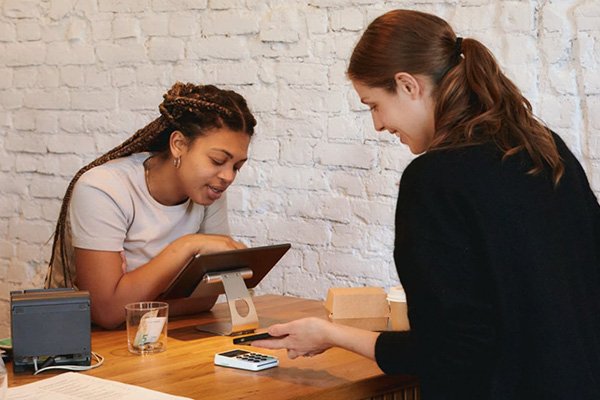
Consensus 2023: How do you simplify and accelerate the path to Web3 experiences by linking a phone number, blockchain wallets, and activations?
There is a segment of Web3 users that don’t want their phones to be used but a lot of people are comfortable using their phones. They prefer it. A lot of event systems are connected to your phones. I prefer text and a lot of people feel the same way. It is an important use case to flesh out. As this continues to mature, you are getting people who are like, “I like it, Josh.” Even I prefer that the text messages were like, “How has it been received?” What are the use cases you are already starting to see?
The way that our flow works is we are not passing the phone number around everywhere. We are onboarding you. One of the unique things that we are doing is rather than as a company sending you a text message, which does have some security holes, if you simply flip that model and a user is sending our backend a text message, which is incredibly secure. Even if someone were to see it, you can’t change it. You click on a link or screen a QR code. That pops up a text message prepopulated. The two filled out the content and you hit send. That is the entire onboarding process.
There is no app to download. There is no form to fill out. We will send you back a link to an artist, the brand’s website, the ticketing or whatever the thing is you are trying to access. I want an NFT because I want to unlock something. I’m not getting an NFT to sit in my wallet and do nothing. We send that link back. They click on that link and they are automatically loaded into a partner’s app.
As a part of that process, we are dropping an authentication token into the secure element on the phone. When you come back, it is not like you have to send another text message. We know this browser is linked to this phone number and is linked to these various wallets, whether we spin up a custodial wallet, a MetaMask, Coinbase or Rainbow and make that your default wallet. We are trying to make it simple for the consumer.
You can use multiple wallets. You can work with MetaMask or other wallets. Is this cross-chain at this point?
If you are on your device, we are working with one of our customers. They could be on Solana, Flow, Avalanche or whatever they happen to be on. If they want to drop a token, it is great. We know they spin up a default wallet or if you already have a wallet, all you have to do on the same device as your phone is sign a message with that wallet. We know this phone number is also linked to this wallet. That information is off-chain, secured and highly private. We want to make sure that it is secure. That shouldn’t be public.
From a consumer, letting my phone number be linked to a wallet across any of these ecosystems. Ticketing is a beautiful use case because I can scan a QR code. It launches the browser. That QR code is a gating link that says, “Does this phone have possession of a wallet that holds this NFT?” We can make everything seamless for the user. They scan the QR code. What we return is the NFT. They don’t have to find the app and NFT. They don’t have to show a QR code. It is seamless.
The flip side or the balancing act with simplicity is security. What if someone steals my phone number, sim swap or I change numbers? How do I make sure all that work, stays secure and I don’t lose access to anything?
The solution to that is the same. We talked about that flow there. We put a secure authentication token down in your hardware on the phone. Every time that phone loads, it is like, “We have seen this phone. We know this phone.” If somebody sim swaps you, they are going to AT&T and say, “I lost my phone. I need someone else to give me my phone. Can you change it? I’m John Smith. Trust me.” The AT&T clerk gives you a new phone. If you try to connect to our platform, we are going to say, “This is a new phone. You have to do two things.” You have to send us a text message but you have the phone.
We also put a simple six-digit pin as you do on your phone. Everybody has that six-digit pin. Everybody knows their pin. You can also rate-limit it. Even if someone were trying to get your phone and try to start cranking on brute forcing it, you are going to know within hours that your phone has been SIM swapped. It is going to get shut down. A six-digit pin is more than sufficient as a backup but you only have to enter the six-digit pin when you change phone numbers or someone’s sim swaps it as long as you can possess a phone and remember a six-digit pin. You only need that six-digit pin when you change phone numbers. That is convenient.
Making it that convenient and making sure that security is there is essential. The use case of getting all these people on easily is its hurdle of having people come on and experience that. As soon as someone comes in and sees how easy it is to put in your phone number and start using it, how have you seen both retentions? As you keep adding more features, more people are like, “This is great.”
As Redeem, we are building an infrastructure and scaffolding around the phone number. We are not doing the end utility. The companies we are working with are doing the ticketing, loyalty and gaming company, the NFT-powered games. They love it because they can stop educating and get straight to experience.
We do a lot of live events because of the idea of scanning a QR code. The ticketing is powerful. We love the idea of an NFT-powered game. I got an NFT-powered game, an NFT or in-game assets. It is a sword, loot box, power-up, skin and an avatar. I got a new upgrade in my game. I go on social media. There is an influencer who says, “Everybody, there is a new release. Here is a link. If you click on this link, we are going to give you a new power-up in the game, a loot box and this new skin.” It is something to do with that influencer.
If they click on that link, it automatically adds that NFT to their wallet. They get redirected into the game. It is loaded, authenticated and ready to play with an NFT. All they did was click a single link. You can take this offline through online to on-chain but to a consumer, they don’t have to spell NFT. They don’t have to worry about where all this stuff is at. They want to play the game.
Having that bridge like that 2.5 where no one knows what is happening in the background but the result is what you want. That is the most powerful piece of this.
We love those use cases where creative people think, “How do we use NFTs to cross channels?” That gaming is crossing the channels or inter-company collaboration. I got a ticket to an event so I can do a pre-event and post-event. The artist can engage with me. I can get open up a playlist on Spotify. I can go onto an eCommerce site that is associated with a sponsor and get some benefits. A consumer was like, “If I access my phone, I get access.”
We were talking a little bit before but if you could elaborate on some of the partnerships, the real use cases that have come about using this technology and what is on the roadmap, that would be great.
We are still early. The folks we have worked with have been mainly live events but not just ticketing. For some of our NFT experiences, we have done a VC3 as a Venture Capital 3.0, a traditional venture capitalist operating as a DAO and doing investments. They had a conference down in Puerto Rico. They used our platform for ticketing and some other cool events. We did archive as a decentralized museum. They had a big VIP dinner at South by Southwest here in Austin. They were doing a live NFT activation, which was fun. We did a big VIP dinner at NFT NYC. I can’t say who because they also want us to do a cool race car event at one of the next big race car events where they are doing an NFT event.
It is not the ticket to get in. You are alongside. If you get into this pavilion, you get NFT. It is like a Pou app. It unlocks all stuff in there. All the sponsors are going to have cool unlocks. Brands are doing live events. A lot of ticketing, concerts and VIP gatherings are where we are seeing it. We love the gaming use cases. We are talking to a couple of people. We haven’t deployed those yet but with the idea of this direct-to-engagement, everybody loves it.
You guys are ticket company agnostic. You can work with any Web3 ticketing solution or Web2 solution.
We are across the board. From our perspective, we are providing scaffolding around phone numbers and phones. If you are a ticketing company, I don’t care what chain you are on or what you are trying to do. We are trying to simplify and accelerate the path for the consumer to get to that experience.
It is a key middleware solution because there are a lot of these ticket companies that come about and have approached us about partnering in Outer Edge. They are all different in their use cases but fundamentally, you get the benefit of adding gasoline or nitro to all those solutions in a game where it is like, “Who is going to be the winner?” We don’t know but you can win alongside whoever is moving the ticketing part of the industry forward.
One of the things we say is, “We don’t care what wallet you use because we don’t know what wallet is going to win.” There won’t be one. There is no scenario. There are always multiple cloud providers, emails and phones. There is no scenario where there is one wallet that wins. We don’t know which wallets are going to win. We don’t care. We don’t know which minting platforms are going to win and we don’t care. We don’t necessarily even care what use cases. What we do know is the phone will play a central role in all of it.
When you go to these different types of events, some people don’t necessarily want to download another app but if you are able to get the phone number and can immediately get things going a lot faster, you are already getting over a big hurdle for a lot of people. That is a big advantage. Coming to something like Consensus, being able to come, meet and see everything that is going on here, what is the vibe you are starting to see within the market? What have you excited about the future of Web3?
What I am excited about Web3 is the utility or the unlocked. You are not seeing a bunch of coins getting pumped, tokens getting pumped or this community for the sake of the community. Communities are great but what is the purpose? What is the objective? How are NFTs unlocking value and utility? Hearing a lot more mature, grounded use cases for Web3 makes a difference in the real world. It is not like, “I’m going to buy this token because I hope it goes up in the future.” That is where you get the Ponzi scheme. That is where you get a lot of the pump and dump and where a lot of the manipulation has happened. I’m excited to hear, “How do we use NFTs and Web3 to power different experiences?”
It is cool to learn more about yourself and Redeem.XYZ. I answered the question with my statement but how can people learn more about Redeem, follow what you guys are doing in the space and stay in touch with you?
Redeem.XYZ is the website. It is Tobias Rush on Twitter and LinkedIn. We love to connect with folks.
Thanks a lot for joining us.
Thank you.
I’m with Sebastien Borget. How are you?
I’m very well. Thank you.
What brings you to Consensus?
At Consensus, I’m going to have a fireside chat about like the lay of the land around virtual release estate in the Metaverse. I can assure you that Metaverse is not dead. There is an active engagement from an ecosystem of builders’ experience and keep launching. We have some big news. Sandbox will be opening self-publishing towards the end of Q3 of 2023.
We expect a lot more experiences to be available and greater diversity of content that people can engage with. We have ongoing land sales as one that has been announced with the Mega CT 3 avatar collection, an official one with great partners that have come and sold out well. Things are going great. It is a chance for us to connect with the community and builders to talk to the ecosystem.
We did see each other in New York at a special Animoca Park event. You brought the house down with the concluding experience. It was a lot of fun. Richard and I were there. Can you tell everyone about that partnership with the dance community because it is special? It is a good example of co-creating and helping communities that have trouble monetizing what they do in creating long-term value.
We are talking about The Wild Ones Collection in ownership with DanceFight, which is bringing a street dancer to the Metaverse. They have such unique dance moves. They often participate in battles and post on their social network more, like Instagram and TikTok. The truth is even though they are talented creators who are innovating in the way they move and push forward like street dance, they don’t monetize this at all. Their dance moves are being copied. They are being integrated into games like Fortnite without proper credit and monetization.
DanceFight is creating more of this Web3 committee movement for street dancers. They want the creator to be rewarded, monetize the content they create and leverage all of their original skills and move to bring life into the mirrors. We have this collection of 3,000 avatars called The Wide Ones that represent over ten popular break dancers and street dancers.
We launched that collection in Sandbox. The sale is ongoing. We have an experience that is live where people can play with those avatars. They can earn rewards in the form of $SAND Tokens and NFTs. More than 50% of the revenues generated from the sales are going directly to the dancers themselves. It is a way to empower that community and bring more emotion and life to the Metaverse.
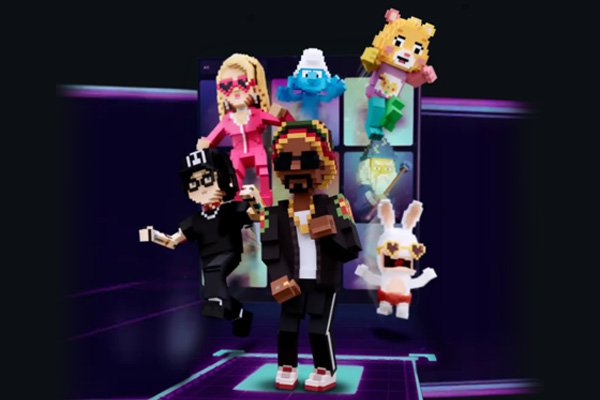
Consensus 2023: The Wild Ones is a way to empower the dancing community as well as to bring more emotion and life in the Metaverse.
It was an exciting event. I was struck by how many of them have created dance moves that have been used by other influencers and got millions of views. They got no attribution at all. These avatars represent their dance moves and they can say, “This happened on the blockchain. I created that move. No one else did.” It is cool.
I’m glad that you were here in person to meet the creator. At the end of the day, it is technology and content. It is also a human adventure. At the center of it, if I can meet the creator and see them live and come into the metaverse, that is something important for us.
That brings me to my last question. We have had a lot of conversations about Metaverse. Is this about big experiences and concerts that are hyped up and ticketed versus more the day-to-day experience of dropping into the Metaverse? How do you see that world of activity in the metaverse? Where do you see that going in terms of the more predominant use cases?
Over the next several years, our Metaverse will be part of our day-to-day life in value forms. At Sandbox, we started with entertainment, gaming, fashion, music, sports and media. We want to make sure this is tangible for more general mainstreams. We can create an avatar and start accessing those experiences. Over time, more use cases will develop around education, work, collaboration, virtual events, virtual shows and concerts.
What the user will make up of it will define at the end of the what they assist. This is a whole new format of entertainment at our centric. We are excited to see ten of thousands of people already engaging daily. They are bringing life, connecting, making new friendships and showing that it is just not virtual. People have real emotions. They make friends. They start to earn revenue as creators or users. Together we are defining the future of what a Metaverse can be.
You can learn more at Snail.com.
Thanks, Matthew. I appreciate your time.
Thank you very much.
The energy is buzzing here.
Thank you.
Thanks for having me.
Important Links
-
Twitter – Tobias Rush
-
LinkedIn – Tobias Rush
-
Sebastien Borget – LinkedIn
-
Illia Polosukhin – Past Episode
-
Twitter – Alex Chiocchi