Top Podcasts
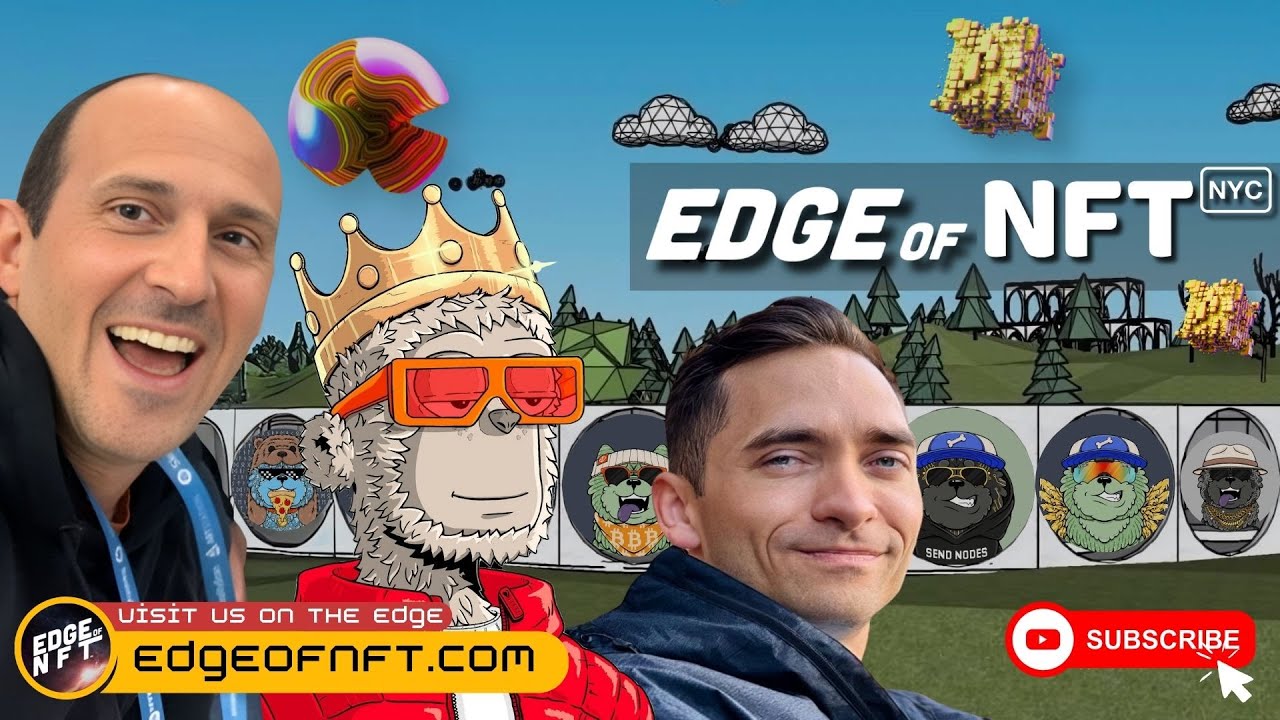
Connecting Web3 Worlds : The Future of NFTs, Dynamic Assets and The Metaverse
In this special episode live from NFT NYC, co-hosts Josh Kriger and Richard Carthon welcome three innovative leaders in the Web3 and blockchain space: Sandman from Crown Studio, Justin Melillo from Mona, and Alun Evans from LAOS Network. Each guest shares insights into their projects, from NFT collections to creating open metaverses and scalable NFT minting solutions.
Sandman, President of Crown Studio and managing partner of BitDOG, kicks off by discussing the highly anticipated BitDOG 10k PFP Rune collection on Bitcoin. Sandman delves into how Crown Studio is building unique IP and connecting communities across Ethereum, Solana, and Bitcoin. He explores the impact of meme culture on Web3, the rise of Bitcoin Ordinals, and the ethos of creating experiences rooted in storytelling and community.
Next, Justin Melillo, CEO and co-founder of Mona, reveals Mona’s dedication to an open metaverse. Mona’s platform enables digital creators to take assets across different games, creating a flexible and interconnected metaverse. Justin also highlights the role of spatial computing, including innovations like Apple Vision Pro, and how Mona’s SDK is empowering developers and enhancing the creator economy.
Lastly, Alun Evans, CEO of Freeverse.ai and co-founder of LAOS Network, explains how LAOS Network is transforming NFT minting. By eliminating traditional blockchain bridges, LAOS Network provides a low-cost and secure solution for NFT creators across EVM chains like Ethereum and Polygon. Alun details how this scalability allows developers to create vast numbers of NFTs, from gaming assets to real-world applications, in a seamless, efficient way.
This episode of Edge of NFT is sponsored by LAOS Network, the cutting-edge blockchain platform simplifying and scaling NFT minting across multiple chains, helping creators deploy assets at scale with minimal cost and complexity.
Please enjoy!
Listen or watch this episode on Apple Podcasts, Spotify, Myco, Overcast, Podcast Addict, Pocket Casts, Castbox, Iheart Radio, YouTube, YouTube, Amazon, Audible, or on your favorite platform. Remember with Myco.IO you earn for your attention.
Sponsorship and Advertising:
If you are interested in sponsoring the podcast, please fill out the Sponsor Interest Form, which we review 1-2 times per month.
Key Topics Covered:
-
The Rise of Ordinals on Bitcoin: Sandman explains why Bitcoin’s Ordinals ecosystem is gaining momentum and how it harkens back to the early days of Ethereum.
-
BitDOG’s Community-Driven Model: Insights into how Crown Studio and BitDOG are using meme culture and cross-chain engagement to build an inclusive and vibrant Web3 community.
-
Mona’s Vision for an Open Metaverse: Justin Melillo discusses Mona’s mission to foster interoperability, allowing creators to move digital assets between virtual worlds and games.
-
Spatial Computing’s Role in Web3: Justin elaborates on how spatial computing, particularly Apple Vision Pro, is redefining immersive digital experiences.
-
LAOS Network’s Efficient Minting Solution: Alun Evans explains how LAOS Network’s low-cost NFT minting solution supports developers by offering seamless cross-chain communication without the need for bridges.
-
Scalable Blockchain Assets for Games and Real-World Applications: Alun describes how LAOS Network enables mass NFT minting for game assets, invoices, and beyond.
What was your favorite quote or lesson from this episode? Please let us know in the comments on YouTube. https://www.youtube.com/@edgeofnft/
Episode Highlights:
-
Sandman on Community and Meme Culture: “Meme culture isn’t just about profit. It’s about story and community, and that’s at the heart of BitDOG.” – Sandman
-
Justin on Interoperability in Gaming: “Our aim is to build a system where digital assets can accrue value as they move from one game to another.” – Justin Melillo
-
Alun on Scalable NFT Minting: “The power of LAOS is in making mass minting affordable so even smaller projects can participate in Web3 without high costs.” – Alun Evans
For the full transcript, see further below.
**People and Resources Mentioned: **
Connect With Us:
-
Website: https://www.edgeofnft.com/
-
Twitter: https://x.com/EdgeofNFT
-
LinkedIn: https://www.linkedin.com/company/edge-of-nft-podcast/
-
Instagram: https://www.instagram.com/edgeofnft/
-
Discord: https://discord.gg/CQhZUdsV
-
Telegram: https://t.me/edgeofnft
-
Facebook: https://www.facebook.com/edgeofnft
About Our Guest
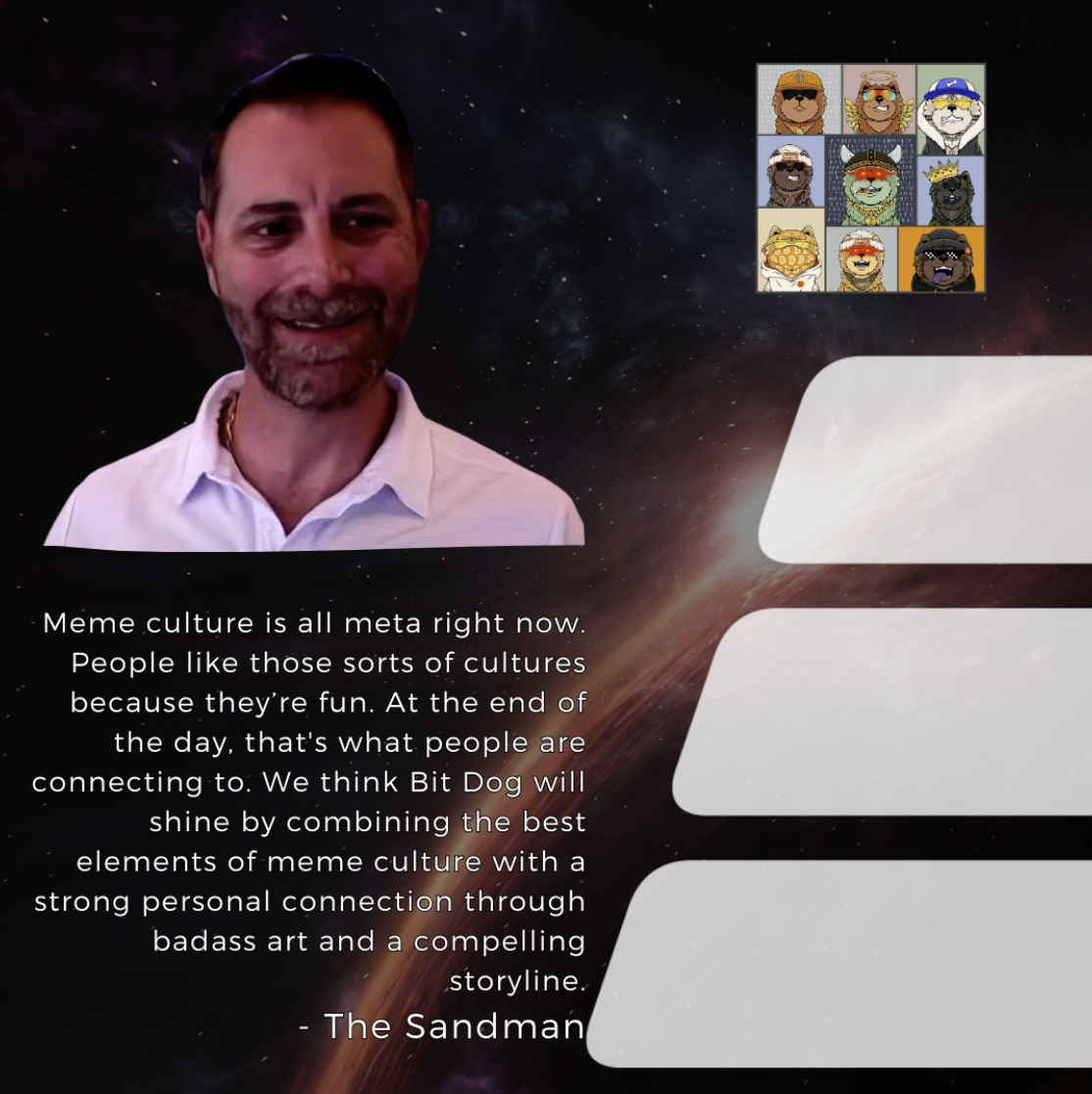
The Sandman
**Sandman – **President of Crown Studio and managing partner of BitDOG, leading the 10k PFP Rune NFT collection on Bitcoin and actively building community-centered IP in Web3.
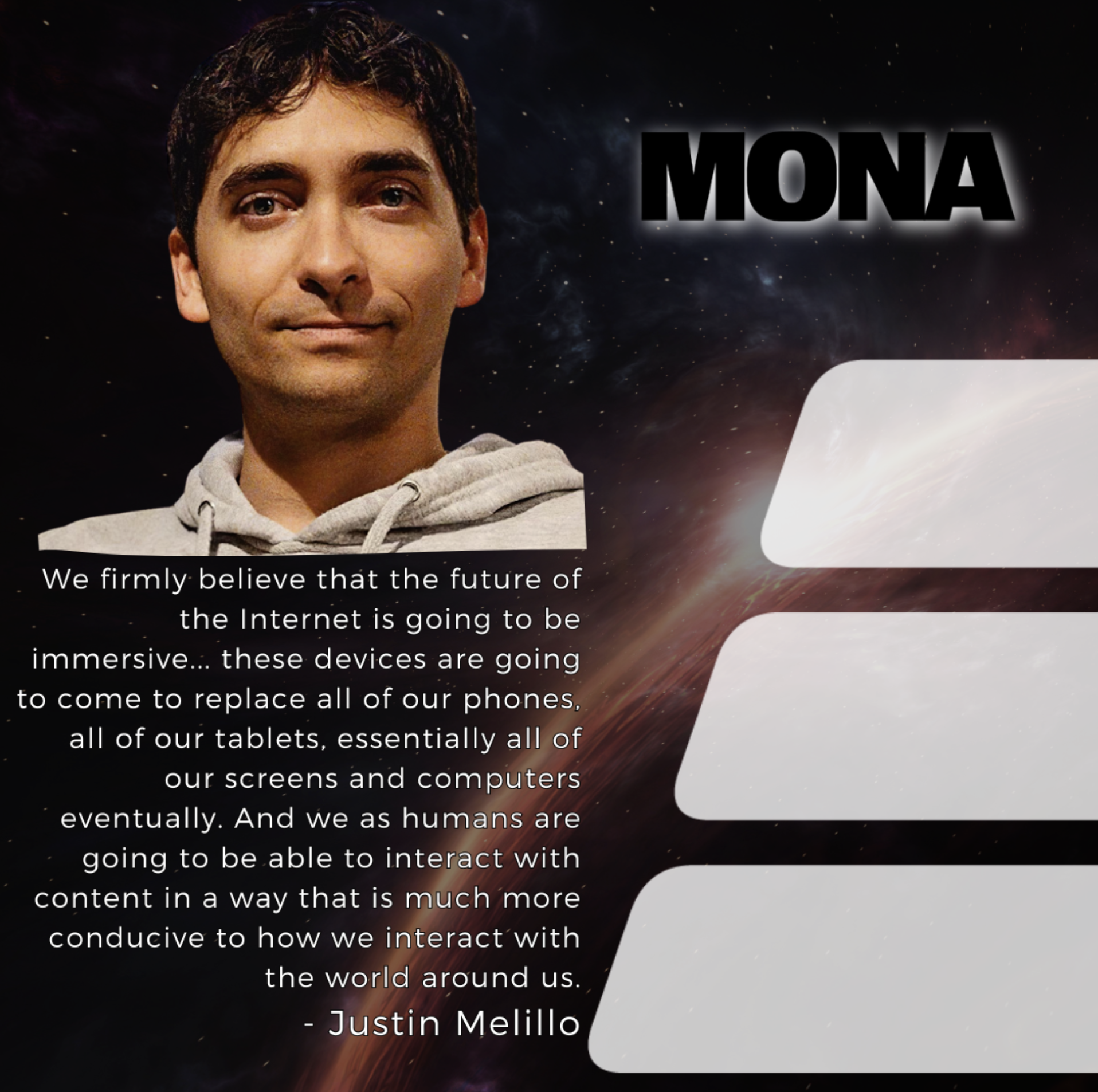
Justin Melillo
**Justin Melillo – **CEO and co-founder of Mona, a pioneering platform for an open, interoperable metaverse, empowering creators to move digital assets across virtual worlds.
-
Linkedin: Justin Melillo
-
Instagram: justinmmelillo
-
Twitter: @justinmmelillo
-
Website: www.justinmelillo.com
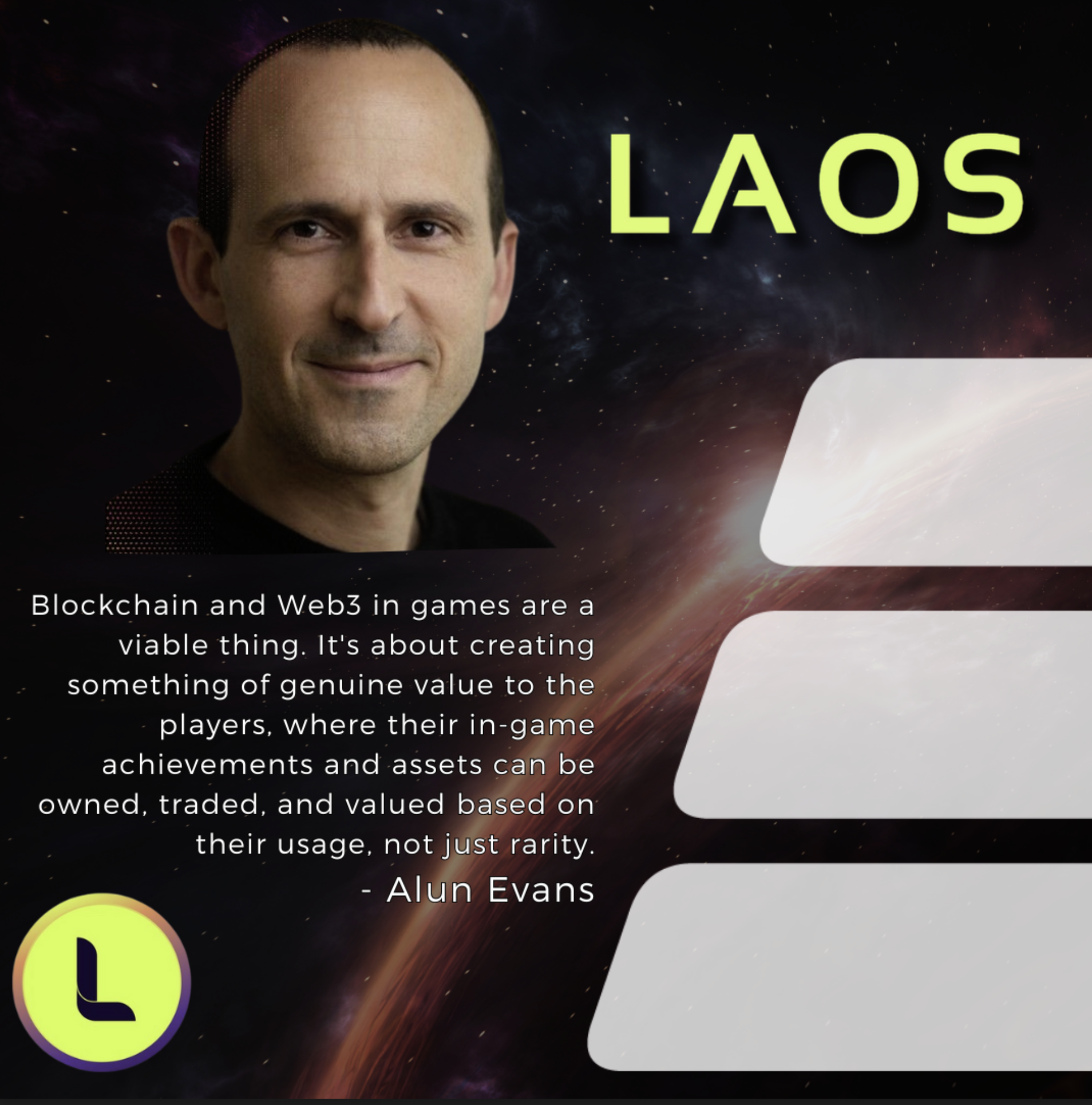
Alun Evans
**Alun Evans – **CEO of Freeverse.ai and co-founder of LAOS Network, a revolutionary blockchain platform enabling scalable NFT minting across multiple blockchains without bridges.
-
Linkedin: Alun Evans
-
Twitter: @alunthomasevans
Subscribe to the Podcast:
Disclaimer:
This is not financial or tax advice. Edge of NFT content is strictly educational and is not investment advice or a solicitation to buy or sell any assets or to make any financial decisions. Whenever making financial decisions, we recommend doing your own research and talking to your accountant for financial advice. Disclosure: From time-to-time we may feature sponsored content for which we receive value and we may share links for which we receive a commission if you make a purchase through one of these links. See our full Disclaimer (https://www.edgeofnft.com/disclaimer), Terms & Conditions (https://www.edgeofnft.com/terms-of-use), Privacy Policy (https://www.edgeofnft.com/privacy-policy), and Copyright Notice (https://www.edgeofnft.com/copyright-notice) for details.
Full Episode Transcript:
Josh Kriger:
Hi, everyone. This is Josh Kriger here with Richard Carthon, cohost of Edge of NFT. We are live in New York, NFT New York, with some new friends and, having a lot of fun here. Today, we have none other than the Sandman on the show. It’s great to have you on.
Sandman:
Likewise. Thanks. Appreciate it.
Josh Kriger:
So, for those that don’t know, he’s deeply involved in the Web 3 community, and, spare time has also been engaged across ETH, Bitcoin, Solana, Polygon, since NFT, and he also serves as president of Crown Studio and the managing partner responsible for overall strategic direction, execution of the BitDOG, NFT k Runes collecting mint on Bitcoin, coming up. This is part of a media partnership. We’re we’re we’re definitely excited about this one. Looking forward to working together, to get the word out to everyone about what you guys have cooking, and, a little more context. You know, Crowd Studio and and BitDogg are are partners for this, airdrop, and let me let me redo that. And a little bit more context, BitDogg, is sort of produced with Crown Studio, which is a really interesting collective we’ll get into. And, again, it’s a 10 k PFP runes collection, we’re gonna break down. Good to have you on the show.
Sandman:
Thanks. Yeah. Appreciate you.
Josh Kriger:
So so we started to talk about this, beforehand, but you have a really interesting background in the space, and you’ve seen a lot of cycles. It seems like you Kelley focused on finding communities that you could really connect with and be involved with deeply. Maybe you can kind of touch a little bit more on the genesis of of Crown Studios and how it relates to sort of your passion in this space.
Sandman:
Yeah. Well, for anyone that doesn’t know about the youth community, right, it really was built around creators. Right? When you think back to the youth list and the fact that that community was was effectively built, for the ability for creators to come together, and it was curated for that. Right? Everyone went through the application process. We literally melted the Internet, right, with with that whole thing, and the benefit of that was that there was just a trove of different artists, creators, entrepreneurs, people who, like, really all kind of believed in the same vibe.
Josh Kriger:
And that was approximately?
Sandman:
Gosh, man. I would say probably 2 years ago, year and a half ago. Yeah.
Josh Kriger:
So, like, 10 years in web free time, but yeah.
Sandman:
Yeah. I know. Dog dog ears. Right? But, so it was very unique in that respect. Right? And then the second piece of it that we realized and so Crown Studio was founded, about 2 years ago. Right? And it started off just as people who were kinda of trying to create a DAO, if you will, around a trade. Right? And it was like, oh, we all have crowns and you know, whatever. It quickly evolved, though.
Sandman:
And so, as things started to evolve, we started to have more and more artists join, started to have more and more business people, and there’s a person who was a Harvard trained doctor and cancer researcher. AI? We have somebody that is a founder of an animation studio. AI myself have been in the industry for a very long AI, since 2012. A couple of who are in different marketing capacities, and so we looked around the room, and we realized we had quite a bit of talent. And and so, and we also realized that there’s a big contingent of people in Web 3 that maybe aren’t here to go trade. Right? They’re not professional traders. They don’t know how to do technical analysis. They don’t, there’s gotta be other ways to, like, grow and make money in Web 3 that doesn’t necessarily require, like, flipping bags.
Richard Carthon:
Oh, definitely. And, I mean, being here at NFT NYC, we’re we’re here with those communities whether they’re here I mean, not just for the flipping the bags, but for the communities. We’ve we’ve gone to several side events with several huge communities that have been built throughout the years, and some are OG. Some are new to the game, but there are a lot of different people from different backgrounds from all over the the world and country. And so, like, having launched Yoots and and and having that type of experience, now you’re here with BitDo. Like, why are you choosing this moment now to enter the ordinal space Mhmm. And and enter into Bitcoin and and to to go this route and start this project.
Sandman:
Yeah. Well, I mean, as soon as I learned about the Bitcoin ordinal space, and it started evolving, which is still very, very young, but AI guess the number one reason for me personally was, it really gave me old school Ethereum vibes. Like, it was it’s the AI, wild west. Everyone is building, you know, very bespoke parts of the ecosystem. It’s very immature and raw in terms of the technology capabilities compared to Ethereum, certainly, and Solana. And everyone’s really building kind of in parallel towards something, but it’s kind of hard, right, because you don’t know exactly what you’re building towards or how you’re going to configure with something else, some other product or app that somebody built. And so through that, to me, technology very much becomes art more so than just a science, right, or something like that. And I think that’s kind of the ethos of what you see within Bitcoin.
Sandman:
Right? The communities are AI, and people are there for the art and for the communities, which was kind of the way it used to be on Ethereum before everyone started, like, all the farming and, you know, flipping and all that. And so you kind of have that vibe there on bitcoin, and Josh like this open landscape of places to go build. And so when Crown Studio, who has a lot of crossover with the old OXBT community, there’s a lot of community members that were in both, and and so we realized as rooms were starting to launch out that there was going to be a real opportunity here, And, and we of, like I said, really figured out how to put together a game plan around, first and foremost, having a great IP and something that people are really going to attach to and because it always starts with that. Right? We’re benefited from having a large community to begin with, so there’s about 15,000 wallets, existing with the old BRC NFT of 0XBT. Right? And that, also extends through to the folks in the Utes and d AI community, from Crown Studio and all of that. So it’s a pretty good cross chain of community members that are coming in.
Richard Carthon:
Yeah. And one quick distinction I wanna make because I I think it’s really important, especially for a lot of our newer listeners that are getting into ordinals. When he says runes, that’s basically just saying, like, a token on top of Bitcoin.
Sandman:
That’s right. Yeah. No. It’s essentially a an altcoin. Right? Just like you would see a different meme coin on ERC NFT or you see all the, you know, the memecoin on Solana, right, the SPL tokens. Bitcoin has not had that to date. Right? That’s really what twenties were, but from a functional standpoint, they, I would say the user experience wasn’t the same, certainly. Right.
Josh Kriger:
So, you know, I can relate a lot to your background in the sense that I I I come from, you know, corporate culture. You know? I’ve I’ve worked across a number of different industries, including food tech. And I think one thing that’s interesting about all this and and what excites you is some people may see some contrast. I mean, you work with Mercedes Benz and AT and T and and Disney, you know, and HR Block. Right? These are big brands with, fairly, particular and pristine, you know, brand reputations, in in where IP has, like, a long, long life, probably, you know, way before you you you Janney you got in the boat to help them. Right? They had a so my my assumption here, correct me if I’m wrong, is what excites you about this space is the chance to leverage what you’ve learned about longevity and IP and to create new IP, from the ground up at this moment in time based on everything you did know with some fun new technology. Is that is that fair to say?
Sandman:
It is. Yeah. And I would say the biggest difference that I’ve noticed, between web 2 and web 3 is the organic community development, and I think that really is the sauce. And, you know, you deal with these large brands that spend, you know, tens of 1,000,000 of dollars to get audiences and traffic and viewers and all of that, but, like, how authentic is it? Right? And, are those your super users? Right? Your you know, your power fans, if you will. And then you ship that lens over to web 3, and, you know, these startups, they didn’t have tens of 1,000,000 of dollars for marketing budgets. Right? So they, you know, they had to be gritty. They had to find out how to drive virality and social content. They had to go out and and really drive organic connections and, you know, mobilize communities to be evangelists, right, which, you know, is marketing power.
Sandman:
Right? And the statistics the statistics will show you that, you know, programmatic or paid media, the conversion rates are going down year over year over year because we’re all being inundated with ads, right, at the end of the day, and more importantly because we’re inundated, even if you give me a discount let’s say you find a $10 discount on a browser somewhere, right, for for a hotel, I’m probably not going to click it. But if you said, yo, go stay at this hotel because I love this place and I had an awesome time there, I’ll book it. I don’t even care what the price is. Right? And so people are more likely to engage with and, probably make buying decisions, based on what their friends or peers are doing. Right? And that capability, I think, comes out more so in organic based content and media, especially with user generated content.
Josh Kriger:
Okay. So circling full circle here back to this project, BitDogs, which is essentially a there’s a meme element to it. Right? We’ve been talking a lot on the show this week about, you know, the trend towards meme culture in in our space. It seems like it’s it’s the only thing that we can’t escape right now. It’s it’s all over Twitter. There’s a lot of of multidimensionality to what’s happening in the space in gaming, the metaverse, and infrastructure. It seems like it’s been sort of covered up. At the same time, there’s some depth to BitDogs in in in in what you guys are are trying to achieve here that’s sort of built on this meme culture.
Josh Kriger:
And I think this is an opportunity for us to explain to everyone, what’s really going on with this this meme mania. So maybe you can kind of unpack it for us and, like, how you’re looking at the the broader meme culture and how you’re looking at this project and and how it might be distinctive from some of those broader trends.
Sandman:
Yeah. Well, I mean, certainly right now, meme culture and meme coins are all the meta. Right? I mean, the last several months, that’s really been most of where the market activity has been. I think people like those sorts of cultures because they’re fun at the end of the day. Right? It’s NFT, like, super crazy expectations or road maps or anything like that. It’s mostly about brands and IPs, right, and story at the end of the day, and I think that’s what people are connecting to is, you know, it’s kind of rooted in different elements of humor or of cultural connection within the Web3 community, and that’s what people really mobilize around. Right? And so I think the best elements of meme culture are really rooted in in IP and in storyline, and and that’s really where we think BitDogs is really going to shine. Some of the folks that work at the Crown Studio actually work in Hollywood building movies for large animation studios including writing all the movie, the AI, all the scripting, and all of that, and so BitDogs actually has a full storyline written, and, all the content that everyone will start to see will start to play this out.
Sandman:
It’s actually Satoshi’s dog, and they kind of come through a vortex, and the dog loves to dig in the grass and in the yard. And when he starts digging in the yard, out comes a couple of runes. Right? And those runes are the token, and so the next vector of that NFT you start to think about what historically has been really cool about meme coins, we said it’s story and IP. What, what it didn’t have was identity. Right? The old versions of the coins, you just had a logo of the coin. How How are you going to PFP that? You’re not. Right? Well, now you have that personal connection because you not only have the coins, but you have a PFP and some badass art, right, that you can really go out there and represent. And so at the end of the day, we think that’s going to drive, take advantage of what’s really good about meme culture, right, which is the story and the AI, but have more of a AI.
Richard Carthon:
And I like the lore of it. Right? Like you said, people get behind a story. They get behind a community, and they get behind different ways that they can interact and be part of ultimately what’s being created. And you talked about it earlier, and I AI gotta bring it back. The team that you have has a lot of experience in being of, not just amazing art, which you shared some with us, which sick. Can’t wait to share some of this with y’all. It looks absolutely incredible. Huge.
Richard Carthon:
It it it’s it’s fire, bro. And, I’m I’m excited to see some of that, but being able to have that amazing art, being able to put this story and lore together and then tie it all in together between the, the ordinal piece and the token piece and, like, having it all fluidly come together. Like, talk to us about, like, how has this journey been for your team to kind of compile this together? And, of course, you have some pretty big things happening pretty soon, with all of this. So tease that up
Sandman:
Sandman:
Josh Kriger:
Sandman:
Sandman:
Josh Kriger:
And how long ago was that?
Sandman:
Josh Kriger:
Sandman:
Josh Kriger:
Sandman:
Josh Kriger:
Sandman:
Richard Carthon:
Sandman:
Richard Carthon:
Sandman:
Sandman:
Josh Kriger:
everyone else.
Sandman:
Josh Kriger:
Sandman:
Josh Kriger:
Sandman:
Josh Kriger:
Sandman:
First thing I remember purchasing, a Yo Yo.
Josh Kriger:
I had one of those.
Sandman:
Yo yo yo yo king.
Josh Kriger:
Sandman:
Josh Kriger:
Sandman:
I know. Right.
Josh Kriger:
Sandman:
Richard Carthon:
Oh, man. That’s tough. Well
Sandman:
Paper handed it.
Josh Kriger:
Oh, paper handed it.
Richard Carthon:
Sandman:
Richard Carthon:
Sandman:
Richard Carthon:
Sandman:
Richard Carthon:
Sandman:
Josh Kriger:
Sandman:
Josh Kriger:
Sandman:
Josh Kriger:
Josh Kriger:
Yeah. Yeah. It was a crazy time.
Josh Kriger:
Josh Kriger:
Really? And
Josh Kriger:
she had a great AI, apparently.
Josh Kriger:
Josh Kriger:
Josh Kriger:
Josh Kriger:
It’s basically like the 3 Janney is
Josh Kriger:
it SanPort
Josh Kriger:
I’m not the only one that doesn’t know that.
Josh Kriger:
Josh Kriger:
Josh Kriger:
Josh Kriger:
But it’s Alright. There you go.
Josh Kriger:
Josh Kriger:
Josh Kriger:
Josh Kriger:
Josh Kriger:
Josh Kriger:
that we we covered a lot. Yeah.
Josh Kriger:
Josh Kriger:
Cool. And what’s your Twitter right now?
Josh Kriger:
Alright. Well, thanks for coming by, Justin.
Thank you so much, Josh. Appreciate it.
Richard Carthon:
Richard Carthon:
Alun Evans:
Alun Evans:
Alun Evans:
So here we are.
Richard Carthon:
Richard Carthon:
Alun Evans:
Alun Evans:
Alun Evans:
Alun Evans:
Richard Carthon:
Alun Evans:
Richard Carthon:
Alun Evans:
Alun Evans:
Richard Carthon:
Alun Evans:
Alun Evans:
Alun Evans:
Alun Evans:
Richard Carthon:
Alun Evans:
and 10 hours in Volsgate 3 NFT, so far.
Richard Carthon:
Alun Evans:
Alun Evans:
Richard Carthon:
Alun Evans:
Alun Evans:
Richard Carthon:
Alun Evans:
Alun Evans:
Richard Carthon:
Excellent. Well, this has been another amazing episode at NFT NYC. Really excited to spend time with Alan and learn more about Laos. And everyone, make sure you go check it out. So thanks again. Thanks very much, Richard.