Top Podcasts
Cathy Hackl Of Journey: Reimagining The Physical, Plus: Bryan Myint Of Republic Crypto, And More…
What happens when you mix fashion, authenticity, and fearlessness into a woman on a rocket ship to the metaverse? That’s what Cathy Hackl is and more. Known as the Godmother Of The Metaverse, Cathy has built a career and amassed a ton of experience that gives her unique insight into the business opportunities of the metaverse and Web3. In this episode, she shares how she and her team at Journey’s Metaverse Studio are reimagining the physical and helping brands s with their Web3 strategies, NFTs, gaming, and virtual couture. She also talks about the latest book on her series of thought leadership works on the metaverse and the direct to avatar trend. Stay tuned for what Cathy has to say about the future. Plus, learn how Republic Crypto takes a conservative and thoughtful approach to the Web3 future that can give cutting edge projects the support they need with Bryan Myint.
Listen to the podcast here
Cathy Hackl Of Journey: Reimagining The Physical, Plus: Bryan Myint Of Republic Crypto, And More…
It’s Cathy Hackl, popularly known as the godmother of the metaverse, guiding brands into virtual worlds. You’re reading the Edge of NFT. They are not the mother goose of Web3 but they sure are delivering the greatest stories evolving.
NFT-curious readers, stay tuned for this episode to learn how our guest has built a career of experience that gives her unique insight into the business opportunities of the metaverse and Web3, what happens when you mix fashion, authenticity and fearlessness into a woman on a rocketship into the metaverse and how Republic Crypto takes a conservative and thoughtful approach to the Web3 future that can give cutting-edge projects the support they need. All this and more on this episode.
Finally, NFT LA 2022 was a blast. It was also a blastoff in a giant plume of bright burning rocket fuel. Web3, NFTs, blockchain, decentralization and a suite of immersive new tech developments have exploded onto the canvas of life. Outer Edge is the theme of 2023’s event dedicated to those of you building with us at the outer edges making the future happen.
The community-centric gathering returns to Los Angeles from March 20th to the 23rd, 2023 to uplift creators and technologies through interactive experiences, a wide variety of discussions and presentations and entertaining surprises that transport participants to the outer edge of what’s possible when we co-create a new paradigm, embracing the decentralized web, artificial intelligence, extended reality and more. To register to attend or learn how to co-create and experience on the Outer Edge, head over to OuterEdge.live. The event is being organized by the Edge of Company and us founders of the show.
In this episode, we’re thrilled to welcome Cathy Hackl, Founder and Chief Metaverse Officer at Journey, a globally recognized executive and futurist. Cathy has worked with leading tech companies such as HTC VIVE, Magic Leap and AWS and leads Journey’s Metaverse Studio where she and her team help brands with their Web3 strategies, NFTs, gaming and virtual couture. With impressive projects like Walmart Land and Universe of Play in Roblox, Electric Fest and upcoming luxury fashion collections, Cathy has established herself as a thought leader in virtual fashion and immersive experiences.
She has been writing and speaking about the metaverse and direct-to-avatar trend since 2020 and chaired the inaugural Metaverse Fashion Week. Her new book Into the Metaverse: The Essential Guide to the Business Opportunities of the Web3 Era is a must-read for anyone interested in the future of business and technology. We are excited to dive into Cathy’s insights and perspective as the godmother of the metaverse and host of Adweek’s Metaverse Marketing Podcast. Cathy, welcome to the show. It’s great to have you here.
Thanks for having me. I’m excited to be here. My world is the fashion space. I’m ready to tackle it with you here.
Thank you.
That’s awesome. This has been one I’ve been excited about, Cathy. There’s so much the tap into over the last few years. You’ve been on the front line there. I would love to rewind though and go back to that first a-ha moment that led you to focus on the metaverse field and working with big companies like Amazon and Walmart.
I’ve been in the space for several years. People were like, “That has been around.” I started in virtual reality. I worked with HTC VIVE, for example, went over to Magic Leap, went to AWS and then launched off on my own but my a-ha moment is a mix of different things. I was working in the live video space very way back with Meerkat and Periscope before you could go live on Instagram. It took a long time ago. I was working on live videos. That’s why I started to get connected to tech in Silicon Valley.
I was invited to a conference. I put on a VR headset and went into a solitary confinement cell in virtual reality. Within a couple of minutes, I felt claustrophobic. I took the headset off and said, “This is the future of something. This is the future of storytelling or whatever it is. I don’t know what it is but this is what I’m going to do for the rest of my life.” I made a decision right then and there that I was going to get on this rocket and ride the rocket.
It started in VR. It took me to Spatial Computing and Magic Leap. When I was there, we thought it was the next Apple. Neal Stephenson was there in AWS and stuff. It has been crazy. That was my initial a-ha moment. My second a-ha moment was when I worked at Magic Leap. For those of you that don’t know Magic Leap, it’s a company that does spatial computing glasses or augmented reality glasses for ease of understanding. When I was there, our Chief Futurist was Neal Stephenson, the person that coined the term metaverse.
On the first day when I went to work there, we thought it was the next Apple. In the training for the employees, they talked about the four North Stars of the company and one of those North Stars was called the Magicverse. They branded it but in essence, it’s the metaverse. I’ve been in this metaverse space, thinking through it and talking to executives for a very long time. It has been a mix of different a-ha moments. I’m still on the rocket. I’m going to ride it with you to the top.
All the way to the Outer Edge.
We love the rocketship metaphor. We fully embraced it and expounded upon it. We realized after the fiery blaze that has been the past couple of years that we also like the metaphor of the fuel tanks of the rocketship blasting everything off. We’re moving into outer orbit and getting heads down working. We’re going to land on some far-off planet at Outer Edge LA. We will see people there to do that. It’s all very exciting stuff.
You’ve led Journey’s Metaverse Studio. In that role, you get to work with top brands there, extending their reach in the virtual world specifically. There are many top brands that you work with. I’m curious about how you can tailor the strategies that you use to work with multiple needs and goals from multiple stakeholders. What do you think about that?
The brands I work with are very different. You’ve got Walmart over here but then you’ve got a luxury brand over here and then a beauty brand. These are all different. One of the things that we have done well is sit down with the brands, try to understand their world and also try to understand where their younger consumers are. In a lot of the work that you’re going to see me do, I’m going to be doing a lot of work around Gen Alpha. Gen Alpha for those that don’t follow those demographic groups, you’ve got Gen Z, which everyone is talking about.
Everyone is on TikTok with Gen Z. With Gen Alpha, you’re talking about kids that are twelve and still being born. Gen Alpha is still being born. I’ve got three kids that are all Gen Alpha. I’ve got a front-row seat to see what they’re doing. Looking at Gen Alpha, what Gen Alpha is doing and what Gen Alpha wants, we’re creating journeys for future consumers.
We’re helping the brands understand these future consumers both in virtual spaces and physical spaces but always with that lens of what are these younger consumers going to want. I don’t even like the word consumers. What are these younger audiences going to want? How are they going to engage with brands? Each brand has a different approach. Even some of the brands that we work with are conglomerates. Within those conglomerates, there are a million other brands. It’s not easy but you start to look at the younger consumers. What are they interested in? What are they looking for?
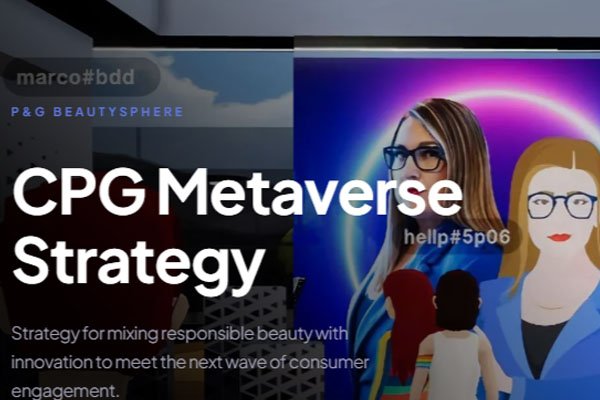
Reimagining The Physical: We’re helping the brands understand future consumers both in virtual and physical spaces, but always with the lens of, “What are these younger consumers going to want?
Here’s a follow-up there. I have a five-year-old son. Our library has all this cool stuff you can check out. They have a Google Cardboard-level VR headset where you can put your phone in. It’s very cool. We picked it up and used it. It was fun. He’s going through outer space, what’s it like to be a firefighter and all this cool stuff. I was looking it up. The companies that make the VR goggles explicitly will say, “Be careful with kids below thirteen,” or something like that.
As someone who studied neuroscience, I understand there’s the visual system developing that stuff but I’m curious about how you think about that in terms of how we are onboarding these younger folks. It’s exciting for them to be able to do this stuff but there are impactful things. We’re not sure how they’re going to affect kids and their development. What do you think about that?
Even with my kids, I’m very cautious. They have demoed a little VR and done a little spatial computing and stuff like that but very minimal. Most of their interaction is with regular screens 2D. Even with that, I still have them wear sometimes blue light glasses. I do think that we have to be cautious. It’s up to the parents. The corporations have to put an age gate. I’m all for that but as parents, we need to be careful what they’re doing right within that. My kids don’t have free-range access to a VR headset as they don’t have free-range access to the internet for everything that they want.
It’s got all the precautions I can put in there. We do have to take care of kids in that sense. Even with the precautions I have in place, they will run into stuff they shouldn’t be seeing in Roblox or other platforms. The only thing there I can say is I have an open door with my kids. We talk all the time. They come to me sometimes when they see stuff that shouldn’t be there and then we do our best to report it or do whatever we can. These tools are thirteen and up. I remember I had Magic Leap was fourteen and up.
There’s this need out there to bridge folks into what this next evolution of technology is into the metaverse and whatnot. You’ve done a ton in this space. You look at your resume. You’ve been in almost every aspect of it. What was it that you saw that led to the formation of Journey? What role do you think you will play here, at least in the immediate term? I know things evolve very quickly.
To me, it was a very critical moment. I had been laid off from Magic Leap. I went through a layoff as a lot of people are hurting and going through that. I went to AWS. I was there but I felt that cloud computing wasn’t my passion. I was still writing at Forbes. I wrote an article in 2020. Ryan Gill brought the term to me. He said direct-to-avatar. Something clicked in my brain. I wrote an article and asked the question, “Is direct-to-avatar the next direct-to-consumer?” This is 2020, a long time ago.
I remember that article in Forbes sparked something in the fashion community because I got so many messages from C-Suite. C-Suite at a fashion brand was saying, “You put into words what we have been seeing. We didn’t know how to express it.” I started working with a lot of brands. My first client was, for example, the Ralph Lauren company. They said, “Come help us understand the space. What’s happening? What’s direct-to-avatar? What’s the metaverse? What are NFTs?”
That was a moment for me when I started to see there’s so much need for education. There’s so much hunger for change and understanding of the virtual side that we’re heading into. That was the moment of, “I’m leaving AWS. I’m launching my company,” which got acquired by Journey in ten months, mind you. As an entrepreneur, I’m very happy about that. That bleeds into the ethos of what Journey is, which is merging physical, digital and virtual and making these journeys for these new customers. I always say my path has never been straight. There have been lots of twists and turns. It all starts to make sense eventually.
You had this unique position, especially having spent so much time under the hood at Magic Leap to see what the hardware application is that can move us further along the path here with the metaverse and Web3 collectively but, in particular, in the metaverse, no matter what your definition is. What’s your perspective on where we’re at with hardware and what that inflection point is? How far off are we from having something that gets us all into it?
Hardware is hard. It’s very hard to do. We oversimplify it. As humans, we want to obsess about the hardware because it’s what we can see but it’s hard. I had this discussion with a lot of people. We’re talking about putting a supercomputer on someone’s face. That in itself, moving from phone to glasses, is extremely hard. We’re going to get there. That’s what all the tech companies are planning for. I always get asked that. Whenever Apple brings whatever it is that they’re going to bring to market, whenever that happens, that will be a watershed moment. Will it be the perfect glasses that we’re all dreaming of? No. The first iPhone wasn’t perfect. It’s going to be a progression.
I don’t know if it will be 2023, to be honest. They might announce something in 2023 but I don’t think we’re going to have a product until 2024 or 2025. I don’t think the full-fledged glasses that we dream of will be here. We will probably need five years or more for that level of true connectedness. Hardware is easy for humans to understand because we can touch it. I’m interested also in all the content, the infrastructure and everything that’s behind it where a lot of the creators that you talk to play. Hardware is harder than people realize.
We appreciate your perspective there. Another topic we wanted to dive into with you is fashion. We have talked about fashion on the show fairly often. I remember Emma-Jane MacKinnon, Lukso and Faith Tribe coming on the show. I know you have some personal projects in the fashion space. I would love to better understand your perspective on how you see luxury fashion evolving in the metaverse and where virtual fashion plays into the future of style and couture. There was a metaverse fashion event. I would love your perspective there.
I was there. Watching Vivienne Tam’s metaverse fashion runway was fantastic. It was fun. @SwanSit and a whole bunch of other folks worked on that.
Here’s a shout-out to Swan who gave us the heads-up about that one.
It’s amazing work. The role of fashion is poetic here. Web1 was focused on the enterprise and universities. Web2 was pushing innovation. It was social media but let’s be honest. It was also adult entertainment pushing the boundaries of what could be done. With Web3 and as we head into this future, it’s poetic that it’s fashion, luxury, art and architecture. That in itself says a lot about who we are. I love that fashion is a first mover. I love that there’s fearlessness and courage from some of the fashion brands jumping in. Some things are going to go well. Some things are going to fail. That’s the reality of it. Understand that it’s tough. I give a lot of kudos to the brands that are doing great stuff.
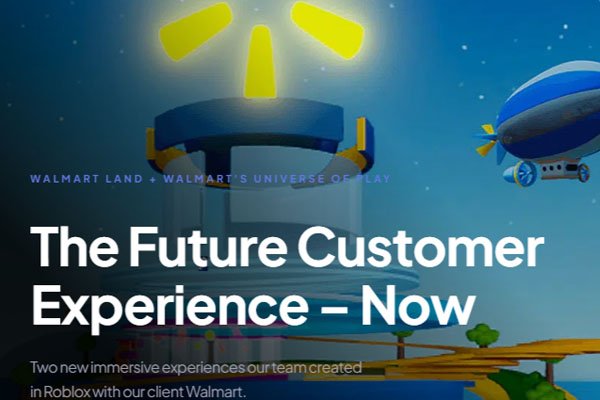
Reimagining The Physical: I love that fashion is a first mover. I love that there’s fearlessness and courage from the fashion brands in jumping in.
Fashion is a natural space in the sense that culture is being created in gaming and virtual spaces. Fashion understands that. Streetwear and sneaker culture impacted fashion in ways that I don’t think they understood. They look at gaming and they’re like, “This is making culture. This is impacting what people are going to wear.” I love that. What are the job and the role of virtual fashion? I’m hopefully optimistic that it will potentially help us not have so much fast fashion. Buying the item to wear in a picture and then throwing it away is heartbreaking. We all do it from time to time.
Potentially, fast fashion can help with that. If you’ve had the Lukso team and some of the other folks here, they have probably talked about how we can potentially solve fast fashion. It will also unlock creativity and let us design things that we can never imagine. I have a phrase that I said a long time ago, “The world’s next Coco Chanel is probably a ten-year-old girl designing skins in Roblox.” I wholeheartedly believe that. Fashion has a big role to play as we head into the future, how we dress or avatars and even how we dress through augmented reality in the future.
It’s also interesting from a sustainability perspective because that’s such a big topic in fashion. You can create something, have a one-of-one and maybe create clothing based on a predefined amount of need and a pre-purchase experience. Jeff and I have dabbled in the world of sustainable fashion. It’s disappointing how difficult it is to create an item in one place that has a lower carbon footprint. You’re shipping things all around the world to get certain fabrics combined. With the challenges that COVID caused to shipping and everything, it’s challenging. There’s an interesting element of digital fashion supporting the sustainable fashion economy.
Where I do get excited since you’re asking about fashion and that’s my thing, is connected fashion. Some people use phygital. Phygital is not my favorite word. I use connected fashion. It’s starting to connect physical items to virtual items and create that seamless connection between them. There’s something there, especially when you talk about luxury goods, luxury markets, the provenance and all those sorts of things. For example, gmoney has done a lot of work with networked products. That’s what he uses. I use connected fashion. I’m doing a lot of work around NFC chips that become physical NFTs and putting them into different jewelry collections. There’s something there as well to be able to trace those items.
We’re doing this fun collab with CryptoJeweler for Outer Edge LA where all of our VIPs are going to get this beautiful silver bracelet. There’s going to be a QR code connected to the gift. They will be able to have a digital version of that bracelet. He’s great. If you don’t know Michael, CryptoJeweler, he’s an awesome human being.
I would love to connect. I’ve been working with Simone Faurschou who’s a jewelry designer on a jewelry collection as well but it’s not QR codes. It’s actual NFC chips inside the jewelry. We have to figure out how much keep can the chip take and all these sorts of things. What can you cover it with? Can you cover it with metal? Can you cover it with this and that? It has been an interesting process designing the jewelry.
He’s going down that path too. This was a little bit more of an impromptu thing for the event. That is the connectedness that I get excited about too. That’s awesome that you’re working on that.
I keep thinking back to my PhD when I was studying neuroscience, particularly in a lab where we studied birds and bird songs. I got a lot of exposure to the studies of cultural evolution. Watching what’s happening with the metaverse and fashion is interesting. It’s almost like an experiment. You throw this at humans. What do they do? Birds are a wonderful place to look at the evolution of culture like taking songs and how they evolve.
I ran into a neurosurgeon at a coffee shop. He introduced me to the idea that there’s this thing called Stentrode. They can take an electrode array and insert it in a vein through the lower part of your body. It goes up into your motor cortex and implants a set of electrodes that can be used to interface with the motor cortex, meaning this is a very low-impact surgery. They don’t have to cut the skull open or anything like this. It’s going to be fascinating. I want to dive into your contribution to the literature on what’s going on here. You’ve written a book, Into the Metaverse. Tell us some of the key takeaways that readers could expect to get. It’s a wonderful topic to address. We hit it right in the zeitgeist. Tell us a little bit more.
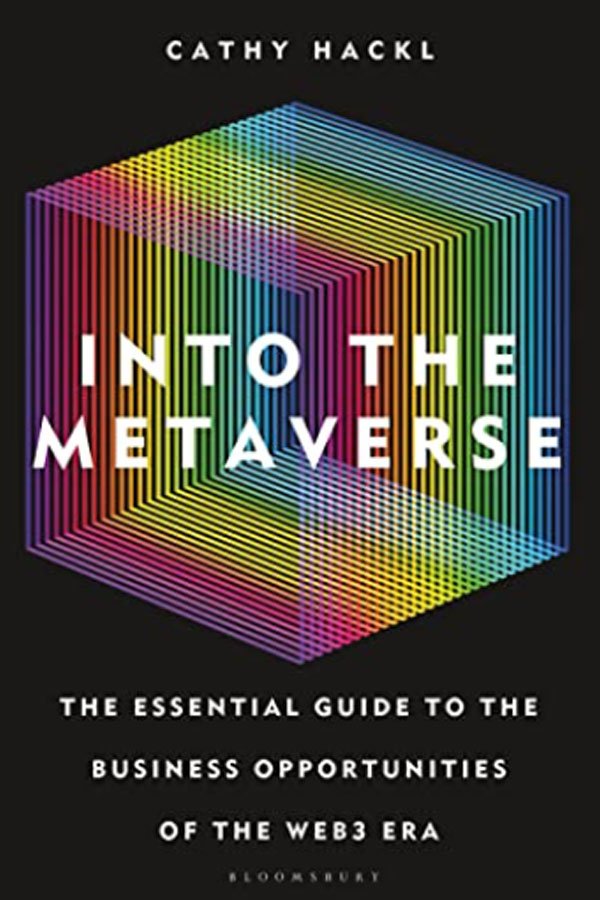
Into the Metaverse: The Essential Guide to the Business Opportunities of the Web3Era
You went to the summer Davos.
It’s very different.
Get after it.
Thank you.
We still need a couple of years for that.
You have to break through the noise.
A beautiful dress for a trip to Paris.
Have you been out surfing in Costa Rica?
Be authentic. Be fearless. Click To Tweet
Thank you. That was fun.
Productivity.
The strategy here is to be friends.
There’s enough for everyone.
I’m so down.
Thanks so much for hanging out with us.
It’s good to be here.
Catch you on the flip side. It has been awesome.
Bryan, much appreciated.
How can people join that group?
How many copies should we give away?
I’ll send you five copies signed.
Important Links
-
Into the Metaverse: The Essential Guide to the Business Opportunities of the Web3 Era
-
Emma-Jane MacKinnon - Previous episode
-
@SwanSit - Twitter
-
CryptoJeweler - Previous episode
-
Unstoppable Domains - Previous episode
-
Lisa Sterbakov - Previous episode
-
LinkedIn - Cathy Hackl
-
Instagram - Cathy Hackl
-
Spotify - Edge of NFT
-
iTunes - Edge of NFT