Top Podcasts
Brenden Mulligan Of PREMINT — The Web3 Allowlist Platform
Authenticity and trust bind NFT artists and collectors together. It is what makes this whole ecosystem work in the first place. Having a Web3 allowlist makes it possible for artists to decide who joins their list and make sure it’s filled with real collectors, not bots. This is what PREMINT has been doing starting early on in the industry’s inception. PREMINT is trusted by over 4 million wallets, and is used by the world’s top NFT artists, communities, brands, and even celebrities for their high-profile NFT projects. In this episode of Edge of NFT, CEO Brenden Mulligan takes us on a tour through PREMINT’s evolution and gives us a sneak peek of what’s to come. Plus, he talks about the most recent developments at his other project, Vulcan, the safe haven for token-gating your Discord community.
Listen to the podcast here
Brenden Mulligan Of PREMINT — The Web3 Allowlist Platform
This is Brenden of PREMINT, Web3’s allowlist platform, and Vulcan, the best way to manage your Discord community. I’m here on the great show loved by so many smart people like you. Stay tuned.
NFT curious readers, stay tuned for this episode to learn how PREMINT empowers NFT artists to curate a list of real collectors, ensuring authenticity and trust, and how Vulcan, the ultimate safe haven for token-gating your Discord community is growing and changing to be so much more. Finally, learn how our guest’s patience stands up to minutes, hours, years, or even decades of abuse. All of this and more on this episode.
Before we go, don’t forget that our Outer Edge LA event returned to Los Angeles from March 20th to 23rd, 2023. You can now catch up on all the discussions, presentations, and more by heading over to Watch.OuterEdge.live and registering with just your email address. You’ll have access to over 60 captivating conversations and performances. Binge-watchers are welcome. See you inside.
On this episode, we’re happy to introduce our guest, Brenden Mulligan, the CEO of PREMINT, a platform dedicated to the Web3 community for all their NFT needs. It’s a welcoming space for everyone, from blockchain beginners to crypto experts. To give you a bit of background, Brenden is the driving force behind not only the PREMINT platform trusted by over 4 million wallets but also Vulcan, the safe haven for token-gating your Discord community.
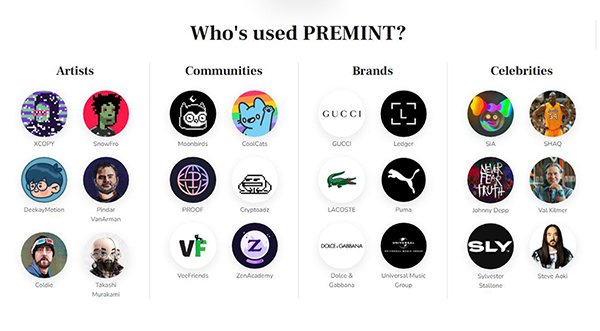
Prior to PREMINT, he led teams of talented product managers, designers, and engineers to create scalable consumer and enterprise products at startups and companies like Google. About PREMINT, it’s not just us who love it. It’s being used by the world’s top NFT artists, communities, brands, and even celebrities for their high-profile NFT projects. PREMINT is all about creating a fair playground. You get to decide who joins your list, making sure it’s filled with real collectors, not bots. It’s this level of care and commitment that makes it a favorite. Brenden, welcome to the show.
Thank you so much for having me.
It’s a pleasure.
It’s an honor. Thanks for coming by. I’m glad that you can make the trip up North for that.
It was great. Thank you for having me there.
It’s an honor. I’ve been following PREMINT and participated in the initial mint launch of PREMINT. I’m still a holder, for full disclosure for our audience, because I saw something special there that hadn’t happened before. At that moment, our industry was pretty fragmented when it came to minting solutions. There were a lot of scams and challenges with the process. You made it easier for folks. I’ve seen this perpetual motion to make things easier for more people that you’ve embraced. Thank you for what you’re doing for our industry. I would love to understand more of the story behind the inception. Give us a little bit of insight into what PREMINT is all about.
I’ve spent my career building tools for creators. I generally get interested in the community. I want to see the creators have more time to spend creating and less time managing a business. What I was starting to see pretty early on with NFTs was creators would launch their projects. For a while, no one cared about NFTs, but then as NFTs got hotter, when they launched the project, generally, it would get minted out incredibly quickly.
Collectors and real people who wanted to collect generally walked away from the process, having spent a ton of gas and not having gotten anything in return. On secondary, on OpenSea, immediately everything was on sale. You could see that the people who were being able to buy the NFTs were the bots, not the collectors.
I saw artists bothered by this and starting to build HomeGrown Solutions. They started creating Google Forms, and they would ask people to give them their wallet addresses ahead of time. They’d create type forms or whatever. They would try to say, “DM me your wallet address.” It was not user-friendly and overall bad.
One morning, I was working with a single artist named Pindar Van Arman, who is the godfather of bitGANs and incredible AI artists. I went to him and I said, “If I built you a page where someone could come on, connect a wallet, connect to Twitter and Discord, would you use it?” What he was doing was using Google Forms, where you entered your wallet address and then you typed in your Twitter or Discord name.
Afterward, he’d then go and double-check to make sure these people existed and the wallet had a real name. It was a ton of extra work. That’s what PREMINT was at the beginning. It was a single page with three buttons. The only rule it had was you couldn’t connect your Twitter account to more than one wallet. If you wanted to submit 100 wallets to an allowlist, you had to create 100 Twitter and Discord accounts. Nowadays, that’s not that hard because there are farms and people know the process for this, but at the beginning, that was enough to dissuade most bots.
The other thing we did was we would privatize and hash an IP address, but we would track IP addresses. If the same computer signed up a bunch of times, the person or the creator could know that immediately and disqualify that person. It’s a pretty simple solution. It was a very Web2 solution, to be honest, for the problem. It did have a wallet connection, but the rest of it was off-chain.
It was enough to get the creator the tools they needed to be able to get a list of wallets that they could then add to an allowlist for their mint. That was inception. It was like being in a Discord channel with about fifteen artists. They were all telling me their problems, working with one of them to solve their problem, letting them use it, and telling me how it was working for them. That’s how it started. That was last October 2021.
Web3 Allowlist: It was enough to get the creator the tools they needed to be able to get a list of wallets that they could then add to an allowlist for their mint. That was PREMINT’s inception.
We started this show in March 2021. We were facing these challenges and talking about them on the show and then PREMIT came along. It is an interesting time. What I find interesting about you from my Twitter stocking is how intense you’ve been around an open customer discovery process since then. At that moment, it was like fifteen artists. Now you’ve got millions of users in all sorts of feedback coming in that you have to ingest and integrate, but yet you’re still having an open dialogue with the community about that. I’m curious what that process has been and how you came up with this approach. I’m a lean startup guy back in the day. Is there some lean startup in your blood? Is that the genesis of all this?
I was interested in building for Web3 and building for creators. I built PREMINT in addition to 2 or 3 other things. I had a sales spot product for a while. I was building this member dashboard where you could see all of your holders when they bought what they own. This exists in a bunch of places now. The idea was it would be like a place where you would direct your holders to go to sign up. They’d provide additional information. They’d tell you who they were on Twitter. They’d fill out a profile and you can build a community there.
I was building a bunch of stuff at the same time. I didn’t think any one of them was better than the other one. I thought they were all going to be useful and I set the community point me in the right direction of what to spend more time. When PREMINT was launched, it was one artist. For the most part, for the first 2 or 3 months, a dozen users. Users mean artists. Plenty of people were coming in and signing up, but there wasn’t a huge awareness of it. Every user I got would say like, “It’d be cool.” This sounds dumb now because I feel like allowlist-based products are all very similar right now, but when we built PREMINT, there was no other one to look at.
Originally, it was, “Connect your Twitter,” and then, some artist was like, “It’d be cool if they could follow me.” I was like, “We could make it. Not only do they connect their Twitter, but they also would be following you.” Another one would be like, “I’d like them to join my Discord also.” “We’ll make them join your Discord.” “It’d be cool if not only they were in the Discord, but they had a role.”
It wasn’t like I came to the space and I was like, “I know the answers.” I put it out there. Artists would recommend what they wanted to make it more gated to them. When we did a partnership or a launch with Gary Vee, they have 300,000 people in their Discord. He was like, “It’s important to me that when I launched this allowlist, people can’t sign up and then get on the allowlist and sign up for my Discord. I want to reward my existing community.”
For that launch, we added a feature that you could set a date where when someone tried to register, they had to have been in Discord prior to a certain date. That was like working with one community on what a solution to their problem is going to be. PREMINT is the result of 100 conversations to build 100 little features to shape it into what we think is a pretty good solution right now. The only way to do that is to open yourself up to feedback and build in public.
We’ve had missteps where we’ve released stuff that people didn’t think was useful or it was one artist that demanded or wanted it and we released it and realized they were unique that it made the product more confusing to a lot of other people. There’s a balance there. They did the same thing with the other products I was working on and they got no feedback because they weren’t very good. They were okay, but they didn’t solve a big enough pain point where people were like, “Please add this.” They were like, “It’s cool.” it made it easier.
It’s almost easier when you have twelve users. As you said, once you get to that level of 100 or 1,000, you have all these feature requests and then you go down that rabbit hole of that one that didn’t matter to anybody and waste all your time. It’s nice to start small like that.
The mint that you were talking about earlier was Collector Pass Mint. PREMINT evolved as a creator tool. You collected names. They were in your dashboard. You exported the CSV of the names you gave, put them in Manifold, or wherever you’re going to mint. That was your allowlist. As a collector, you came to a page. You clicked a button and you were told you were registered. For 6 or 8 months, there was no next button.
There was no, “Check out the other list to join. See all your registrations.” There’s zero experience for the end user. Probably that’s what YouTube was like for the first X amount of months or years. You just went to the video page, watched a video, and closed the window, then they were like, “We should probably get people to keep watching videos, create their own account, or be able to see what they’ve watched before.”
Even that entire side of the market, if you look at it in a marketplace, we weren’t even serving the collector for the first eight months until the collectors all started saying, “It’d be nice to be able to see what I’ve registered for. I forget. I don’t remember what I registered for. I’m registering for premiums all the time.” I’m thinking like, “We should probably tell people that. It’d be nice to get an email notification that the Mint is that I won the spot on. It’d be nice to be able to browse all the projects looking at categories.” It’s all that stuff. I was listening to that. That was when we had hundreds of thousands of users, but hearing the volume of requests is what led us to build the collector side of things and launch the Collector Pass.
We got to dive into not only the foundation of the idea but the details of how the artists can exclusively identify the people they want to be on their lists. Are there any details about that that we missed or we covered the main idea around how the artist can decide on those types of things?
At the time of this interview, we’re in a fairly deep bear market. As the market changes, the utility or why you’re using PREMINT changes. In the beginning, it was all about filtering. It was like you could release anything and everyone wanted to buy it. PREMINT was more about, “I have 100,000 people who want to buy my NFT. I’m only releasing 10,000.” How do you get from 100,000 to 10,000? In order to be on the list, you have to do X, Y, and Z. You have to follow me on Twitter,” or whatever the artist and the creator wanted to do. They could design it however they want.
How am I going to get from a smaller subset? Maybe I want to do partnerships with communities. I want people who have a Moonbird, a CryptoPunk, or a Doodle to be able to get to buy this. I want to set aside 300 spots for those people. That whole concept of collabs and doing joint partnerships with different communities came out of the list being harder diminished. We built a whole part of the product that was all around and set aside spots for these different communities.
You can have one PREMINT list without your sublists for different communities. It was like, “How do we give the artist tools to be able to do the filtering however they want to filter?” When you flip to the time when not as many people are interested in buying NFTs or gas is high, it’s harder to get someone to buy an NFT. If it’s a bear market and the liquidity’s gone, a lot of artists are using it to, “How do I get eyeballs on my project?”
Before, it was like, “How do I get people away? How do I limit the amount of people who can buy?” Now it’s like, “How do I raise awareness? How do I do my marketing?” The same set of tools used differently is useful for that. If you’re launching a new thing, it’s like, “I need Twitter followers. Maybe I’ll do a PREMINT, but in order to get the PREMINT, you have to follow me on Twitter. I want to get other communities involved maybe by giving them some spots, that’ll make them more willing to share my project with their community.” People are using the same tools totally differently.
You have this unique vantage point on what’s happening in the industry behind the scenes. There are only X many active wallets in the space or X many collectors. There’s probably no one in the space that know the real truth here more than you. I got to ask you, where are we now in terms of the level of activity in the NFT space?
I’m a better data scientist. I can probably look at our data and give nice projections and estimates on numbers. All I can tell you is that it is significantly quieter than it was before. It’s obvious and most people have a lot of liquidity and volume has moved over to airdrop farming on Blur and meme coins. There is not a lot of people out there. You see this in like the numbers of the volume on Blur and OpenSea and everything.
How does that translate into the PREMINT world? If there are less people out there willing to buy secondary, there are probably less people interested in buying primary because there’s a large group of people who were buying NFTs, not for the art or the community. They were buying it to flip and trade. Our industry always had these collectors and they hated flippers, but we needed the flippers to get the volume, and it was a weird relationship.
Every time I would coach a project on a launch, I’d be like, “Here’s how we DeBot. Here’s how we make sure the only people who are going to buy are the collectors.” There was always this, “We need some secondary volume because if there’s no secondary volume, people will think that the project isn’t desirable.” It’s this weird balance. Now that that whole flip side is gone, it’s harder to launch a new project. The best use case for PREMINT was I’m launching a new collection of thousands of NFTs. Without that, we see a lot less people doing allowlist in general for brand-new projects. It’s an obvious answer, but volumes are down.
What’s great for me is scams are way down. Our life was hell for a few months because all we did was try to prevent abuse in general in Web3, but on the platform also. How do you stop someone from pretending they’re going to launch a project, collecting names, getting someone to go to a website, and then draining their wallet when we’re not the minting platform? We can’t tell you if that contract is going to be a wallet trainer or not.
We spent a lot of time building anti-scam and anti-fraud bot technology. We don’t need that right now because the financial incentive to bot and scam is gone down. Those people are moved on to do something else. That’s one of the things for us that’s great. We see a lower amount of volume, but the projects that we do see are like artists that are excited to launch their collections. It’s meaningful work for them. Collectors generally are excited to collect.
We’ve seen that, in general, in all our activities in space. Slower times are when dedicated builders come to the forefront. In some sense to the outer public, it looks like nothing’s going on when it’s almost like that’s when everything of legitimacy. That’s worth paying attention to.
You can’t tell the future and know what’s going to happen in 6, 12, 18, or 24 months. Will there be another boom? What will it look like? I don’t even try to pretend like I know. I do know that in every boom, everyone looks back at the bear and says, “I wish I would’ve bought a Fidenza when they came out, a Squiggle, or a CryptoPunk when it was $300. When things are amazing, you always regret not paying attention at this exact time.
When things are amazing, you always regret not paying attention at this exact time. Click To Tweet
When it’s most bloody and hard to make the effort, you get the biggest reward.
A lot of the people got the biggest reward. When the bull market comes in and everything’s crazy expensive, they like to talk like they’re geniuses, but in reality, most of them didn’t buy five Fidenzas because they’re like, “This is going to be worth 100 ETH one day.” They bought them maybe because they liked them or maybe they were like, “I’ll buy five. What is this thing? It’s only 1 ETH. It is cheap. ETH is $100.” It’s not even like the geniuses are doing it. Typically, people who are active end up being rewarded later, assuming there is another time when everything comes back.
It’d be great to shift over and talk about Vulcan and PREMINT, how that collaboration came together, and why. Can you tell us about how that all came together?
We’ve been able to usher people into Web3 who aren’t necessarily native to it. PREMINT is a product that looks like a Web2 product. It’s easy to use. It doesn’t require you to mint anything. You don’t have to load it with ETH. You do have to have a wallet, but you can download MetaMask and immediately have a wallet. We care a little bit more about helping make sure it’s a secure space. We did this with PREMINT in general and making sure that all around, PREMINT was more secure. We’ve done all kinds of crazy cool security stuff on PREMINT to make it easier and more secure.
Mutant Ninja Turtles action figure.
Baseball cards at a flea market.
Very fun things.
I sold a set of plastic shelving on Craigslist.
That’s a little bit of spring cleaning there.
Also, the air that you’re breathing.
Teleporter.
We got that on our minds.
Important Links
-
Erick Calderon – Past Episode
-
@Mulligan – Twitter
-
@Premint – Twitter
-
@VulcanAuth – Twitter
-
Spotify – Edge Of NFT
-
iTunes – Edge Of NFT
-
@EdgeOfNFT – Twitter