Top Podcasts
Bill Tai & Amanda Terry Of MetaGood, Catalyzing Positive Change For Collective Action, Plus XPUNKS, First & Only Punkmunity Of The XRP Community, And More…
This episode recorded the team’s trip to dCentral Austin and Consensus, in June of 2022. Listen to Jeff and Josh talk with Bill Tai, Chairman, and Amanda Terry, COO of Metagood. They discuss the details of building a Web3 project that has an incredible impact. Hot topics bring us a chat about XPUNKS, bringing the crypto punk aesthetic to XRP NFTs. How can you go wrong with primates and punks? You can’t.
—
Listen to the podcast here
Bill Tai & Amanda Terry Of MetaGood, Catalyzing Positive Change For Collective Action, Plus XPUNKS, First & Only Punkmunity Of The XRP Community, And More…
**This episode features Bill Tai, the Chairman, a monetary Cofounder, and COO of Metagood, the for-profit company that strives to build a better future for Web3 while doing good along the way. Bill has been funding startups as a venture capitalist since 1991 and has 23 of his startups become listed companies. Originally trained as a chip designer, he joined LSI Logic, a seminal Silicon Valley startup formed by the CEO of Fairchild Semiconductor, after earning an Electrical Engineering degree with honors from the University of Illinois. **
In addition to being a partner at Charles River Ventures, he cofounded the nonprofit MaiTai Global, a professional networking group that merges work, play and philanthropy. MaiTai also heads up the Extreme Tech Challenge, an international startup competition that culminates in a pitch presentation to Sir Richard Branson on Necker Island.
Amanda has over twenty years of digital media sales and business development experience from Twitter, NBC, Zagat, 5min, TARGUSinfo, and Acxiom, all of which were acquired at some point as well. She’s a frequent speaker at blockchain industry events, including NFT.NYC, Ethereal Summit, South by Southwest, VeeCon, and soon-to-be NFTLA.
She’s a Minneapolis native. Amanda received a BA from Princeton University and an MBA from Wharton. Metagood empowers communities to be catalysts for positive collective action. Through its first NFT project OnChainMonkey, Metagood has simultaneously created value for its community members and contributed to several important causes. Amanda and Bill, welcome to the show.
Thank you. We’re honored to be here.
It’s so great to have you both.
Thanks for having us.
You two have some relationships with some of the biggest projects in the space, investors, advisors and friends. What drew you to Metagood? Give us the origin story.
The origin story dates back to the funding of Dapper Labs. I did happen somehow to be into peer-to-peer computing in the ’90s. A friend of mine started Second Life. I became Alan Greenspan Gollum and helped create the concept around what became the Linden dollar around 2003 or 2004. When the Bitcoin white paper came out, it was an immediate draw. I ended up in that industry around 2010. I funded Bitfury, the silicon that became Bitfury mining. I and a couple of kiteboarders funded that silicon ASIC chip in 2011.
That eventually led to me passing on the formation of Ethereum, but then I realized that it was going to be important. That year, I decided I’m going to back a couple of projects in Ethereum. I funded Powerledger and Fluidity, which created the first DEX through AirSwap and Dapper Labs, which had created CryptoKitties. When CryptoKitties got up and running, it became obvious to me that there was a lot of economic power in communities that were interested in these digital assets. I wanted to capture some of that energy to do some other things that were good for this world.
Separately, I had helped start a nonprofit. The name has evolved to become ACTAI Global for Athletes, Conservationists, Technologists, Artists and Innovators. We support both environmental conservation and economic empowerment through entrepreneurship. Along the environmental front, we were throwing an ocean gala with Sylvia Earle, one of the Time 100 people. She’s a famous woman in the ocean space. I wanted to do something interesting. I asked the team at Dapper Labs and CryptoKitties to create a special edition CryptoKittty, and they did. It was called HonuKitty. It is a CryptoKittty with a turtle shell. It’s very cute. You can find it on Giphy and look it up on through a bunch of search engines.
We managed to auction that off for tens of thousands of dollars. We gave the money to Captain Paul Watson who parked his ship to fund something called Operation Gyro at the turtle nesting area off the island of Antigua. He had people walk the beaches 24/7 to protect the turtles to make sure the babies got off into the water and that the bigger ones didn’t get eaten. That was an idea that happened around 2017 and 2018. It has been a good few years, but I always knew that the general idea could be made to be lower friction, replicable and scalable. That led to the formation of Metagood.
Top-down organizations limit creativity. Click To Tweet
We don’t talk enough about Second Life in this space. It doesn’t come up often. I appreciate you raising that. Amanda, how about you? What was your story? What was your journey to Metagood?
I’ve known Bill since 2013 through ACTAI Global. I helped to run that community for the last couple of years. We wanted to do an NFT to raise some funds for ACTAI Global. We did it but ran into a lot of issues along the way. I was thinking, “There has to be a way to harness the power of NFTs in those communities to connect them with causes.” That was the root idea in my head.
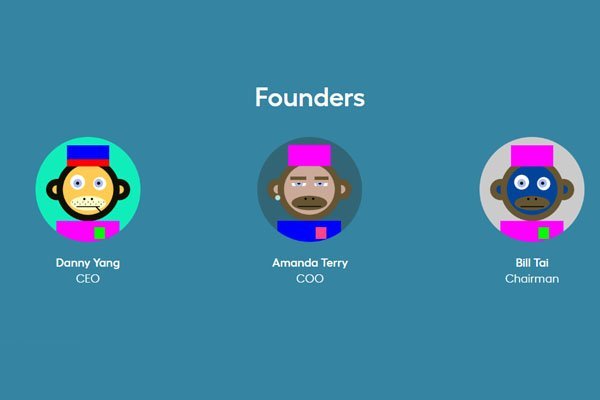
Bill was kind enough to connect me with our Cofounder and CEO, Danny Yang. Danny has a PhD in Computer Science from Stanford. He is the Founder of Maicoin, which is the largest cryptocurrency exchange in Taiwan. He found a company called BlockSeer, which he sold in 2018 and billed it back to his previous company.
Danny and I got together. We were kicking around a lot of different ideas in everything from a marketplace to other ideas. We’re working on an art collection that involved bears. Danny, being the technical genius that he is, decided on the side to work on a little project. He’s like, “I wonder if I could do a 10,000 profile pic collection all on-chain in a single Ethereum transaction.”
He was working on this thing on the side. On September 11th, Bill and I get a WhatsApp message from Danny, “I did something pretty cool. You might want to check it out.” That was the launch of our Genesis collection. Within four hours, they were all minted out. Roham from Dapper Labs retweeted it. They were gone like hotcakes. That was the launch of OnChainMonkey.
A little fun aside is that our Head of Events, Zach Sekar, planned a little happy hour at a popular bar in Venice for Dapper after CryptoKitties launched. Jeff was there too. We met Mack and heard the old story. He was on the phone a lot because things were still breaking. They pretty much broke the chain. That was our first exposure to NFTs, which got us excited about the industry.
It’s the Genesis block of this industry.
There has been a lot of building. There’s also a lot of ideating on what problems can we solve in Web3. I was in Davos. There are exciting conversations there. Making projects like what you all are doing is so relevant and important in the space as we get past this PFP phase. I would love to dig into what are the big problems that you all think we can solve that inspired Metagood?
Going back to Second Life again because people don’t talk about it enough, Second Life was built at a time when things were hard to build with the technology that existed at the time. Computers were not that fast. The broadband was spotty. Not everybody had internet. The clients had to be massive and software downloads. It was not that user-friendly, but the company accomplished a lot with real-world physics or physics implemented behind the UI of the assets. It was a real live economy.
They had a giant concert for Mariah Carey or someone.
U2 came in. IBM used to have a booth there to display products and things. There was a lot of experimentation with things that would become more commonplace now, whether it’s livestreaming through Twitch or metaverse-related things. All of that was already pioneered in high friction in Second Life. As we move forward in the world, some of the elements that were born in that era are coming to life both inside the metaverse and are being abstracted outside to touch real-world people and assets in a connected way.
What are the problems to solve? There are still a bunch of problems to be solved in the web infrastructure layer to try to make things cheap enough to run economically. You see it in the friction around the viewers with the headsets. Those work well but they’re expensive. At some point, the rendering capability has gotten a lot more economical than ten years ago, but it’s going to go a lot further because of the clout.
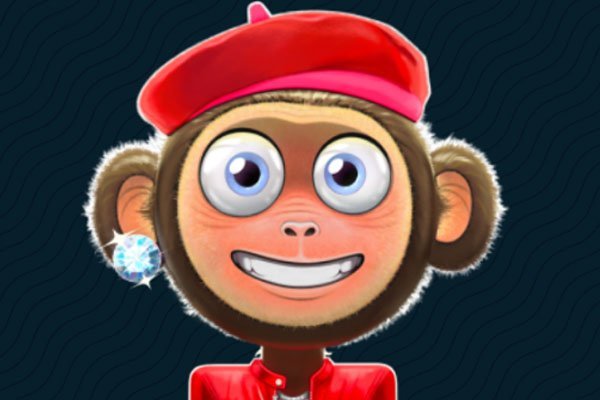
Metagood: When CryptoKitties got up and running, it became obvious that there was a lot of power, a lot of economic power, in communities that were interested in these digital assets.
Moving forward, we solve these problems. On a social impact scale, what do you think is possible using Web3 that maybe wasn’t as easy to accomplish otherwise?
The communities are a lot larger now because of the breadth of use of the blockchain as a standard methodology to have a trusted distributed database where things act as real currency. Second Life is a SQL server with almost loyalty points programs. They were convertible into fiat currency but through weird little exchanges like IGE that Brock Pierce ran in 2005 and 2006.
A lot of those things are already embedded in what you can do with a digital asset, whether it’s an NFT or a cryptocurrency. The communities are big and broad. The communications channels exist across everything from the existing social media things to newer things like Discord. You can spin up communities and spread messages fast. You can resolve questions at scale quickly in ways that you couldn’t before. You can get communities of interest built by discussing things and making decisions at a speed that was unfathomable many years ago.
Whatever the world’s problems are, whether it’s poverty, cleaning the oceans, conflict resolution, or even getting the constitution amended, you can do these things with more ease through that community-centric gathering and the multiplier effect.
The soil is right for that. You can plant seeds in a desert. Nothing will happen. We’re at a point where there’s a generational change occurring. Pretty much anybody that’s 25 and younger or maybe even 45 and younger cares because they see what’s happening to both the destruction of our environment and the rising temperatures. There are arguments about, “Is it cyclical? Is it climate change?” People know that it’s affecting them and they want to do something about it.
Let’s talk about OnChainMonkey, what it is, and how it incorporates some of this DNA we’re talking about. Why is it so special?
We’re a collection of firsts. We were launched on September 11th, 2021. It’s a free mint. We were the first profile pic collection all on-chain in a single transaction. All of the metadata and images are on SVG. It’s very energy efficient to launch that way. We were one of the first NFT collections to my knowledge that has ever projected NFTs on landmarks in San Francisco and LA.
Instead of a bat signal, it was shining a monkey signal to raise awareness of OnChainMonkey and be like, “We need to do something differently.” Weeks later, we projected NFTs on the side of the Armadillo Building in Glasgow, Scotland during COP26 while world leaders were meeting to inspire a billion people to think about the climate change crisis. We have done things differently.
We did OCM Earth, which was a mosaic of 25,000 of our monkeys that we shaped in the picture of the Earth with a heart over Ukraine. We sold those for 0.1 ETH. We did say, “There’s no utility. This is donating.” We raised $185,000 in two weeks. Instead of our team deciding where it should go, we consulted with one of our investors, Holly Branson of Virgin Unite and said, “We want this to go to a good humanitarian cause.” She gave us three options. That was our first DAO Snapshot vote, “Which charity should it go to?” It went to Save The Children to fund humanitarian aid in Ukraine.
Starting in a DAO is also on the edge. I’m curious. Why start a DAO? How does it apply to your vision?
A DAO is a natural fit for communities. If you think about trying to drive collective action across a group of people that share a common interest in both an asset category as well as a cause, it’s a perfect way to map those two. The way our company functions is it is a for-profit company because we need to make enough to keep going and funding causes. As the digital assets that we create trade on exchanges, a certain part of that is commission.
That commission comes into a bucket and splits into two pieces. One is a foundation entity that is the pool of capital that the DAO gets to vote on. The other fund is for the operations of the company. As this capital pool builds up separately, the members of the community that are monkey holders or NFT holders can suggest projects of any kind. It’s very democratic and open. They can be Web3 technology projects, charitable projects, and open-source projects. The group then can nominate. There are discussions. Things resolve to whether or not the group wants to apply capital.
We were doing a social DAO panel over at Decentral talking to some of the folks over there. ATX DAO was part of that. It was interesting that they’re reaching out globally to other DAOs and trying to find these synergies between them and utility across DAO is everywhere. It sounds a lot like society in general when some of the complex interactions that happen across governments. We’re at the very beginning, but it’s cool to see these things start to evolve.
Also, what’s getting interesting is because we have created such an authentic and passionate community of NFT holders, we have been getting reached out to by very large brands who want to understand, “How can we leverage and move into the Web3 space? How do we offer NFTs to our customers and our shareholders to engage and incentivize them either with fungible or non-fungible tokens?” To all of those large brands, we said, “You should buy some monkeys, get into our community, and join our DAO.”
Consulting knowledge is valuable. Let’s do a little bit of a Web3 exchange here.
We’ve got Bill Tai, a legendary Silicon Valley investor. We’ve got Danny Yang, the consummate tech builder and incredible technical genius. I’m on the business side. I said, “Come in, buy some monkeys, and participate in our DAO. There are projects we can do with you that can get funding from the DAO. Also, you have a built-in base of customers who are already going to be consumers for your projects because they are OnChainMonkey holders.”
Are there any non-anonymous brands that we can talk about that are now monkey holders?
I’ll mention two. These are not signed yet, so I have to give that caveat. We are going to be doing something with Hut 8 who are going to be buying some OnChainMonkeys. We’re hoping to do a PO app with them for an upcoming event where there will be some very high-profile people. It’s a great way for them to get their brand out like a digital swag in terms of a badge that you were there, which is a big flex in anyone’s wallet if you come to this event. At our gathering, we have been chatting with the New York Stock Exchange about doing something as well, which can be big scale.
There are so many cool things coming up. One I want to talk about in particular is Karma. It’s right here very soon around the corner. Tell us a little bit about this drop. It’s your second drop.
Our first drop was that Genesis collection of 10,000 monkeys. We did a Snapshot and dropped 10,000 Desserts. We had 55% Ice Pops, 45% Divine Donuts, and 15% Celestial Cakes, which we have been selling for 65 ETH to 80 ETH. This will be our third collection, which has been designed by a Hollywood animation team. The coolest story is it was one of our community members who created a monkey derivative of his OnChainMonkey and posted it on Twitter. People in our community loved it so much.
We reached out to him and said, “Do you want to come work with us on our next collection?” We hired him, his boss, and two other colleagues. They’re the team behind Rio, Ice Age, and Ferdinand. They have been working on this collection since October 2021. That’s what’s coming. You have a Genesis monkey. It can eat D1 or D2 or both Desserts. It will get a Karma monkey with the traits of the Genesis monkey. That’s for existing holders. You can come in and buy a Genesis now or wait until the public mint and get your Karma monkey. Buying now is good because there are better rarity chances of knowing what you’re going to get than waiting for the public mint.
We were on a panel together in 110-degree weather. I still heard this correctly. You let them go in terms of the creation process, which is so cool. You all have a lot of experience, expertise, and strategic guidance that you could provide to the different dimensions of OnChainMonkey and Metagood to the extent that you can. You’re letting people roll with it and see what happens organically. That’s the power of the Simon Sinek role. You define this meta-purpose and see what happens. That’s pretty awesome.
Thank you. That’s the way the world should work. I’ve always struggled when I’ve been in top-down organizations. Those limit creativity. In our community, there are such interesting people. The people that ended up driving the art for the Genesis collection were original holders that happened to be artists that worked on Academy Award-nominated films.
Web3 is that too. It just happens.
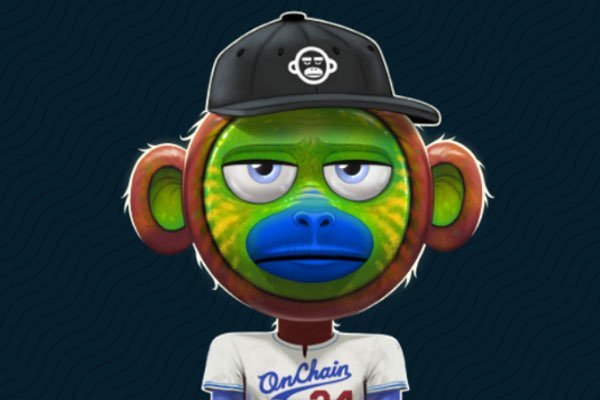
Metagood: Now we’re at a point where there’s a generational change occurring. People care because they see what’s happening—the destruction of our environment and the rising temperatures. People know it’s affecting them and want to do something about it.
Without suspending the creative and innovative spirit, what are the types of projects you would like to see encompass the Metagood community in the future?
First of all, in the spirit of not being top-down, we would love to see that come from the community. I mentioned broadly three buckets of things where there are going to be incredible things happening. One is the for-profit company space. There’s a lot of stuff that still has to be invented and deployed in Web3 to make the industry reach its potential. That’s not going to come from us necessarily.
We might do little pieces of it, but the spider web effect of all the thousands of people in our community that see things, that are able to nominate things, that can then put them in front of thousands of others, that can then spread the word and provide funding, we’re an amplifier for that kind of thing. Key new technologies, movements and products in Web3 can get their sea legs in our community.
There are going to be some things that are not so much companies but open source projects. I funded a lot of different open source projects over the years mostly in bits and bytes and things like that. There are some things that lend themselves better to that business model than for-profit companies. This is a perfect vehicle for something like that as well.
There are so many things to be done in the domain of charitable giving to support causes that will never make money by themselves, whether it’s things around ocean conservation, preventing climate change, the plastics issue that we have in this world, and projects like that. There may be some for-profit things that come out of there but maybe not. We can do these spot things as well like the Afghan girl getting lifted out of the arms of the Taliban. That changed lives, her and her whole family. There are lots of things ahead.
There are a lot of alphas on this show.
Could you come back to me on that one?
We will come back. What do you have, Bill?
Bill, what about you?
I can’t think of anything.
That works. Bill, how about you?
Amanda, how about you?
Amanda, how about you?
We can relate. Amanda, how about you?
I ate a bag of trail mix.
Amanda, how about you?
Thanks for having us.
Kaj, thank you so much.
Thank you for having us. It’s great to meet you.
Important Links
-
Discord – OnChainMonkey
-
@OnChainMonkey – Twitter
-
@XRPLPUNKS – Twitter
-
Discord – XPUNKS
-
iTunes – Edge of NFT
-
Spotify – Edge of NFT