Top Podcasts
Anton Glotser Of DelNorte Terravision - Global Blockchain-Based Property Titles, Plus James Fink & Jeannine Penn Of Kinder Hearts, And More...
Before the pandemic, many Latin American governments thought blockchain-based property was a scam but nowadays crypto and NFTs are beginning to look like a doorway to opportunity for the region. Jeff Kelley, Eathan Janney, and Josh Kriger sit with Anton Glotser of DelNorte Terravision. Anton shares how he diligently tried for years to educate politicians about crypto real estate and to create the right blockchain real estate business with the right partners. The pandemic created many 2nd, 3rd and even higher order effects that nobody would have dreamed of, not lease of which is increased awareness of the value of digitalized real estate. With this greater awareness, DelNorte was bound to take off. Anton explained how an initial focus on smaller deals made it feasible to transform the economies of multiple countries. James Fink & Jeannine Penn of Kinder Hearts also come in to share the massive impact they create with art and cryptocurrency. Don’t miss this episode!
—
Listen to the podcast here
Anton Glotser Of DelNorte Terravision – Global Blockchain-Based Property Titles, Plus James Fink & Jeannine Penn Of Kinder Hearts, And More…
NFT curious readers, check out this episode to learn how DelNorte identify and resolving one of the biggest problems with global real estate ownership.
What our guests uses their pillars of strength and why they are meaningful.
Kindred Hearts and Favrit are making the business of social impact their business by sharing their hearts genuinely with the world. All this and more on this episode. Enjoy.
—
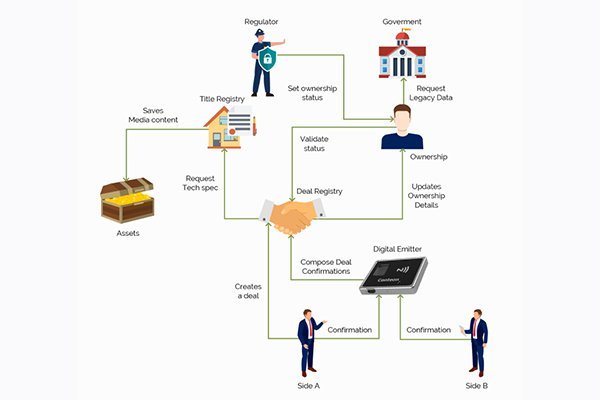
This sponsored spotlight episode features Anton Glotser, the Founder of DelNorte, the blockchain FinTech product company that is revolutionizing real estate by developing hardware-based title and property ownership, management transaction, and endorsement protocols. They link government-verified proof of ownership with private commerce to unlock the true value of land and provide a secure way to invest, transact, and manage resources, and track and take legal possession of real assets.
Anton has founded several successful startups, real estate, online sales, marketing, mortgages, and technology including Andean Brewing Company, the only craft beer sold in New York City’s LaGuardia Airport, and Texas Oil & Gas Management. He also co-produced several commercially successful and award-winning feature films. Anton has spent the last couple of years building DelNorte and educating private sector and government leaders worldwide about its capabilities. Now, he is here with us to do the same for the show and our community as well.
—
Anton**, welcome to the program. **
It is nice to meet you.
We like to start at the beginning with our guests and elevate the origin story for our audience. What is the DelNorte origin story?
It started back in 2017, about the time when crypto started pumping in the public space and people started talking about it on the news. One of my friends and business partners from films got in touch with me and said, “We should look into this crypto thing. Maybe we can make some money there.” Before that, I had no idea what Ethereum or Bitcoin was. I did meet somebody in 2015 who told me to buy Ethereum. Back then, it was difficult to buy it. You had to jump through a bunch of hoops. It cost pennies and I did not buy it, but I should have jumped through those hoops and at least learned them.
At that same time, I was dating a girl whose family happened to be in the government of Honduras. Her father was a congressman and a minister of budget and planning for that country. I had a real estate background and I have worked in real estate since 2005 for myself as well as for several large companies, I worked in their acquisitions department.
One of the things I had to do was to put together $100 million deals. The biggest challenge in those deals internationally was to figure out who owns the property because there is no title insurance outside of the United States and parts of Europe in places like India or Mexico. If you look at different government departments’ core deeds because there is more than one, they would have the same document and land but different owners. We would then be like, “We cannot buy this.”
When I started going to Honduras and this was back when CryptoKitties and CryptoPunks got on the scene, I said, “You can encode real estate information into the NFTs.” I started with that idea. It took probably the first two years to educate the local politicians that what I am building is not Bitcoin and it was not a scam, but once I overcame that hurdle, we hit the pandemic. In some ways, that expedited the process.
It normally took a decade for the people to say the world was moving through touchless. You were doing everything on your phone. Everything was paperless, but that one year was like a decade in education because everybody could not leave their home. You could not go and sign a document even when people were trying to do deals. I was doing a 1031 exchange myself that was interrupted because of the pandemic. It is when you change one real estate property for another in the US. Everybody was unprepared.
Something that could have taken months took years because they did not have this touchless communication. Afterward in 2001 when things opened back up and the government got back on track, they were like, “Maybe this will give you a shot.” We were already bankrupt. It could not have gotten any worse. I then got my first contract to tokenize the entire agricultural industry of Honduras.
At that point, I already had three iterations of the company. By that, I mean, my initial partners thought it took too long so they quit. I created another company with new partners. They waited for a year and thought it took too long so they also quit. I then created a third company with new partners and they held out a month before I got the contract.
I did have a friend who was in tech in Ukraine. He was like, “I know crypto. I will help you.” He and I put together the technology app I got after the contract. We got it off the ground, which is the iteration of the company that I have now. Before, the company had different names as well, but in this one, he and I became partners as well as my family and other associates in Honduras.
We became the majority owners because we did all the work for five years, and then this 2022, we also got a contract in El Salvador to tokenize a part of that country because, by the time we got that contract, I already raised money. We had a lot of things to show for it. We were able to throw a big event that was televised and made a lot of El Salvadorian and Central American publicity that we are the first company that is doing it. Ironically, El Salvador made Bitcoin and all crypto legal. You can go onto any techs and exchange Bitcoin through any other coin without anybody knowing who you are or what you are doing. One coin becoming legal means all of them are legal so they gave it a shot.
That contract was a local one but there is something that a lot of these countries have which I noticed early on back in 2018 when we started talking to people in congress and researched laws. It turns out that because a lot of the Latin American countries mostly speak Spanish, they plagiarize each other as laws. By plagiarizing, they copied them.
They just change the name from Mexico to Honduras, which I think is a good thing. They have the same language and very similar cultures. At least 90% of the laws are the same throughout and they have the same problems because of that as well. It is quite easy to copy and paste the project from one place to another. Moreover, even when you start small, they have legislation on books that mandates the government to adopt whatever works. That is the simplest way I can put it.
Blockchain Based Property Titles: It took two years to educate the local politicians that what we’re building is not Bitcoin, and it’s not a scam.
If there is a new project for water, agriculture, or even technology, they have to go with the cheapest and have to at least try to implement them nationwide after the pilot program works on a local level as long as you put your local government’s obligations, etc. Before, I was trying to go to the whole country, but I realized that I do not have to. I can go for the small deals, which are easier to get. By that, I can get the whole country anyways. I believe that before the end of 2022, we will be at least in five countries in Latin America, pretty much every country in Central America, and most of South America at this point. We are talking to all of those governments.
This is a big deal. As we have talked through these episodes and laypeople who are not deep into crypto and they say, “NFT? What are these JPEGs and all this stuff?” This is the example that I always give them when I say this is here to stay. It is specifically exciting when you think about something like how cell phone technology took over Africa and developing countries and how people could leapfrog from not having computers at all to all of a sudden having access to the world’s information. They did not need to have that infrastructure because it was wireless.
**This is interesting with what you are doing in these Latin American countries. There is an infrastructure that even though they do not have the infrastructure is an infrastructure that is online and on a ledger that could be imported. You are patient. You are the one that is doing it. It is incredible. Let’s dive deep into the details here. **
As I said in the intro, link government-verified proof of ownership with private commerce, unlock the true value of the land, provide a secure way to invest, transact, track, take legal action, and possession of real assets. That is a lot of different facets. Is it that these are natural outcroppings of the fact that you have attached NFTs? How much of these details require a lot of extension on your part of how things work with DelNorte?
I will explain to you why all those facets that you mentioned are in there. The number one wealth creator historically all over the world is real estate, whether you were a king or a peasant. Anytime throughout history, land equals wealth. That is hands down what is true since people started doing agriculture. One of the biggest reasons the developing world is still developing and is not already developed is because they do not have clarity of ownership. People cannot often prove that they own what they own, and because they cannot prove that they own it, they cannot finance it.
When they do finance, the deals that they are getting are horrible compared to what we are getting here in America or in Europe, but certainly in Europe because, in Europe, you can go to Germany and buy a million-dollar apartment in Berlin and get a loan for 50 years at 1/2 of 1% interest rate. You are paying $100 for a million-dollar loan a month for the next 600 months.
You cannot get those kinds of deals in Africa, Latin America, India, or Southeast Asia. Over there in Latin America, you get a 15% loan for 50% of the price. Also, they usually require you to own something previously so they can take the house that you own because the rates are so crazy and the other house that you put up so you cannot get ahead.
I heard plenty of stories in Latin America too of people having a property, but if they have another property somewhere else that they live on and their neighbors decide, “We like that next-door neighbor’s property.” They are not around that much so they can squat on the land and then it becomes very difficult to claim what you own. It sounds like this is an incredible solution for things like that.
The raw ambition of this vision is what has impressed me. I should let our audience know that we are exploring some strategic partnership with DelNorte because we think what these guys are doing is exciting. We will be hanging out together in Davos and that will be a lot of fun. One of the things that are so important to us is having a clear set of core values and ethos for how you do business because there are a lot of ways to make money in the world, and certainly, in Web 3.0, the possibilities are unlimited. Having that foundation for how you do business is important to us. I know you focus on four pillars of strength. I want to learn more about them and why they are so meaningful to you.
I do not want to say that we are not trying to make money here because we certainly are, but we also understand that in order to build a company and a great product, it takes time and effort. If I just wanted to make a quick buck, I could have done that years ago when it was the crypto craze and people were making white papers that have nothing on them, no backends, got the millions of dollars, and then disappear.
There is a company that you may have heard of called Factum. They raised quite a bit of money in the tens of millions. From the news, it said they were going to sign an MOU with the government of Honduras. They never signed an MOU. I know the guy who was supposed to sign. He went to Washington, got cold feet, and went home. He had a free meal and a free hotel.
I had my MOU signed by the vice president of that country three months into my visiting that country. I did not go public with that because I did not think that was enough. I took the time to get an actual contract. I can show you a dozen MOUs with Coldwell Banker of Central America and a bunch of other public and private entities. To me, while they are very important and certainly investors like those things, they are not contractually obligatory deals.
That is true, but I will say getting any kind of MOU from a governmental entity regardless of contractual obligations is still pretty impressive. It symbolically means a lot in terms of the intent of both parties, right?
Yes, I agree.
Blockchain Based Property Titles: Once we can prove that you own something, we can then track the origin of production.
Backing up, what are the pillars that are foundational to how you run your company and the culture that you are creating?
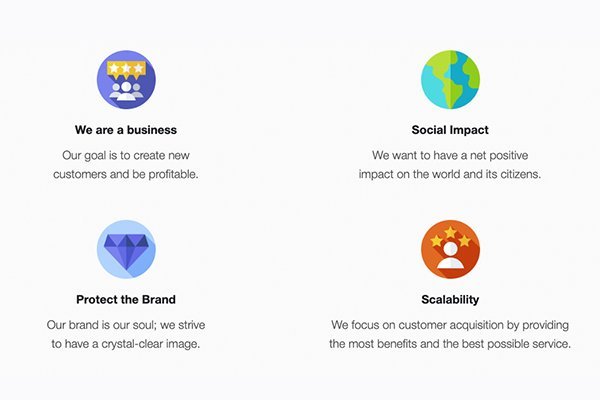
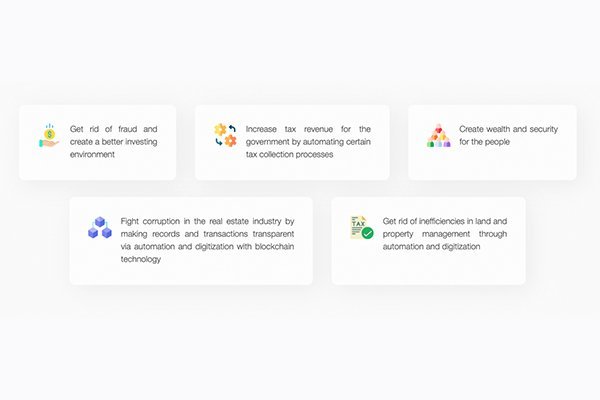
First and foremost, we are a business. Our goal is to create wealth both for the people who use our products and people who invest in our products, and that is our investors and our clients. Our slogan is to create wealth and security for the people, and if we can provide that, that also covers our second pillar, which is our brand and protecting the brand. Our brand is very important because we want to be, one day in the future, as big as Google or Microsoft, or any of the other five tech giants.
The third pillar that we are focused on is ethics. In this case, we covered it pretty well because by giving clarity of title to people, we are not just focused on the investors, which is what a lot of these other allegedly competitors of ours are. They are NFT-ing some property because they want to crowdfund the deal, but the reality is that most of the world is not investors. They are just regular people that might own a farm or a home. They are not looking for crowdfunding. They are looking to prove that they own what they own or they live where they are supposed to be living.
Those are regular people that we are going after. Our business model is more like a Walmart, which is huge volumes with very low margins. Because the volumes are so big and how we structure our deal effectively become irreplaceable in those people’s lives, we believe we will be creating a lot of wealth for those communities that we are tokenizing.
We are having this show on a day when the markets in the US have taken a big tumble. These simple concepts of creating wealth and sustainable economic value, which is going to be a conversation in Davos as well are not small topics and not to be taken lightly. Every aspect of our society is very fragile. It is having these types of strong pillars that create possibilities for more stability throughout the world.
With our product, we cover directly 11 of the 17 sustainable development goals, which is like the United Nation goals. Indirectly, we cover all of them because what we are trying to solve is the root cause of wealth creation and also wealth destruction, which is ownership. If you can own something, then you can start building wealth. If you cannot own something, then you cannot start building wealth. It is that simple.
Whereas a lot of the businesses focus on a specific area, we are trying to cover the area from which everything grows. If we are successful there, and I hope and believe we will be, we will be indirectly impacting even simple things like wildlife preservation and preservation of nature and land. When you know that you own that land that may be adjacent to that forest or a coral reef, you will be more likely incentivized to preserve it because you want to live next to something that is valuable and you cherish.
As a business, the goal is to create wealth for consumers and investors. Click To Tweet
If you know that in your particular country or area you can be kicked off that land at any time at the whim of some politician, then you are not going to care as much about it because there is no long-term incentive to preserve whether it is a historical building or some forest. It is that simple. We are not in the land preservation management business, but if you create the right incentives for the people, it solves a lot of the problems.
The incentive is the underpinning of any great economic system, either micro or macro. Aligned incentives help a ton. You talked a lot about geographic expansion. It is a major part of your growth path. What are your overarching growth goals beyond just physical location and how do you define those?
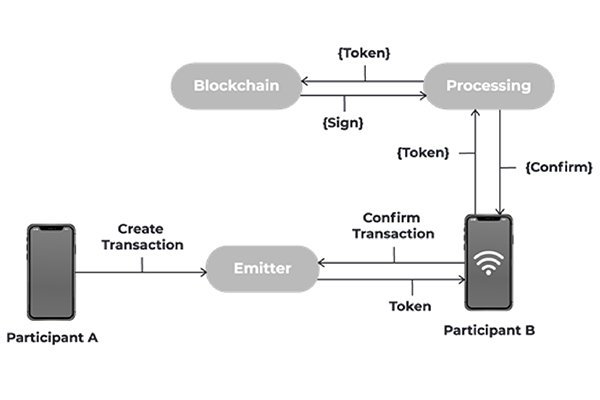
Our business growth goal is when we can acclimate the people to use our platform and our service and get them to trust us with their land and their house. We already built a payment infrastructure that is able to process crypto and fiat transactions simultaneously within the same system. We have a patent-pending hardware-software solution. It is a hybrid solution. I do not want to call it Web 3.0 because I do not think it is exactly that. It is more of a hybrid solution that uses existing technology and laws. Once we can prove that you own something, we can then track the origin of the production.
We are not the ones proving it. It is the government that is validating the ownership. When you say, “I own this farm and I grow a ton of coffee on this farm,” the government validates that you do own that farm. You can input all the data for the coffee, like altitude, moisture, content, etc. When you say, “I sell this coffee to this company that buys coffee.” When they now pay me, we can track the payment. It is validated by a third party. Now, you have this entire infrastructure with supply chain management already built into it and the value of both your land and the asset that you have produced on that land is expanded.
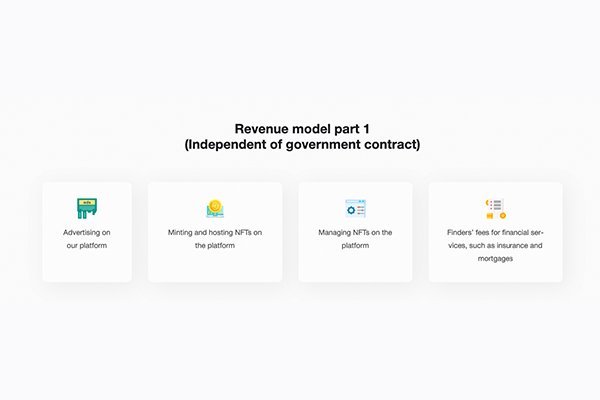
You can then pay that to the bank. You can also sell it to the consumer for more money because you can clearly show its origin and prove this was organic. You can say, “This was grown with XYZ fertilizer. I used this tractor to plow it.” All of that data already exists. People already have all this information. They are already using it. It is just not connected to anything, or sometimes it is, but that supply chain is proprietary information of some company. We are giving them effectively an open-source platform where you can plug in all this data and all these other supply chains. They validate each other through third-party validation. You then have a whole ecosystem. We collect a small fee for all of that.
We appreciate that.
It feels like that very much when it reveals.
Yes.
Thank you very much for having us.
Important Links
-
Jeannine Penn – Twitter
-
Living Tree – Twitter
-
@KindredHeartsIO – Twitter
-
@LopinEugene – Twitter
-
Spotify – Edge of NFT
-
iTunes – Edge of NFT
About Anton Glotser
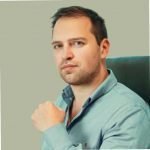
Since his youth, Anton Glotser has been an entrepreneur, across different regions. His unique vision and networking skills have contributed to his success today, he leads Del Norte by applying years of experience in overcoming hard lessons.As the CEO and founder of Delnorte Holdings inc., Mr. Glotser directs all divisions across multiple company disciplines. This ability to unify goals and people to work toward a bigger overarching success was built over the last two decades.
The idea for Delnorte ignited as far back as 2005 when Mr. Glotser started in Real Estate, working on multi-million dollar commercial and residential development and acquisition. He also held two executive-level roles at fortune 500 real estate development firms and invested heavily in mortgage notes, oil & gas, technology, film & tv production and cryptocurrency.
The first iteration of Delnorte began in 2017, formalized in 2019. Since the official launch, Mr. Glotser has developed strong networks in Latin America and the Caribbean. Throughout his travels he has acquired extensive experience working with parastatals and government institutions, to elevate their programme for digital transformation. One of the flagship contracts that Delnorte holds is with Honduras. The nationwide contract aims to digitize commercial and residential property and recognize NFT as a valid instrument to create disaster modeling software.
Due to my business background, I occasionally consult private investors and companies on investment strategies in mortgage notes, oil & gas, technology, film & tv production and cryptocurrency. I also act as a political & business liaison for several governments and companies, right now mostly in Latin America, Caribbean and Eastern Europe.