Top Podcasts
Anthony Georgiades From Pastel, The One-Stop-Shop For Creating, Collecting And Building NFTs To Stand The Test Of Time
Anthony Georgiades and his team from Pastel want to provide safe, long-term distributed storage, not only for NFTs, but for the data they connect to. Their system chops stored data into blocks that can be copied and randomly distributed to every single supernode on the network itself. Thus, ensuring that not only ownership is immutable but the digital items that are owned will also last indefinitely. Join your hosts Jeff Kelley, Eathan Janney, and Josh Kriger as they speak to the COO Anthony about this system as well as his insights on the NFT marketplace. Learn how Pastel is trying to solve the underlying problems in the NFT marketplace. Also, learn the importance of strategic partnerships and how they can help make NFTs stand the test of time.
—
Listen to the podcast here
Anthony Georgiades From Pastel, The One-Stop-Shop For Creating, Collecting And Building NFTs To Stand The Test Of Time
I’m Anthony Georgiades from Pastel, a technology platform that provides a better world for NFT creators, collectors, and builders through innovative NFT protocol standards like our new duplicate detection protocol, as well as our permanent storage system. Enjoy this awesome episode with my good friends Eathan, Jeff, and Josh. Thanks.
—
This is the show that brings you the top 1% of NFTs now and what will stand the test of time. We explore the nuts and bolts and the business side and also the human element of how NFTs are changing the way we interact with the things we love. This show is for the dreamers, disruptors, and doers who are pumped about this ecosystem and driving where it goes next.
—
**This sponsored spotlight episode features Anthony Georgiades, Cofounder of Pastel, which aims to be the world’s most advanced, secure, and decentralized blockchain for NFTs and to revolutionize how creators and collectors interact in a peer-to-peer banner without the high fees or intermediaries that currently impede the physical world and competitive platforms. **
In addition to his duties as Cofounder, Anthony is a general partner at Innovating Capital, a technology fund focused on disruptive companies and digital assets that have incubated Pastel Networks since day one. Anthony previously spent time on the investment team at First Round Capital and on the operations teams of various startups. He studied Finance and Management and Computer Science at the University of Pennsylvania’s Wharton and Engineering Schools. Anthony, thank you for joining us.
Thanks for having me. I’m excited to be here.
It’s so great to have you here and I will throw in robotics, too, because I saw that on your LinkedIn. I noticed that it wasn’t in your profile that you guys share, so that’s pretty cool.
You’ve got to be cool if the robotics gets left off because there’s so much other good stuff there.
Robotics was interesting but I wouldn’t classify myself as a roboticist by any means given that there’s so much talent and people way smarter than me in this space. It was cool to study and immerse myself in computer vision and obviously, a lot of emerging tech that’s become a critical part of Pastel.
It would be cool if you were a roboticist botanist. That would be fun.
Anthony, on your website, it says that your goal is to ensure that even in 100 years, the world does not lose access to a single one of NFTs entrusted to the Pastel Network. I love the clarity of that statement. How did such a bold declaration and a project like Pastel come to be?
In short, our Founder, Jeff, back in 2018, which has only been a few years but in the crypto world that’s 100, had a vision and the wherewithal to see where the path of NFT was going. We had projects like, Counterparty and Colored Coins, CryptoKitties that were coming to market and they were prevalent with a number of different underlying inherent problems, a lot of which are still persistent.
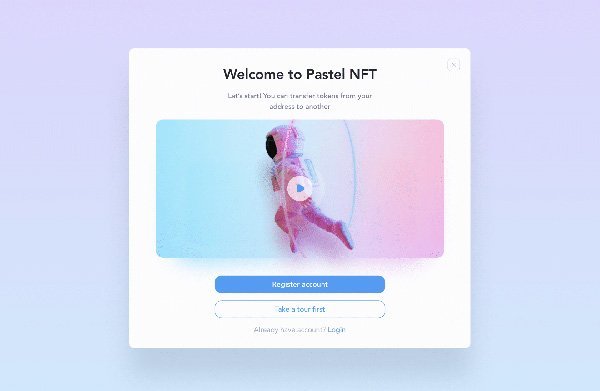
Flexible Ticketing System: The idea of being able to have a permanent decentralized storage solution for both the data and intrinsic metadata could basically stand the test of time.
Storage was one of those huge items. The idea of being able to have a permanent, decentralized storage solution for both the data and intrinsic metadata itself of underlying NFTs that could stand the test of time in a fully decentralized fashion. Also, not relying on an external dependency, like IPFS pinning, not reliant on a hyperlink that points to some centralized server.
We’ve seen projects that have been susceptible to rug pulling in that respect as well. That’s one of the core aspects of the platform itself. Pastel was always meant, at its core, to be this Layer-1 blockchain that became the standard for various protocols as it pertains to NFT, specifically one of which being our storage layer itself.
It’s so interesting. We had this conversation on the show that not all NFTs are created equal. People don’t realize that. They go to OpenSea, hit buy, and they think they have an NFT, but what you guys have done is you’ve figured out that there’s a lot of inherent challenges and nuances to building a network that supports NFTs that can last. Can you elaborate a little bit more on that?
Yes. When you buy a smart contract-based NFT, you’re acquiring a token ID and effectively a hyperlink that will point to where that actual metadata is stored and that could be a centralized server. That could be reliant upon IPFS pinning and things like that. For us, it was important to have both the actual NFT itself and the underlying data that it represented to be tightly coupled until we built out a sophisticated ticketing system.
Also, an intrinsic storage layer on the network itself to allow for such. In the storage layer, you can think about it as follows, the best analogy is, you upload an NFT to the platform itself. We take the actual data, we chop it up into a bunch of little blocks, we copy those blocks, and we randomly distribute it to every single supernode on the network itself.
Even if 70%, 80%, 90% of the nodes randomly went down, you could still recover the actual data from the actual remaining nodes on the network. To us, it was an important problem to solve. Since being founded in 2018, it’s been years in the making to develop the system. It’s become a protocol standard as well so it’s exciting to see us when we’re taking this out to market. The number of Layer-1 platforms, existing NFT marketplaces, commercial enterprises that are excited to partner with us, work with us, and leverage some of these protocols such as the storage layer.
I can appreciate that. As we say in our intro, we’re here about standing the test of time as well with the projects we explore so we can resonate with that long-term vision you guys have. Can you talk our readers through the beta launch of the Pastel marketplace? What’s it all about?
To take a quick step back, Pastel Network, at its core, is a Layer-1 blockchain built on the intrinsic data integrity of the core NFTs themselves. For us, it was important to, beyond building out these protocols that other Layer-1s or other NFT marketplaces could leverage, but to also launch our marketplace directly on top of Pastel that would leverage all of our core functionalities. Initially, it was a proof of concept but over time, to solve some of the other intrinsic issues such as network congestion, high transaction fees, storage constraints, lack of proven authenticity, and whatnot.
Even beyond that, some of the frictions of user onboarding. Effectively, for us, it was quite critical to build a marketplace that was as easy as almost swiping a credit card for users to onboard. For us, the focus was always, on day one, having the most user-friendly, user-intuitive platform that would cater not necessarily just to crypto native users but any both existing and aspiring digital creator or collector in the world.
That’s so important. We talked about that over and over again here. The underlying technology is super important and revolutionary, but the folks who are going to help let this stuff stand the test of time are the ones that are going to bring it to the mainstream, the ones that are going to make it easy. Press a button, swipe a credit card, and even easier than that. It’s the future we’re looking at.
An important distinction here is that Pastel is not just an NFT marketplace. It’s a network and there’s a lot of different layers of functionality to Pastel that you’ve started to talk to us about. I’m still trying to understand it all because there’s a lot there. One thing that comes to mind is this Near-Duplicate NFT Detection. What’s that all about and why does that matter?
If you think about it, blockchain is an amazing piece of technology. For the first time, users, from a peer-to-peer fashion without any central intermediary, are middlemen that are pervasive in the traditional, contemporary art world, enabling users across the world to transfer digital collectibles, back and forth. With that, though, comes some intrinsic flaws.
I could take an existing NFT off of Solana, rip it, and trade it on any Ethereum-based platform. It’s the same NFT itself or the same actual data itself or I can even take that asset file, I can make an invisible change, crop, or change some of the coloring effects. If I’m reliant on some of the detection standards that we see now to see if the file is the same, which rely on something called a perceptual hash, the computer will think about that file as something different, because I’ve changed, cropped, or changed the pixel on it but from a human perspective, it’s the same exact file.
For us, it was, “How can we emulate how a human would view an NFT as being relatively rare from a computer standpoint?” We’ve developed the system and at its core, we take the NFT data, we go through a number of different deep learning methodologies to transform the pixel level data into a fingerprint.
That fingerprint is a 10,000 plus digit vector. We’re able to then take that fingerprint and assess it against every other fingerprint that exists in the underlying data set. That data set could be defined as all NFTs existing on Pastel, all NFTs existing in the broader ecosystem or metaverse, and even effectively on the broader internet. You can do a reverse image search on Google or whatever you might want to do.
From there, we effectively assign a relative rareness score from 0% to 100%. 100% being this is the first time this computer has seen this level of rareness. 0% being this is an outright duplicate of something else. We’ve obviously seen a lot of scams, outright fraud that’s become a little bit more pervasive in the ecosystem and whatnot. This was a problem that we saw coming. It’s exciting because this particular protocol, which stands on its own, can be leveraged in a number of existing marketplaces as well. For us, we have a lot of the tools and infrastructure. How do we best collaborate with the broader ecosystem and various aspects of the general NFT community?
One thing that fascinates me about this project is that you’ve chosen to base it on the Bitcoin codebase, which some people may find to be counter-intuitive, but I know that’s your secret sauce. Maybe you could talk a little bit more about why you chose Bitcoin codebase as the foundation and how that relates to your on-chain, distributed storage protocols.
Let’s take a quick step back. At the core C-note, as we call it, is effectively a fork of Zcash, which is Bitcoin was a trusted setup, and zk-SNARKs. That’s our core consensus layer. From there, we levered on top of it the concept of these supernodes, which require users to stake a certain amount of PSL and run a very high-powered server or client, which runs a lot of these deep learning methodologies, which has enough storage to help store these blocks that are referred to in the storage protocol.
Those are two core aspects of the system that worked together. Going back to the Bitcoin aspect, if you look back in time, there’s been a lot of research. Over the last couple of years, people have gone down the web three routes of smart contract design and things like that. Smart contracts have a lot of limitations from our perspective in the sense of, they’re good for general-purpose type applications in a world of decentralized finance. In particular, credit markets, even insurance, and lending products as well. For specific, feature-based applications like NFTs, we thought of a better way of a custom, highly flexible ticketing system that leverages the intrinsic UTXO model of Bitcoin. They’re leveraging something called Pay-to-Fake-Multisig.
Effectively, we’ve been able to design this ticketing system that’s intrinsic to the actual way that Bitcoin functions on its own. Each actual Bitcoin transaction or UTXO is transmitting this ticket-level data. You can almost think about the ticketing system as marrying smart contracts in some way but it enables us to bolt on additional features over time as well.
We can create a ticket for a new collection or a new series. We included a ticket for limiting, adding the four or the reserve price, or whatever it might be. Who knows where we’re going to be in a couple of years? Maybe we need a ticket for an NFT that pertains to an apartment building or something in the real estate sphere.
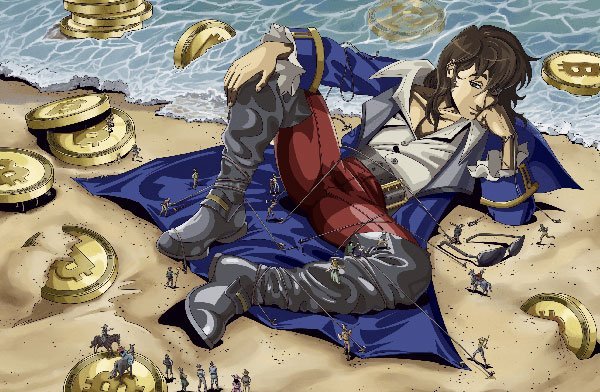
Flexible Ticketing System: It’s important to have both the actual NFT itself and the underlying data to be tightly coupled.
For us, it was a lot more of a flexible agile model over time but one other thing I’d like to add in terms of why Bitcoin, Zcash, more than anything, we wanted something that started off with a rock-solid, extremely secure foundation that was reliable, durable. We’ve seen some of the broader network congestion issues and some of the smart contract-based platforms. I’m a big fan of Solana. Full disclosure, I’m a big investor.
We’ve had some outages that have happened. These smart contract platforms are going to solve a lot of problems as it pertains to financial applications that require a drastic, high throughput, high transactions per second, where speed is critical, in the case of NFT applications where it might be less about transactions per second and velocity but more about the actual core functionality, durability, and security as it pertains to storage, proven authenticity.
It’s amazing stuff. Thank you for sharing the details of that. You mentioned partnerships as it’s related to the duplicate NFT detection feature. As you look at the broader blockchain ecosystem, what are some of the other ways that Pastel is thinking about partnering with other key Layer-2 players?
To take a quick step back, what I love about the way that these protocols have been designed is they’re lightweight and easy to integrate. It’s as easy as, “I’m minting an NFT on Rarible.” I make a function call to call it the Pastel New Duplicate Detection Protocol. That passes through the actual data and returns a JSON with a relative rareness score, which then gets submitted on the NFT. Same with the stories that I write. They all reference back to a hash that’s been signed by three supernodes on the network itself.
The way to integrate it is, it’s the level of interoperability where any layer two marketplaces or any application can leverage some of these specific protocols that I mentioned. You can launch your own entire on-chain marketplace directly on the Pastel Network. You can do anything. You can launch your own application or whatever it might be.
It’s been exciting to see a lot of the progress we’ve made with a few platforms that you guys have had on your show in the past which will be announced, as well as even commercial enterprises that are looking to launch on-chain marketplaces directly on Pastel given the very lightweight durable aspect to it. Also, Layer-1 blockchains that are launching their marketplaces that might not necessarily have some of the functionality that we’ve developed or what we prefer to leverage our storage layer, relative readiness checks, and things like that.
Is there any way we can pull out of you any of those partnership names or collaborations right now?
There are a couple that would be coming out. You’ve chatted with some of them in the past. I’ll keep you abreast as things become official and come to market.
**We narrowed it down a little bit. **
We only have 47 episodes. We’re in episode 48, so that doesn’t help too much.
We’ve got some big ballers out there, so that’s awesome. Congrats.
**We talked about some of these Layer-2 players you’re partnered with but what about potential commercial applications and partners? In that respect, can you give us any details on what you might foresee in the future or at present? **
There’s a couple of talent agencies that are looking to launch white label solutions that are either branded towards specific creators that are trying to tailor themselves towards that creator-specific audience or for their broader base of different creators and entertainers that they represent. On the flip side, there are a couple of players in the actual gaming and sports gambling space who are looking to launch NFT platforms. We’re working with their existing labs to help provide some of these resources that I alluded to, as well.
It’s exciting to see where the markets are going because it’s still early. From a lot of people’s perspectives, NFTs are digital collectibles. They mean a lot more than that. Anything that should be movable and stale will become an NFT in the future. That could be anything from a piece of property in the real estate markets to the credit markets all the way to gaming, even data itself. Think about data that’s being minted from an oil refinery at a certain point in time or even an IoT device.
These are certain applications that are not months or even a couple of years but several years away. It’s exciting to see a lot of the commercial applications that people are starting to explore. I’m surprised that the media has not necessarily garnered as much attention on some of those applications yet but being in the weeds and inner talk with a lot of these enterprises. There’s a lot of idea generation and a lot of innovation in the works.
One use case that I became aware of is these Gambling Apes and Monkeys that you can buy and be part of these decentralized casinos. As I think through that, I think of the challenges with this concept of dripping profits from a casino into someone’s wallet from NFT. There are security issues and a lot of things where your technology would help shore up the hatches.
On a side note, and not to go off on a tangent, but you mentioned Apes. One thing that I do love about what we’re seeing is if you look at the Bored Yacht Club, which to me represents an interesting aspect of the ecosystem. It’s ownership as membership. If I own one of these Apes, I get access to a specific community with other Ape owners. That gives me rights to certain airdrops, memorabilia. The impact that this can have on the broader realm of social media is quite insurmountable as well.
We’ll see where that goes as well but some of the existing social media players need to potentially keep an eye out or play catch up on this. Talking with some of these talent agencies, too, people have been a little bit more reactive than proactive. Whereas the community is moving so fast and evolving in certain ways that if you don’t get on board, you’re going to get left behind.
**We talked about how the focus right now has been on these gas wars, who want to pay $800 in gas that costs $500 in speed issues. It was crazy when Solana shut down for almost 24 hours, if not more. I’m not sure but it was shut down for a while. These are the conversations of the day. What do you think the conversations are going to be like tomorrow? What does the future of the NFT market look like? **
Let’s do it.
It’s got to be lemonade in a lemonade stand.
TQQQ ETF.
My Crypto-Keys. No question.
Do you want to tell us what those are?
Keep them safe.
Let me think about that.
I was at a Conference. That was fun.
Maybe some after parties. Good times.
I’m getting too old for that.
Josh, take it away.
Thanks for having me.
Important Links:
-
LinkedIn – Anthony Georgiades
-
YouTube – Edge of NFT
-
Twitter – Pastel Network
-
Telegram – Pastel Network
-
iTunes – Edge of NFT Podcast
-
@EdgeOfNFT – Twitter
About Anthony Georgiades

Anthony previously spent time on the investment team at First Round Capital and on the operations teams of various startups. He studied finance, management, and computer science at the University of Pennsylvania’s Wharton and Engineering schools.