Top Podcasts
Anthem Hayek Blanchard And Austin Davis Of HeraSoft On Security In NFT And Blockchain, Plus: WazirX NFT Marketplace, Chicago Physical NFT Gallery, Paragon NFT Fragmentation +
Security breaches are a major concern in many industries today, especially now that most work is done from a home-based setting. NFTs aren’t exempt from the concerns, and blockchain security is often under the microscope as well. In today’s episode, our hosts Eathan Janney, Jeff Kelley, and Josh Kriger are joined by Anthem Hayek Blanchard, the CEO of Hera Software Development and Anthem Gold, and Austin Davis, the Chief Revenue Officer of Hera Software Development. They discuss personal and network security and why it is very important in today’s fast-paced digital world. They also give us a look at HeraSoft’s Enterprise security solutions and how they work. Plus, we’re treated to a discussion on the present and future of NFTs and how they will impact our life and commerce well into the future.
—
Listen to the podcast here
Anthem Hayek Blanchard And Austin Davis Of HeraSoft On Security In NFT And Blockchain, Plus: WazirX NFT Marketplace, Chicago Physical NFT Gallery, Paragon NFT Fragmentation +
This episode features guests Anthem Hayek Blanchard and Austin Davis of Hera Software Development Incorporated. The zero-failure, ransomware-proof, enterprise software solutions company. It helps to solve the world’s toughest enterprise and cybersecurity finance, gamification, and logistical challenges. Anthem is Cofounder of HeraSoft serving in-house public blockchain software stack, Hercules, gold-blacked cryptocurrency company AnthemGold Inc., and Cofounder of precious metals dealer Anthem Vault Incorporated. He was raised by legendary goldbug and precious metals pioneer James U. Blanchard III, who helped restore American’s right to own gold and also founded Blanchard and Company. One of the world’s largest rare coin and bullion companies.
**His passion is empowering people to manage their crypto portfolios and understand the joys and pitfalls involved in the space. Austin is Chief Revenue Officer at HeraSoft. He is also Cofounder of CommunityElectricity.io and other tech ventures. He also began dabbling in the NFT space many years ago. Building prototypes and hosting community and educational events in LA related to new token standards, such as NFTs. He holds Advanced Degrees in Engineering, and Austin is also a strategic advisor to tech companies, such as CasperLabs, HeraSoft, and MeWe.com. He’s an avid entrepreneur with proven experience and passion for efficiency, driven tech, and renewable energy solutions to benefit all humanity. **
—
Great bios, guys. There’s much more that we had to trim, so the readers shall know that you have a lot of cool stuff going on and we’re happy to dive right into it.
Good to see you guys. Austin, it’s been a minute since we both have seen each other in LA. Where in the world do you live these days? Are you in LA when you’re not traveling to the Middle East?
I’m over the place. I’m bicoastal. I’m on the East Coast a lot these days with my family. I’ve got a little one. I’ll be in LA, so maybe we can see each other. I was in Dubai with Anthem. He’s over there still right now. I don’t know he’s been going on a world tour, but we both travel quite a bit.
Hello to our Dubai audience. You guys might get a kick out of the fact that at one point, we were number 38 in show and technology and Dubai. We hit the radar at some point. Maybe our audience will get excited about this episode as well.

NFT And Blockchain Security: As Bitcoin and cryptocurrency get more valuable, one repercussion is that the bounties you can extract from ransomware gets exponentially greater.
Within the first few weeks of our launch at that, so very exciting.We’ve talked about your friend’s background already, and there’s such an interesting story behind the evolution of HeraSoft and the work you’ve done. We understand it spun out of AnthemGold, which is the cryptocurrency that allows you to buy gold with blockchain technology. How did that transition happen? What was the inspiration?
I appreciate it again. Thank you very much, guys, for having me on the show. It’s a pleasure. It was a lot of luck. I was adopted into an amazing family that became pretty legendary in the gold business. My parents, one of their claims to fame was helping to push for the relegalization of gold ownership in the United States, which was illegal for 40 years and became relegalized again in 1975. My parents were responsible for founding and building the world’s largest gold coin and bar retailer named after my dad, James U. Blanchard III, and company. They sold it to GE Capital many years ago. That was my basis. My dad passed away in 1999. When I graduated college at Emory in Atlanta in ‘02, I looked at our estate’s portfolio and took a liking to a digital gold currency company called GoldMoney.com. It was a fledgling startup under $500,000 metal.I got to spend six years there and it was an awesome board secretary, director of marketing strategy, product, help with audits, accounting, and client service. It’s an awesome experience like a utility. That gave me some good experience as it turned out into cryptocurrency “public protocol.” My wife and I founded our precious metal company, Anthem Vault, years ago. We started developing in this public protocol technology that the Bitcoin founders created years ago. It’s been quite a long run playing in these tools. From there, we started building gold, stable coins, prototypes like Reuters credited us with building the world’s first gold token a few years ago as a marketing tool.
In 2017, we built an inventory log anchored into Bitcoin. That is 100% public protocol. We created our own public protocol layer called Hercules that serves like an index, a library, or a very basic operating system. We serve the solution to governments and companies. What it does is it provides them with 100% uptime ransomware proof and guaranteed data integrity to the level of Bitcoin. Obviously, with the news, JBS meatpacking, the world’s largest meat processor getting cyber hack colonial pipeline. It’s getting cyber hacked that our reserve is going. Now, the publicity is out there. The world knows about it. It’s impossible to hide these attacks anymore. It had been happening exponential rates for a couple of years and every day gets more so. As Bitcoin and cryptocurrency get more valuable, one of the repercussions is that the bounties that you can extract from ransomware and denial of servicing systems for example, gets exponentially greater. It’s something to understand.
Don’t broadcast where you live if you can avoid it. Your address is sacred. Click To Tweet
Security is quite an issue these days, especially with their ICS double ends of the spectrum. There’s a theme in our culture, especially since the early 2000s of being open and sharing. We’re all creating profiles and all these sites, Facebook, Instagram, YouTube, and all these different places. At the same time, not only is there more of a need for security but there’s also a different set of culture that is all about being more secure with things. It’s almost even more difficult these days. In general, outside of the specific rounds that you deal in, any thoughts on how an individual or their business as they’re growing their business, how they might manage their security?
I’ve got some basic tips for that I still correct people all the time even people that have been in this industry for many years. Never use your real cell phone number, especially not on your email signature. A lot of people still have their actual cell phone number and email signature. You might have multiple cell phones in that one. You don’t have any attachments to any real email accounts or bank accounts or anything like that, but most people do. The easiest way to your wallet, whether it’s a bank account or a crypto wallet, is through your phone number. SIM swap is a huge problem. A mutual friend of ours, Michael Turpin has a notorious case with AT&T for, I believe, $200 million. He’s selling them. I’m not sure if that closed or not yet, but at any rate, it’s a big problem in the industry.
Don’t broadcast where you live. Your address is sacred. You never want people to know where you live and if you can avoid it. Some people live in the same place they work and they have meetings there. That’s unavoidable. Basic things like that. Use different email accounts for everything. Don’t use the same password for anything. I know that’s hard, but there are ways to manage it. There are platforms that help you manage your passwords if you trust them but some of those have even been breached. The best way would be to come up with your own password system and have different passwords for everything and save storage of those passwords offline.
Austin, that’s great advice and putting that in the context of NFTs. We want you to have in the show because security is not a sexy topic when it comes to NFTs. Everyone wants to talk about the cool stuff that NFTs can do, but the reality is there are real security issues here that both consumers need to address and enterprises that are building this cool stuff with NFTs. Any addendum you would add to the basic set of advice? You’ve got NFTs that are in closed systems like NBA Top Shot, where what you shared is very relevant. What about NFTs that live in the open space that someone has in their MetaMask wallet? Any extra precautions that you guys think of when you think of NFTs?
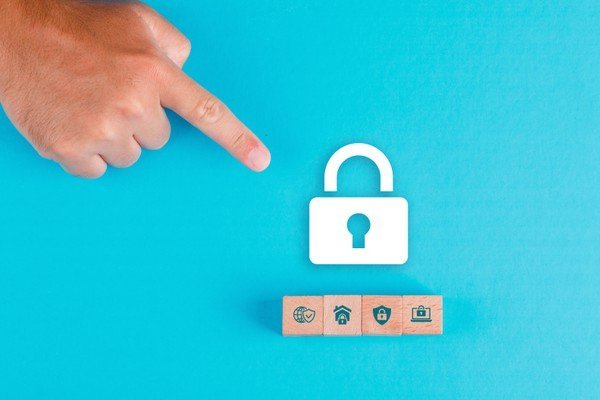
NFT And Blockchain Security: The best way to manage your passwords would be to come up with your own system and have different passwords for everything and save those passwords offline.
Specifically, the MetaMask. How safe is your computer like basic way if someone can get into your computer? Potentially, they can get into your MetaMask wallet and transfer that in NFT out. MetaMask and webtrees systems have been breached as well in the past. They’re not foolproof. They’re a lot more secure than other things, but they’re not 100% foolproof, especially in this industry where you have people reviewing code all day long looking for these loopholes and tanking projects or accounts and draining things. Luckily, there are funds to replenish the coffers sometimes like with finance. They’re notorious for replenishing when a project gets hacked and drained if it’s in their ecosystem.
I would say be as cautious as possible with your computer, your phone, and anything that you’re clicking through with those devices because you are the weakest link, even if there are no code flaws that people can hack or anything like that. People can certainly easily be hacked. It’s always you, that weakest link. Be cautious of what you click on and where you store these things. Don’t store them all in one place either. Traditional is very simple. Don’t put all your eggs in one basket. Don’t put all your NFTs in one MetaMask wallet. You can create 1,000 MetaMask wallets on different devices if you want.
This issue gets more complicated now that we look at the intersection of NFTs and defy. Every day, there’s a new project coming out and we’re pretty excited. We’ll have some guests on the show talking about collateralized loans against NFTs, both physical, digital assets, and fractional NFTs. The idea of loaning in NFT adds more fuel to the fire at the end of the day.
Loaning within NFT makes a lot of sense because NFTs can represent physical, tangible things, or digital things that have value. You could NFT your car to some degree. If you’re in titling, that is the one representation of your car then you want to protect that and make sure that no one is able to transfer the title of that asset to their name and take it from you. Even if they could prove that they own the title, they could potentially take you to court by, “They have my car. I have the title here. It was signed over to me,” once that becomes legal.
What about NFTs themselves as some security key? Something that we’ve talked about in a few of our episodes so far is the possibility of NFTs being a pass. A ticket to a show, into a club, or a small group that nobody else has access to or something like this. Is this something that security companies are taking a serious look at that NFTs are attached to like your password, credentials, or is that not even necessary?
Some of what you’ve mentioned to do like ID management with NFT is interesting. To do like clubs or VIP passes, you go to a sporting event, and if you do certain auctions, then you get an NFT for participating. It’s in the stadium organizers’ best interest because now you’re going to be interacting with more of their commercial ventures on the premises. Now you’re marketing the premises to other people off-premise. You’re creating a continuous reminder of yourself of the premise for you to return. There are some use cases there that we’re looking at for sporting events and things of that nature to realize that.That makes a lot of sense. Think about going to a traditional sporting event, they rip your ticket stub in half, make you keep your piece that says your seat number and everything else, and its memorabilia. Maybe it has a QR code. You scan it or it has an NFT embedded in it. That could all be done from your phone instead. Whatever they scan, they’re taking a piece of that and keeping it to show that it’s been redeemed and it can’t be redeemed again. Whether it’s one of the standards that has multiple tokens attached or it’s an NFT, you’re transferring it, and then it can’t be transferred again. You have the transaction history of it, which still has all your data, you still know where you’re sitting, and you still have to or the idea of the collector’s item. It can be embedded and will be and it’s a good way to move forward without wasting all the paper trail and everything else from the past.
In 2020 with the pandemic, we have a lot of new entrants into the space via NFTs. We have a lot of people at home working from their personal computers in some cases or on their personal networks. We have this opportunity it seems for security protocols to break down even as limited as they are right now. Have you guys seen this elevation of security issues in your experience in 2020?
Without a doubt, the world has the world’s largest meatpacker. JBS is being held publicly under ransom. The largest US Eastern pipeline for oil was held under ransom. The Federal reserve is down for hours. Some of the most protected and most critical infrastructures to commerce on the planet have been publicly compromised. Imagine how much has been compromised that we don’t hear about it unless we’re directly impacted by the incident. I look at it like hardware is losing the battle against software in terms of offense and defense because the attackers are compromising other people’s hardware. Whereas the defenders are having to use their hardware to defend in tandem with the software.
When you look at it from a game theory standpoint, it’s an impossible equation. Eventually, to cat and mouse game that there are so many IP traces you can do in physical form and people that can conduct it or outsmart some robot or something detective. It’s folly when you look at the cost analysis. We look at distributed networking and public protocols that provide distributed networks as being inevitable in terms of taking over all commerce, all markets, and all types of exchanges between goods and services. I don’t think it’s going to happen in 2021. I don’t think it’ll happen in the next five years. I hope it will happen in the next ten years, although I’m still skeptical.
The sooner that we can transition to public protocol commerce from Forex marketplaces of governments, and we have to do things out of fear because we can’t trust our records. Bitcoin’s invention gave us another option because now we have trusted record keeping. By linking commerce on a trusted record, keeping our decision tree changes from fear of the unknown of corruptible information to trustworthy information where good actors win. It’s super exciting to be alive and all of us get to be good actors in this massive chain, which is privileged.
You guys work across a number of different use cases, enterprise security, logistics, finance, and gaming. What makes it possible for you to help these different channels with IT security? What is it about your solution that applies to all these different channels? Secondarily, as these channels incorporate NFTs, how are you thinking about things similarly or differently than you’ve done in the past?
With us, it’s two-fold. One is that we take a stack approach. That’s something that I’ve starting to see a little bit, which I’m super excited about. We have been four years into this concept of stocking public protocols together and anchoring them into Bitcoin. Using that approach, you create 100% uptime, ransomware-proof, perfect data integrity to the strength of the Bitcoin solution. By having these software keys enveloping the cloud, it disincentivizes a denial of service attack economically. It distributes where you’re trying to attack the application. It separates out all the data with the application. All of these points are critical shortcomings, ultimately of centralized network architecture in a world where our access to terminals to access the internet is free.
Break it down in layman’s terms. What do stacking protocols mean to somebody that’s not in the IT security world?
Think of it like a cake or a recipe. We can think of a cake visual. We slice that cake open. We see the icing right around the cake. We maybe have 2, 5, or 3 layers. We have icing in between the layers like bricks in a house. The icing is like mortar right to the brick. That’s a layer. Think of each one of these layers as one of these public protocols like a Bitcoin, Ethereum for example, or our Hercules. Think of it like ingredients to a cake as long as Bitcoin is there and this index library protocol that we created Hercules is there, all the other public protocols or components that can be swapped. All of our software that we run, all the time in business commerce and what have you runs in different types of stacks like Assembly, Cobalt, Fortran, LAMP, Linux, Mingo, MEAN, whatever. There are all kinds. Tons of them.
All of them operate in a locked format because if you start plugging in playing any component of any of these central software stacks, you can lose all the information. You can have a mismatch of information. That’s why you have banks, for example, run software that’s 50 years old plus because they’re so afraid, all they’re going to do if they switch software is go to the latest and greatest corruptible software. What is their advantage to change over to simpler written code? It’s a disadvantage in the sense that it’s easier to hack. The simpler the code is, the more obscure the language of the code is, the harder it is and you have to understand it. You can see though this is a very poor way to do security of what we’re talking about here. It’s a very reactive approach and you’re constantly chasing everybody else. Anything in life, if you’re chasing, you’re burning energy without being a purpose, planning, and being methodical. You’re letting others take over the tempo rather than taking control of the tempo.
It seems that one of the things with NFTs that’s come to the surface for me a lot in a lot of our recent conversations is that a lot of that data that’s stored is stored in a central way. It’s not on the blockchain. It feels like that presents some serious risk for those companies leading the way like NBA Top Shot or others that are storing a massive amount of data. If you have video or audio, it’s hard to store that significant amount of data on chain for a reasonable price. How does that play into this? What do you guys think of this unique aspect of NFTs relative to some other crypto?

Do you remember which one?
You’re sure it wasn’t Boys II Men.
How about you, Austin?
I didn’t see that in your bio.
Austin, how about you?
Austin, what’s the most recent thing you sold?
Anthem, how about you?
There you go. That was a reasonable sell.
Anthem, what is your most prized possession?
How about you, Austin?
Curiosity.
**How about you, Austin?**Empathy.
It is indeed. Anthem, how about you?
Austin, what did you do before joining us?

**From somebody insecurity, it never ends. **

They were behind the Vee for us thing.
Important Links:
-
@AEDavis – Twitter
-
@AnthemHayek – Twitter
-
iTunes – Edge of NFT Podcast
About Anthem Hayek Blanchard

Co-Founder and CEO
About Austin Davis

Chief Revenue Officer
Expertise in building technology companies; engineering, consulting and education in digital media and blockchain technologies, energy and decarbonization; Bitcoin pioneer.
-
Founder of CommunityElectricity.io, Plouton Group Renewable Datacenter and Blockchain Beach and other technology ventures
-
Strategic advisor to top companies such as MeWe.com and CasperLabs