Top Podcasts
Alexander Salnikov Of Rarible, The Creator Centric Community Marketplace For NFTs, Plus: 5,000+ Attend NFT.nyc, Quentin Tarantino's Pulp Fiction NFTs, And More...
Rarible is a creator-centric, community-governed NFT issuance and marketplace platform that empowers users to buy, sell, or create digital art and collectibles secured within the blockchain. Today’s guest is its co-founder and Head of Product, Alex Salnikov. Alex chats with Jeff Kelley, Eathan Janney, and Josh Kriger on how they’re creating a space that will make NFT more sustainable and more accessible to more people. Easy buttons and lazy minting are ushering in the next generation of NFT users, and Rarible is a major part of this wave. Plus, Alex discusses an exciting partnership with Adobe that makes it easier for creators to create and verify ownership of NFTs. The group also touches upon what’s hot, including Quentin Tarantino’s Pulp Fiction NFTs and possible intel regarding Logan Paul and Gary Vee.
—
Listen to the podcast here
Alexander Salnikov Of Rarible, The Creator Centric Community Marketplace For NFTs, Plus: 5,000+ Attend NFT.nyc, Quentin Tarantino’s Pulp Fiction NFTs, And More…
This is Alexander Salnikov from Rarible, the easy button for buying, selling, and creating NFTs. I’m on the Edge of NFT. After hanging out with these guys, they are going on my curated list to find out about everything NFT. Stay tuned.
—
To all our NFT curious fans and friends, this episode is a great one. Find out about how easy buttons and lazy minting are ushering in the next billion people to NFTs.
Learn about a powerful NFT partnership that Rarible and Adobe have cooked up.
Get a quick but intense wrap-up on the NFT.NYC conference plus a little bit of intel that we happen to gather on-site involving none other than Logan Paul and Gary Vee. All this and much more on the edge of NFT.
—
This episode features Alexander Salnikov. He’s the Cofounder and Head of Product at Rarible, the creator-centric community governed NFT marketplace that empowers you to buy, sell or create art and collectibles secured within the blockchain. Alex has over a decade of technical experience and has cofounded multiple crypto startups and successfully building complex products that are focused on usability. Alex, welcome.
Thank you for having me.
It’s great to have you on. We’ve been watching Rarible and all the fun stuff you guys have been up to. You have been in the mix for a long time. You’ve been in and around the world of crypto and NFTs. We’re curious. What was your first exposure to NFTs?
It’s standard here. I heard about NFTs when the crypto boom. That’s probably the hardest part of the NFT market at the beginning. That made a ton of sense. You have NFTs that can breed and create more NFTs. It was like an on-chain live. There was this big downturn in the market when everyone was like, “This is fine.” We can do copies of CryptoKitties, but we don’t know what else we can do with NFT.
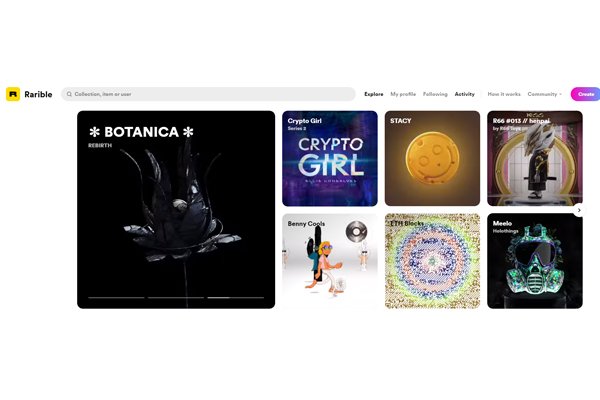
Rarible NFT: The NFT space should be permissionless.
**I’m rocking the gold CryptoKittie shirt from NFT.NYC. Shout out to CryptoKitties. **
It’s a great party, too. The best of derps of any 1 of the 16 parties we went to.
You’ve got to remember that you got to not say that the party was good because I was stuck in the hotel room publishing the show.
Alex, did you see the potential of NFTs in that first exposure to it? If not, when did that capture your interest?
At the first exposure when I saw it, that made sense. I was like, “This is interesting.” The clear moment when I saw the potential of NFTs was probably somewhere around the end of 2018 and the beginning of 2019 when I went to the space and resourced a lot of things. I suddenly realized that it was not crazy anymore. You don’t need to install MAZE and download 200 gigabytes of data to a computer to use Ethereum. There was a wallet like Fortnite where you can log in with an email and password. This is doable.
Probably, we are more or less ready for some consumer adoption. Being many years in the cryptocurrency market, there was one thing that always bumped into me. We onboarded a ton of people into crypto. Some of them were like, “I have a credit card. That works fine for me. Why do I need crypto?” The financial aspect for a lot of people is almost a little boring, like 2% APY, “I love to spend my money and enjoy it,” that’s what the consumer motto should be. That was the thing that clicked with NFTs. It’s fun.
Elaborate a little bit more on the founding story for Rarible, how you met your Cofounders and what the genesis of the platform was as it exists now?
We met with Alexei, who is the CEO of Rarible, in 2017. It was a crazy time and everyone was doing blockchain. We were doing some ERC20 platforms and helping people to create their own tokens. That is the 2017 thing, creating ERC20 tokens. Before meeting the team, I worked with our head of design for five years on all these crypto startups and boarded him into this space. He fell down the rabbit hole. Alexei was working with the CTO for a lot of years as well. That was the saturation point. When we joined forces, there were 2 people from one side and 2 people from another side. That felt like a powerful combination.
We sat together in the summer of 2019. We’re like, “What should we do?” Before that, I had a five-month sabbatical. I was doing nothing. I was full of energy, creativity and things like that. I was messaging all my friends, “We should do this.” That clicked with Alexei too. He wanted to do something else. That’s how we thought that we should create Rarible.
Coming from a creative background of branding, we felt that this space should be permissionless. Back then, there were two ways to create NFTs. The first one is for the CryptoKitties, “Let’s create a copy of some game, deploy that, and play that. We need developers for this.” The other was some crypto art platforms, “We needed to go there and wait for three months until they verified it.” I was like, “Why is it so? You shouldn’t ask anybody’s permission to create your NFT.” We came up with a simple thing, a name and description. You’re going to create buttons, connect your wallet and that’s it. That went viral.
We talked over again about how the leaders in the next decade in these realms of crypto and NFTs are making easy buttons. You said, “There’s the button.” It says, “Make my NFT,” which is great. I want to dive a little bit deeper into Rarible. I want to know more about the RARI community government’s token and its utility. Can you talk a little bit about that?
The creation tool went viral. We’ve got a ton of creators on board that issued their NFTs. We had the early works of Osinachi, all over the board. Osinachi is now in South East reach. That was a good start on the creator side. We quite soon understood that we’re struggling with liquidity and there is not much activity going on in the marketplace. We decided to put a little bit of fire on that flywheel and launch the governance token with the creative writing program. People are earning RARI Tokens for trading on the marketplace. The liquidity for the marketplace is the buyers and sellers. We created a mining program for Rarible rewarding buyers and sellers.
The idea is it’s a shared platform. It’s a common platform. It has to belong to its users. We’re distributing the governance rights over the platform to the users. In that sense, it’s more or less a standard governance token with some slight alterations in terms of what we learned that we need to iterate fast on the front end. You can decide on things with the governance every time when you’re in that business. The creators are less involved in the governance than DeFi Degens.
You shouldn’t ask anybody’s permission to create your NFT. Click To Tweet
That’s why the next generation, the next spiral of governance rights, is the protocol. In our latest product, we took off the whole infrastructure behind Rarible and created a Rarible protocol product out of that. This is done with open-source community governance straight with all the principles that we build projects in the blockchain.
We run across these DAOs quite a bit when we interview folks and governance issues. We’ve even spoken with folks that are a little bit more heavily into that space. It’s complicated, like the governance in the tangible world. Kudos for creating something that’s working and for iterating on it and making it better. That is interesting to learn about. We haven’t necessarily heard facts like that. It’s interesting that you say that the DeFi Degens are a little bit more involved in the governance than the artists themselves. You may not want it that way. Maybe there are ways to incentivize other things. It’s interesting to learn about that. Thank you for sharing that.
One of the interesting features you talked about is the zero-cost minting for NFTs. When we think about an easy button, that’s certainly part of it. You guys call it lazy minting. What is it that serves your overarching goals and underlying values in particular as it relates to environmental sustainability?
I love talking about easy buttons. Our core value and the mission of the whole project is to let everyone be able to create, trade and monetize digital items. This is all about digital items. We’re living in a digital-first world. We want everyone to be able to use those digital items and to own them directly. We all own a load of digital items, but most of them are in the custody of a bigger platform. Custody does that for you and you can’t opt-out of that.
Lazy minting is particularly related to the first part of that. That was the pain point. We onboard a lot of creators in the space. They come to the platform and say, “I have great art. Let me mint that.” You say, “You need some Eth to create your artwork.” They’re like, “Where do I get that?” “On the exchange.” They have your password and things like that. They’re like, “Let me do that tomorrow.” That’s the single most effective reason why we did this lazy minting.
Now, you can hop into the platform, create an item for free and list an item for free on the website. The gas prices will be only charged in the event of the sale happening. That’s all derived from the buyer. At least for the seller, that’s zero friction. They still need to set up their wallet, but you can at least do that by spending an hour in the evening. Eliminating the purchase of the Eth was the goal.
Mission accomplished.
Once someone mints using your zero-cost minting feature and its purchase, it can be traded on any platform. They’re not locked in. You’re enabling this unique feature but also open-sourcing the market dynamics after that, which is pretty cool.
Thank you for mentioning that. This is super important. You can create free NFTs with your backends in a decentralized manner, but that’s not the same. Lazy minting is when you create the real NFT but it doesn’t exist until it’s bought. When it’s bought, it turns into the same NFTs as everybody else, on-chain, fully yours, completely permissionless NFT that can be traded anywhere.
It’s meaningful, especially with the gas price as Ethereum continues to have all-time highs on a daily basis. Let’s take a step back. We were in New York. You’re your partner was there. You’re in Lisbon. A lot of partnership conversations are happening and have happened. You guys had an exciting one with Adobe focused on protecting NFT creators and tackling digital art theft. It’s Interesting to see Adobe position themselves in the space. I’m curious about that partnership, the problem that you feel is being solved here, and how this partnership can solve that problem.
Let’s try to break that down. We announced our partnership with Adobe. What Adobe does is it incorporates the crypto wallet into the software you create your art with. You login with your MetaMask to Photoshop and you sign the item that you created in Photoshop with your wallet. It allows us to understand in the marketplace that, “This was created by this wallet.” If that’s somebody else’s wallet and not the wallet of the person who sells that, that’s a bad sign.
The real reason why I’m excited about this partnership is that I hate the verification mark on Rarible. We started without it. That’s permissionless. You don’t need to ask permission. You can create anything. We had to implement that because we needed to highlight some more trusted people. While other platforms took the path that’s like, “We are verifying only cool artists.” A lot of artists had backlash about that. How can you decide who’s the cool artist?
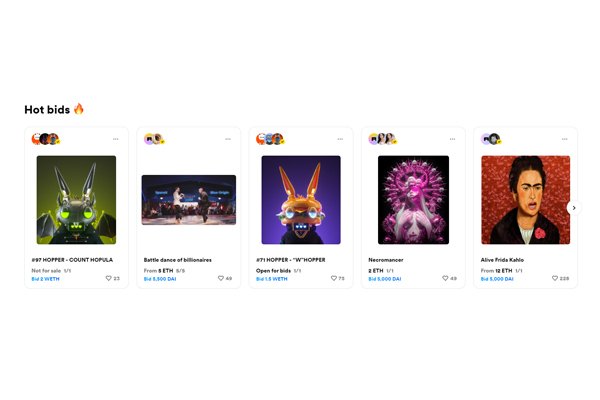
Rarible NFT: Everyone should be able to create, trade, and monetize digital items.
We took the path where we verified the identity. We verify that this item is yours and if you show that’s your identity, you’ve got the yellow checkmark. It’s not the symbol of any ranking or status. It’s to verify the identity. Still, that creates some impediments. You need to wait until they verify you and that takes 48 hours more or less.
We streamlined the process, but it shouldn’t be like that. You shouldn’t ask anyone to be in this space. With the Adobe partnership, we can verify that this is your wallet automatically and programmatically without any human interaction. This is the future. I want to eliminate any human interaction from this process.
**It’s interesting where things are going with being able to have verifiability and ownership of people’s creations. For me, as someone who’s been creative for many years, it’s almost a little bit difficult to get used to. I’m harkening back to the early 2000s where you could create something, put it on a blog post, and somebody says, “That’s a nice photo. I’m going to use that as my background.” You’d have to enlist a huge legal team to do anything about it when somebody is stealing your work. They could say, “That’s not even yours.” I find this fascinating. I love that Adobe is jumping in here too and taking the lead. **
I thought about PDF, editing and that whole situation for decades. Adobe realized this is their moment to shine if they join the crypto crew. Fundamentally, people can screenshot OCR process and content in Adobe all the time and reclaim it as their own. With this partnership, you guys are creating a future where ownership is clear. It’s a win for them and you. It makes a lot of sense.
Also, doing it in a way that is equitable where everything is verified versus forcing a class-based system where it’s the blue checkmarks. There’s something to that and far more aligned with the ethos of the NFT and crypto world, class-based systems, identifying the select few. That doesn’t feel aligned with our world.
There is a whole article about that called Credible Neutrality. It’s the design of the system that cannot discriminate by the fact that it’s created this way. If you have something written in code to check the owner, the system cannot discriminate against anyone because you see what it does.
Yellow checkmarks around the house.
**Let’s turn the conversation a little bit to NFT platforms. One thing that’s come up on our show over and over is that NFT platforms themselves may be as numerous as websites in the future. It’s a matter of how they cater to a certain audience, what bespoke products and services do they offer to users. There’s Rarible and you put in the same sentence with that OpenSea and these other platforms. **
There are all kinds of things that are popping up. Sometimes we have this idea of putting them against each other, especially within the media. Let’s get your opinion on it. What do you think of this idea of pitting platforms against each other? Who are you rooting for? Tell me how you think about this type of idea.
It works the same way in every business. There is some competition. The real thing that’s happening within NFTs is that they’re slowly taking over the digital world. We’re not yet in the situation where we need to compete across the existing NFT people. We need to help. If you want to have a decent market share, go and help the new sector of people to onboard into NFTs and do something meaningful. This is the motto for the next several years for the platform and businesses.
Everyone has a chance to create their own swim lane and start jumping into the pool. Related to that question is besides the features that we talked about, what are some of the key differentiators when people ask, “Why should I use Rarible instead of OpenSea?” Is there anything else? I’m looking at the website. It’s a different user experience.
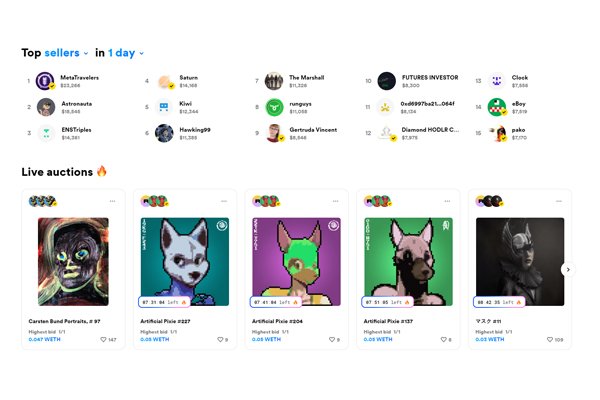
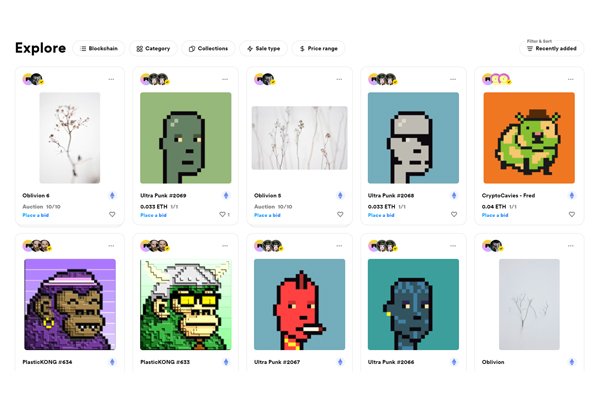
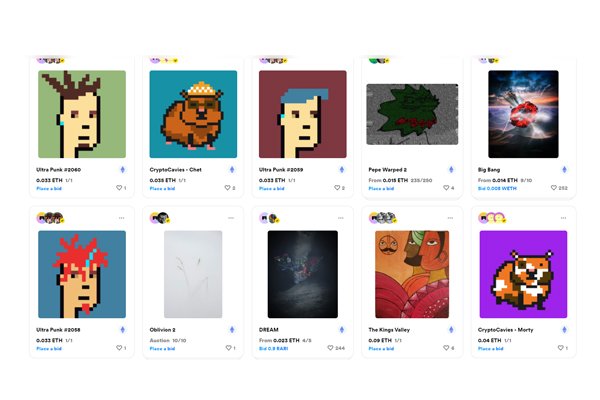
We are very much social and people-focused. You have this follow button on everybody’s profile. You have a well-designed profile. It almost feels like a social network in the sense that here are the individual creators that they want to buy from because of their story. It’s less transactional like, “I want to buy any floor price NFT.” They want to sell that for a higher price. It’s more cultural, more fun, more yellow, more social. You have the following feed that you can browse whatever this guy you followed dropped. This is the mechanic where we’re drifting.
We are very much focusing on the newcomers, people who just entered the space. The thing about them is you want to use visual language much more than text language when you talk to people. It’s much easier to understand when you intuitively click to the right angle of the website to find your profile. This is something that we are diving deep on.
Speaking of features being the product lead over there, I imagine there is a tremendous roadmap for Rarible. What can you tell us about what to expect here in the future?
I might share a couple of things. We are expecting the release of the mobile app. It’s already there on the app store. You can find it. It’s quiet there. Something louder is coming up. This is a big thing because we have 60% of our traffic from mobile, even on the website. Going more native on the platform is super useful. Also, we’re going multichain.
In the same way, in 2018 and 2019, there was a feeling that we were finally ready for some consumer adoption. I have a feeling, probably not me alone that we are ready for the next big wave of consumer adoption. Twitter, Discord and Reddit are building NFT stuff. Facebook mentioned NFT in the same article of their name change, “We’re changing the name to do NFTs.” We’re ready to onboard the next ten million people into NFTs. There is a survey that eleven million MetaMask users interacted with NFTs. They all generated all these buttons. We’re coming for 100 million users. It’s crazy.
**We live and breathe this stuff. It’s easy to forget that we’re early. I always like to say, “Later than some, but earlier than most.” That’s true here. It’s exciting times for Rarible overall. I cannot wait to experience the app. We’ll go down that, get in the mix there and keep an eye on what’s next. We’d like to talk a little bit about your perspective on some things. It’s a segment that we call Edge Quick Hitters. It’s a fun and quick way to get to know you a little better. We have ten questions and we usually look for short single-word or a few word responses, but we can expand if you get the urge. Are you ready to dive in, Alex? **
I am.
Let’s do it. Question number one, what is the first thing you remember ever purchasing in your life?
That would be a funny one. I bought a flash drive. I’ve bought some candies or something like that. I remember earning my first money somewhere and going and buying the flash drive because I needed it to carry on the information. My computer had 40 gigabytes of HDD data storage on it and that’s it. I need the flash drive.
**Around what age is this? **
It’s 2005 probably or something like that.
That’s how we learn it all. That’s our world.
No.
It’s in time for the show. Thank you so much.
That’s smart.
Let’s do it.
Lazy minting is when you create the real NFT but it doesn’t exist until it’s bought. Click To Tweet
Every day is amazing.
Important Links:
-
@Insider0X – Twitter
-
iTunes – Edge of NFT Podcast
-
@EdgeOfNFT – Twitter