Top Podcasts
Alastair & Seema Khinda Johnson Of Nuggets + James & Anjali Young of Collab.Land On Decentralized ID & Security, Plus: DevTeamSix Team, And More…
Digital identity wasn’t a big part of the conversation when the internet was invented. But now, it has become a central concern for users because of how personal data ends up being used by enterprises for monetization and other purposes. Innovators in the Web 3.0 space are trying to put the power back in the people’s hands by changing the way we look at digital identity and shaping the way it’s going to look like in the internet of the future. Joining our hosts in today’s show are two power couples who are leading an amazing collaboration in this space. Alastair Johnson and Seema Khinda Johnson of Nuggets and James Young and Anjali Young of Abridged, the makers of CollabLand, are tackling a foundational issue that’s going to affect everything that’s forthcoming in the world of Web 3.0. Tune in and learn more about digital identity, digital rights, and how the way our data moves around the internet will change forever, and for the better.
Plus, for our hot topic of the episode, we are joined by Bill Spata and Eric Andersen of DevTeamSix, who are in the thick of something that is going to be a game-changer in the play-to-earn space. Stay tuned for more!
—
Listen to the podcast here
Alastair & Seema Khinda Johnson Of Nuggets + James & Anjali Young of Collab.Land On Decentralized ID & Security, Plus: DevTeamSix Team, And More…
**This episode features Alastair Johnson and Seema Kinda Johnson of Nuggets plus James Young and Anjali Young of Collab.Land. Alastair is the Founder and CEO of Nuggets. He envisions a world in which individuals regain absolute power over their own data and profit from its value e day, both financially and through day-to-day convenience. Seema is Cofounder and COO at Nuggets and is on the Technical Advisory Committee of ID 2020. Before founding Nuggets, Seema headed up go-to-market for Skype and Microsoft. **
James Young is Cofounder and CEO of Abridged, makers of Collab.Land. He is a multi-time founder, developer, and crypto technologist. Anjali Young is Cofounder and CCO of Abridged. She is an attorney by education with a history as a member and leader in online communities. Nuggets is a self-sovereign decentralized identity super wallet that believes that personal information should be owned and controlled by the person. Collab.Land leverages the power of identity through cryptocurrency to create a social space unique to a specific network of humans. We have a packed episode. It’s exciting. Powerhouse teams, as well as quite a few guests. Welcome, everyone. It’s great to have you here.
We should take a moment to give Eathan a blue ribbon for that intro. Also, amazing job. Lots of words in there, lots of accolades for this amazing team.
There seems to be some trend going on, guys, with the show. This is not our first couple episode, but it is our first episode with two couples on the same show. We’ll have to do some study here of what result couples working in Web3 together creates in the world and get your thoughts on that, guys. Speaking of collaboration, we’re excited about the partnership between Nuggets and Collab.Land, and what you guys are building together. It would be helpful to give us some more depth on how this formed and developed and where you guys are now both independently with your respective project collaboration. Who wants to kick us off?
In terms of where Nuggets came from originally, it started from a problem where I had my card details taken and realized that our personal information is spread all over the internet without any privacy and security. It’s been breached constantly. We realized that digital identity, wherever user-owned and controlled their own data was key to a better way forward. That’s what set us on this journey. It was human problem-led from day one.
**It’s interesting to reflect upon. I don’t know all the details and you perhaps know quite a bit more of how much what we think of as privacy from the vendors we work with, banks and credit cards and stuff like that is not privacy. It’s them paying for the breaches of our privacy and not letting us know that it happened. **
**I’ve gotten maybe a dozen emails in a year that my data is on the dark web. I’m like, “What can I even do about that at this point?” The cat’s out of the bag. It’s challenging stuff. I appreciate your inspiration there. James, what about you all? **
I was going to add quickly onto that, James. It’s because these corporations that are holding your data are sharing your data. That’s it. When they’re sharing your data multiple ways across multiple platforms with multiple partners, then they’re not necessarily watching what every single other partner is doing. That’s why you end up with breaches.
I’d like to add something to that as well, because obviously, you probably know this already. When the internet was invented, no one thought through that identity layer. What’s ended up happening is we’ve got usernames and passwords, wallet IDs, email addresses and phone numbers. The big, massive problem with that is that you don’t know who’s behind all of this. It’s the backdrop of all of the data being held in these centralized silos. We’ve all heard the term honeypot of data. That’s not working. All our data is being compromised and being fished. It needs to be resolved on the privacy and security side.
**No pressure, guys. It’s a big thing to enter this territory and have the responsibility of all this information and yet still inspiring collaboration. It’s good to see you. I’m not sure I would take on that task. **
We’re trying to make our dent in the universe here. We founders are trying to make a difference and learn from previous mistakes so we don’t repeat them. When it comes to Collab.Land, when we first started, we started as DAO tooling. We can talk about Decentralized Autonomous Organizations maybe later. We want it to be able to vote. We had the sheer treasury on the blockchain. It was difficult to coordinate.
With Collab.Land, it was initially a hack to use these chat groups because that’s where people were already forming. We needed a way to know if these people that are in these chat rooms are part of the same DAO. The NFT craze took off. We’ve been embraced by NFT communities and we provide utility and community for them.
This is a wider problem that we want to be thoughtful about. We want to make sure that this time around, we can do it right. We know that we all live now blended lives. There’s no big difference between being online and offline and what the impact of that is moving forward. We have this second chance, this opportunity to get the internet out of beta, because now we have a better understanding of the impact that these breaches and what privacy needs.
James, to that point, it seems bonkers now that everyone else owned and controlled all of our data. All we want is for our personal information should be owned and controlled by the person. It’s great to have the technology, but also technologists and problem-solvers and phenomenal thinkers trying to solve for those problems, fundamental human rights around privacy. It’s good that we’re all mission and purpose-driven.
**Whenever I think of all these topics, I think of some of the interviews we’ve done with Brittany Kaiser. I changed my thinking about what it means to own your data and even your identity and who you are. Whatever’s inside the skin, that’s usually what I think of. Also, all these data points that are floating out there. Some that can be mine that I own, and nobody else gets to mess with. Some of it I might want to share. It’s something that is going to become a larger part of the collective consciousness about how our identity extends. I want to move on a little bit into how you all came together to collaborate in the identity space, Collab.Land, Nuggets. Let’s go to James. You look like you’re ready to roll. **
Thinking back now, we first got together through a mutual third party. We were thinking about ways to collaborate with this third party and we hit it off. When we were thinking about at Collab.Land, what it meant to have this community, we were thinking it more in terms of community identity. I’m newer in terms of being exposed to decentralized IDs and verifiable credentials. I learned a lot from the Nuggets team and try to understand how to be impactful here, because we need to approach this in a cautious way.
I gravitated to the Nuggets team and from a value alignment perspective, the emphasis on security on privacy, user sovereignty. It was the graciousness of Alastair and Seema opening up and teaching us at Collab.Land. On the Collab.Land side, we were more focused on the crypto Web3 space. There’s a whole universe and collection of knowledge when it comes to DIDs and V credits that I’m still falling through the rabbit hole. It’s this natural fit. It was good vibes all around since the beginning.
**What’s the essence of the collaboration? How are you working together? How does that function? **
Alastair, do you want to pick it up?
I can speak to that. As an individual in the physical realm, you have identity, but the best identity you can have when in the digital space on the internet is a digital identity. It was a point in time. We believe having a self-sovereign identity where you own and control is essential if you’re going to have any identity in that space. You don’t want any of the social brands with serious misdemeanors in the past, such as holding your data, selling it on, and passing it on. It needs to be self-sovereign. You need to be able to do it where you’re interacting with different services. You can’t be correlated from one point to the other. It’s important.
There are some points where you want to be the same identity from realm to realm, but there’s a lot of points where you might go into a gambling realm and don’t want to interact with the work realm, and you don’t want people tracking between itself. That might be one merchant. To purchase, it’s another merchant. Self-sovereign identity and DIDs and verifiable credentials, you can demonstrate reputation and prove from one area to another through cryptographic proof that can be done with zero knowledge principles. That is essential to move around and interact with these services and keep as much privacy and information. You don’t want to carry on dumping it around in little packages as we have done in the past.
That model we see is broken. We do believe that that self-sovereign principle is the best way, but you can take on board a reputation from one community and then move into another community. What we picked up was the problem that James and Anjali had with Collab.Land. They had all these people in the community doing great things. They may move over to a similar community, but not directly the same. They want to take our reputation, but real merit-based reputation. It was important to bring that along with them. That’s when we started talking about the opportunities and how we could work with self-sovereign identity principles and decentralized identities.
It feels like it’d be a better recipe for dating too if you know the background and history. “This didn’t work out, but at least they checked these boxes.” That’s been attempted. It hasn’t gone so well.
It’s funny that you say that because we have talked to some of the dating apps, because obviously, there’s a massive concern in the real world of some of the terrible things that can happen in that environment. It would be nice to have some safety and security. If you’re looking at different levels, it could be reputation and provenance in terms of NFT, but decentralizing the metaverse might be safe for brands and people going in there. If you’ve got your thirteen-year-old kid going into some environment, you want to know that he stood next to another thirteen-year-old kid and not someone saying that they are. At the same time, you don’t want to be spelling out privacy and names and real names if you don’t want to be issuing. These opportunities, zero-knowledge proofs, and search are excellent work in these environments. I don’t think there’s been an opportunity to have done this in the past with the technology that’s been available up until now.
We are coming where newer players in this space of V credits and decentralized identifiers. That’s because what sparked everyone’s imagination in these communities. People were able to join a Collab.Land community, be with other people that own the same token that they do. Now we’re sitting on this information pretty much the history of a crypto community from day one. We’re thinking, “How can we service these members? What can we do now to bring value to this new world that we’re living in altogether and for each individual person?” Collab.Land was like, “Maybe one way we can do this is to remove the gatekeepers of the past from reputation.”
Collab.Land itself can issue verifiable credentials, V creds, to each individual. Jeff was in this community from this time to this time. Eathan was in this community and he received this number of tips, or he had this role in this group for this time. We’re in a position to oversee what’s happening. We can give you the individual attestation from Collab.Land.
Now you have all these V creds where you can start building this crypto community, this crypto reputation, community reputation. Nuggets is there. That way, we can port that data to Nuggets and that can be taken anywhere they want. The way that actual interaction is going to happen is that Collab.Land will be the attestation for what you’ve done and how will you behave in these communities. They can be ported to Nuggets, which is going to be like a portable wallet that you can now move across wherever you want to go with this data.
There are many different layers to that. One of the things that comes to mind for me is that it’s like a big responsibility to try to think about and craft what inputs you’re leveraging to issue V creds and to determine digital value, digital credentials, digital identity. There’s a lot to that. How do you all think about that? It feels like a pretty immense responsibility.
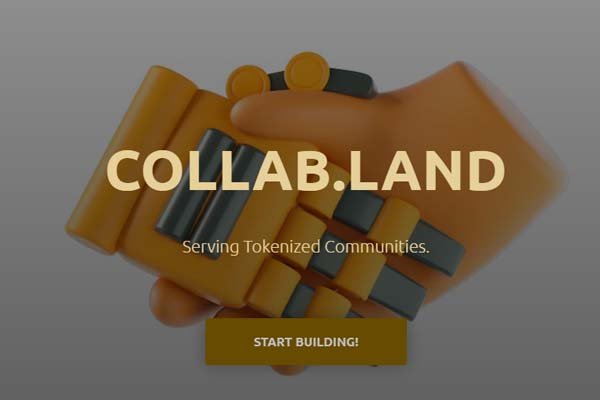
Digital Identity: These corporations that are holding your data are sharing your data. When they’re sharing your data multiple ways across multiple platforms with multiple partners, they’re not necessarily watching what every single other partner is doing. That’s why you end up with breaches.
If you take a step back and think about the problem you’re solving rather than going, “How do we tackle that piece of it?” We’ve been quite single-minded in what is the problem that we’re solving. We’re solving the problem around privacy, trust, safety, and security. If you think about that, and then you think about digital identity sitting at the heart of that, it becomes a lot easier to unpack.
Otherwise it’s a massively overwhelming, huge gargantuan task that feels unsurmountable. It does feel overwhelming. The way that we’ve picked this up is that we have been every single day, and this speaks to all of us as a team. We haven’t looked at the technology and go, “What can we do with this technology? What can we do with verifiable credentials or kudos or cred?”
We’ve gone, “What is the problem that we’re solving?” We’re trying to solve this one of moving that data ownership from the hands of enterprises, into the hands of individuals, but doing it in a way that makes sense in their everyday lives. What do we do every day? We log in, pay for things, and communicate with each other, but we want to make these things super easy for our end users to use so that they don’t need to worry about their privacy or security. It should be inherent in the products and services that we build. Because we’ve tackled it from that perspective, it becomes a lot easier for us to one pack. That’s my bit on it.
It’s important because what Seema is saying about ourselves in Nuggets and what I also see very much so in Collab.Land is that we’re people businesses. We’re bound working for people to get a better way for people. We’re not tech first. Yes, we may be using the latest technology to do it, but we’re doing that for other people to make it a better environment, to make the communities better, to make the trust in those communities better, to make everyone be able to move around more freely and more confidently as people. That’s what’s key. When we first met Anjali and James, we could see at their core that they believed in what they were doing and why they were doing it. It was people-led. It was humans. It wasn’t just tech. That was something that was important to us as well.
**That’s special. I want to expand on that a little bit. There are a lot of ways to make an impact in the world. Clearly, this is a shared passion among all of you. What’s been the community’s response? What’s been the types of feedback you’ve gotten and the stories you’ve heard from the community in terms of the impact that this project has made on their lives and for various projects in the space? We’d love to learn more about the impact that you guys are making. **
I can speak to that from what the challenges are for the communities right now and what need we’re trying to service. The biggest need is with scammers and imposters. Not being able to know who it is that you’re talking to, and if they’re the real Jeff Kelly, or if they’re the real Joshua or Eathan or Alastair or Seema. I need to be able to know. It’s not enough if that’s your username or whatever. Being able to show like, “These are the V creds that I have. I’ve been in this community for this long. The admin gave me kudos for this. I’ve been tipped these many times in the bank list style.”
Being able to now see your reputation, that’s cryptographic. It cannot be edited or changed. That’s reputation right there. I can verify who you are. That’s the biggest issue we have. That’s the number one issue we see with Collab.Land. It’s not necessarily what their feedback has been to this concept, but it’s been, what is the challenge that they’re facing? How can we help them with those challenges? This is a huge unlock when we think about crypto as money, but crypto as identity, it’s going to be just as big, if not bigger.
It’s interesting because when you talk about it from the crypto perspective, it’s trustless. We’re humans. The way I think about it is trust is like water. It shifts. The trust is no longer with the technology or with the platform providers, but trust has to exist somewhere. It shifts to us as individuals. It may take some time, maybe even a generation. It took our generation to understand email where kids don’t even email anymore. They’re on instant messenger. Right now, we’re learning to take responsibility for our identities online. What does that mean? It’s super empowering. I don’t even know if we’ve scratched the surface on what this unlocks, but we’ve had these babysitters, these platform providers who have monetized and used our identity.
Now we get this transfer of trust back to us as individuals. What does that mean? What does that unlock? You need that. When we started with Collab.Land, it was because I was in a DAO, but I didn’t know who walletzeroX123 was. I didn’t know how to connect with them or I didn’t know how to identify with them. When it comes to crypto, what identity and reputation does is it shines a light because we’re in this dark forest where we’re all moving forward and we don’t know what’s going on.
We don’t get to see each other, but now we have this light that shined on us. We can build those relationships online. It will map to our IRL or In Real Life identities, but it may even go beyond that. Like back in the day, when Amazon in 1997, people were like, “I’m never going to buy anything online because I need to see and touch it,” where now people are one click shopping and getting everything delivered. I don’t know if we’ve yet grasped what it means to own our own identities.
Trainers at a market stall in Bedford.
Any particular brand?
Making a cup of tea.
Thank you for having us.
No.
From the Collab.Land crew?
Mine’s @AlastairIJ on Twitter.
You can follow me @KhindaSeema on Twitter.
Important Links
-
Brittany Kaiser – Past Episode
-
@Collab_land_ – Twitter
-
@DamaDeRoca – Anjali Young Twitter
-
@JamesYoung – James Young Twitter
-
@AlastairIJ – Alastair Johnson Twitter
-
@KhindaSeema – Seema Khinda Johnson Twitter
-
Spotify – Edge of NFT Podcast
-
iTunes – Edge of NFT Podcast