Top Podcasts
Al Morris Of Koii On Building The Infrastructure Of The Attention Economy, Plus: Pplpleasr Fortune Mag NFT, Axie Infinity $1B In Sales, Messi Soccer NFTs, And More...
Did you know that there’s a way for you to earn from the meat fact of people looking at your work? Underlying all our interactions there is an attention economy and methods to quantify and capture the value of attention are continuously expanding. In this episode, Al Morris, the CEO and Founder of the Koii Network, shares how he’s working to decentralize control within the attention economy and build an infrastructure for content creators to earn directly from the attention they receive. He joins hosts Eathan Janney, Jeff Kelley, and Josh Kriger to discuss details relevant to Koii including atomic NFTs and the Finnie wallet. Al’s goal is to build a better internet that embraces openness of ideas and fair distribution of revenue. All this and more in this episode of The Edge of NFT podcast! Stay tuned for our regular hot topics and find out the latest NFT with Axie Infinity, Messi’s Soccer NFT venture, and NFT artist Pplpleaser’s Fortune Mag cover.
—
Listen to the podcast here
Al Morris Of Koii On Building The Infrastructure Of The Attention Economy, Plus: Pplpleasr Fortune Mag NFT, Axie Infinity $1B In Sales, Messi Soccer NFTs, And More…
Welcome to this killer episode of Edge of NFT brought to you by Koii. Our guest, Al Morris, the CEO and Founder of Koii, is offering two huge giveaways including 500 Koii tokens for 1,000 listeners and secondly, 5,000 USDT, a stylus pad and lifetime access to Koii for one talented artist.
Stay tuned to learn the ins and outs of Koii and how they’re building an infrastructure for creators to easily earn from the attention they receive.
You’ll also find out how our guest, if given the chance, would destroy the telecom industry and finally, create an internet service that works.
Plus, find out how NFT artist pplpleasr is still making waves by partnering with Fortune Magazine for a special NFT drop.
All this and more on this episode of Edge of NFT. Don’t forget to go to EdgeOfNFT.com to sign up for our newsletter and stay on top of what’s next.
—
This episode’s special collaborator episode features guest Al Morris, CEO and Founder of Koii Network, a new ecosystem and an economy based on attention rewards. Besides leading the Koii team, Al is an advisor to a number of other projects and actively works within the community to make a better internet through decentralized media. Al also co-founded WeTeachBlockchain.org, which helps others to learn and love blockchain. Much of Al’s work is centered on openness to new ideas and bringing decentralized projects to life. Al, welcome to the show.
Thanks for having me. I was surprised listening to a few previous episodes to see how many references to Burning Man popped up.
Do you have your own reference?
No. I hear a lot of similar stories in this space that it’s fascinating how this keeps popping up.
Have you been to Burning Man?
No, we’re going to save that for after Koii’s long successful life.
Al, it’s great to have you here. We’ve been looking forward to this for a long time once we got you on the schedule. We want to dive in and start at the beginning. Let’s lay the foundation for our readers of what is Koii and why is it important.
The product that we’ve created with Koii is something that’s come together as a solution to a number of different things that we encountered along the way. First, we started looking at ways to build larger capacity systems on blockchain. That got us looking at storage systems. Storage led us to NFTs being an interesting thing that we could play with. That’s led us to build the Finnie Wallet, which is a cross-chain NFT wallet.
We’ve snowballed a number of these things together into a framework that anybody can use to make efficient low-cost blockchain apps. It is something that hasn’t existed in the past mainly because everyone’s very focused on using one blockchain. We can piece together a number of them and get the best pieces out of all the ones that you use in the right way. We take the best little elements from each one.
Let’s dig a little deeper into what Finnie Wallet is all about and its role within the Koii ecosystem.
There’s that saying that if you seek revenge, you’re supposed to dig two graves. If you want to build cross-chain apps, you have to have a wallet that can hold multiple keys. You have to have as many keys as you have blockchains often. We built one wallet that contains all of your keys for all these different systems. The neat thing is that we also have popularized a new standard called Atomic NFTs which standardizes across all the different blockchains. In addition to holding the keys that own these assets, we can also visualize them and show you all the different elements in a standardized interface, which for a lot of people is very helpful. Some people get stuck with that thing.
That’s what’s profound about what you’re doing and why we took a liking to this project. We’ve had a lot of opportunities to collaborate with different teams on what they’re doing. As one of our first collaborations, we wanted to pick a company that is forward-looking as the Edge of NFT is and as we like to be in. What you’re doing with interoperability is so interesting. It’s not a surprise to us that CoinList took a liking to what you are doing and put you in their accelerator program as a result. What were some of their feedback and how’s the community responded to what you’re building?
We got good feedback from the CoinList Seed Day. We’ve been through three accelerators. We’re in the third one in Sanctor Capital accelerator, which is more of a launch phase. We’re working on more communications at this point. Earlier on, we were in the Outlier Ventures accelerator as well, which is their base camp. They helped us put together a lot of the tech behind this project. They introduced us to the Arweave guys along with a few other people. That’s how we coalesced the team around us.
The CoinList process has been interesting because it opened us up to a lot of the retail investment crowd which we hadn’t been working with too closely before. We very quickly went from being an artist and technology-focused product to trying to explain it as a tokenomics model, which we knew was a useful thing, but putting it into investor language is an interesting experiment. We’re getting a little bit better at it now.
In terms of the DNA that you have, it’s showing the core values that you have of openness and iteration. It’s something that we’re seeing from the most successful projects. Things are moving so quickly that if you get laser-focused on one particular path, you’d get left behind. It’s great to see you evolve and hear the story.
Our goal is to help the user as much as possible, which means being flexible to wherever they need to go. If there’s a network that’s a better solution, then we have to incorporate that product eventually.
To piggyback on what Josh said about our enthusiasm about the project, we’re about co-creation when it comes to the NFT space. This particular project makes us feel good to be helping something to grow long term by collaborating with you and working together. We’re bullish on what you’re doing. The next question on the block here is, what are Atomic NFTs? There are various ingredients in what you do. We talked about the Finnie Wallet. We’ve talked about the infrastructure that you’re building. What role does Atomic NFTs play in all this?
I mentioned with the Finnie Wallet that the Atomic NFTs allow us to standardize the display of all of your NFTs across all these platforms. What that means is if you look at OpenSea or something Ethereum-based, they have 1155 or 721. They have these standards that explain what an NFT is in that context. If you go and look at Tezos’ products like Hic Et Nunc, that’s a different NFT standard. Making these interoperable is really complicated.
We thought we need to back us up to Arweave because most of the media files are not stored on-chain otherwise. We take the media file, we back it up along with a special smart contract we’ve created. It’s a lot more efficient. We put that on to Arweave in a storage medium. Now we’ve got the storage medium containing the media file along with the smart contract. We incorporate all of the data from whichever chain it started out on.
We mint this Atomic NFT, which is one single thing that exists wherever you needed to go. You then can take it through our bridges, which are compatible with this new standard of Atomic NFTs and you can take it to another chain. You could take something from Tezos, put it onto Arweave, and then move it back over to Ethereum and list it on OpenSea. The best part is you can do this all inexpensively because the way that we structured Koii is to batch all these transactions together. It makes your NFTs not only interoperable but permanent and hard to destroy.
Plus everyone in DeFi likes leverage. In a sense, you’re giving people leverage on their NFTs because they can sell their NFT but they can also earn tokens by just people liking their NFT, wanting to see it and sharing it with their friends.
That’s the best part. Without actually setting it up as an Atomic NFT, we can’t track the attention on it. Once you registered as an Atomic NFT, then Koii starts tracking and every single time that somebody looks at this individual file, you’re going to get your Koii tokens. We give out 1,000 per day and it’s going to be one million a day. These tokens enable you to control our computers, resources or our network just like Ethereum does with gas.
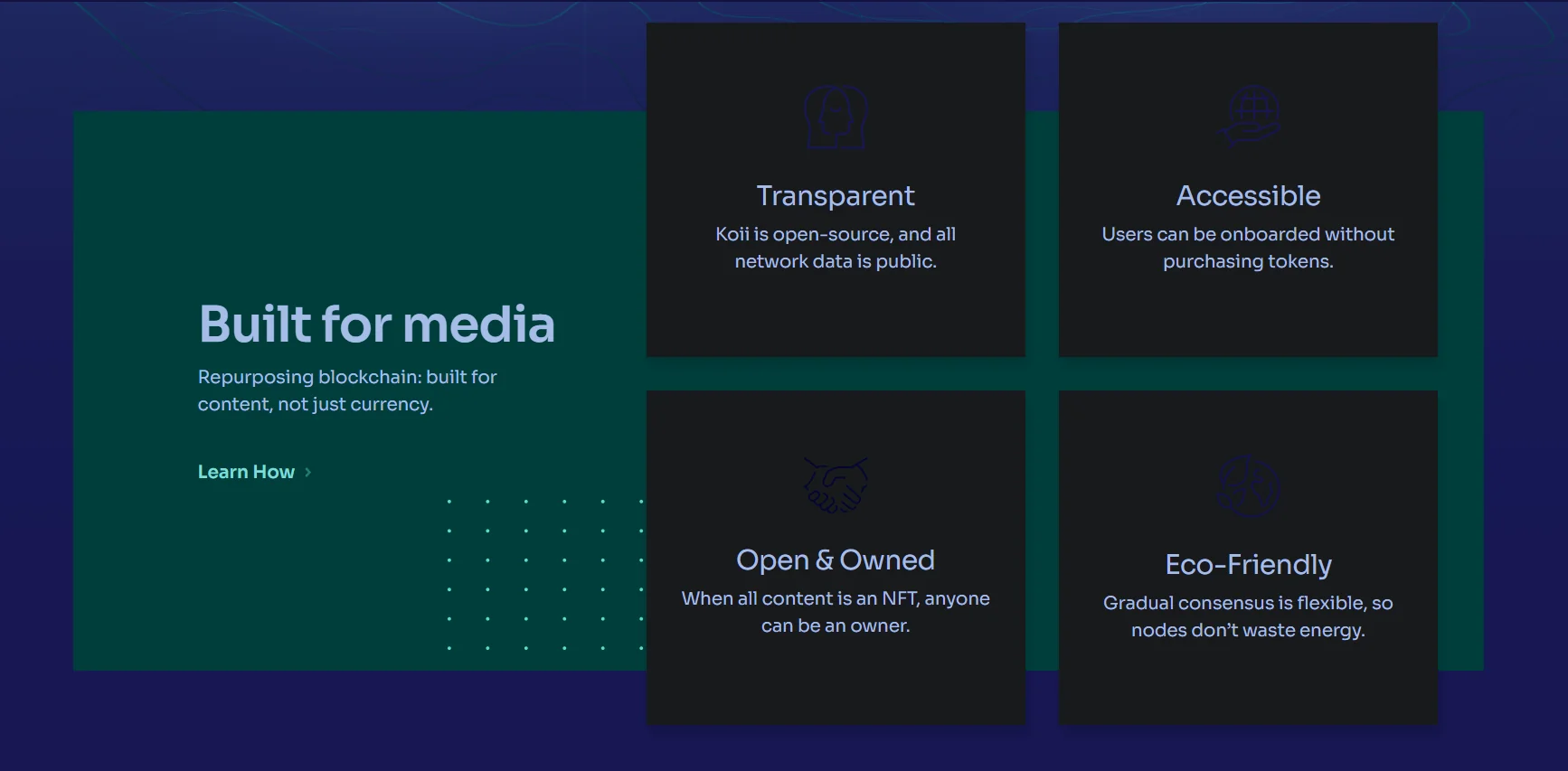
Attention Economy: Our goal is really to help the user as much as possible which means being flexible to wherever they need to go.
Let’s go a little deeper on that. The attention economy, we’re seeing it start to take form throughout the industry. You are well-positioned to go deep on that and evolve the entire ecosystem around attention and rewarding attention. Can you share your thoughts on that? What was the inspiration for it? Where do you see it going from here?
Where it was inspired by is the fun part of this because we accidentally added this to the whole system. We’re just looking for a good way to distribute the tokens. We didn’t want to create one of these systems where you have the node operators own the entire network. With Ethereum, if it grows, the people that get rewarded are the node operators who mostly own server farms. They’re not everyday people. They’re certainly not content creators. They are the furthest thing from content creators most of the time.
You create these networks that are at odds. That means that if you build a dApp on Ethereum in a very real way, you’ve created another oligarchy of tech giants that own the system that everybody else is publishing content into. We wanted to create the opposite of that. We wanted to give the token straight to the content creators, and then we had to create a couple of spam prevention mechanisms. That’s how we came up with proof of real traffic.
Where do you see the attention economy going from here like token rewards where you’re getting those rewards, and then spending them within these economies or NFTs? We’re seeing all kinds of different NFTs coming in about access, admission, and the IP behind it. What’s the next phase here that we don’t see now?
The simplest way to think about this is it’s a distribution tool. It’s useful for incentives for growth, for the most part. Imagine if you could tell people, “We’re building a new Twitter and if you come now, and you get a lot of followers, you’re going to get a seat on the board of directors. You’re going to be able to help us make the decisions that are going to shape this platform.” That’s a very real possibility now in a digital asset sense that it wasn’t a few years ago.
This is going to lead to the fragmentation of the current attention economy, which is mostly owned by Facebook, Twitter and Google. It’s going to ultimately lead to a lot more of us having more equity on the internet where we publish all our content. The cool thing about that and that equity that we get to own from an ethical standpoint is that it also will probably translate into digital assets which will trade very similar to equities in the stock market.
Nodes are at the centerpiece of all this in terms of the creator developing nodes and those nodes launching to power this ecosystem. When will these nodes launch and put the foundation in place, and what will that look like?
We’re on testnet number three. The nodes that we operate are mainly designed to batch transactions together. They require a customer. Right now, we’re the main customer because we’re building all these dApps on the network. We’re going to be open-sourcing the developer toolkit that will allow people to build their own applications. That’ll probably coincide with our launch. Following that, we’ll start to allow large token holders to run their own nodes progressively. We want to let 1 or 2 at a time to make sure that we are not overwhelming the network with potential bad actors. If one of these operators gets hacked, for example, and their tokens are stolen, then it could unsettle the network temporarily. Our plan is within about a year of the launch, to have it be more than 50% decentralized.
What do some of these potential applications look like? I don’t want to reveal the ideas that have already been presented to you and give those people an opportunity to create a new network, but what are the themes that you expect to occur in terms of applications that people build on to Koii?
It comes in a few different forms. There are certain types of apps where people are willing to pay to get a better quality experience of viewing content. Those tend to fall into the category of Spotify or Netflix. There are a lot of people looking at doing that on decentralized systems, especially for copyright protection, but also for indie artists that don’t want to go through the publishing hoops. If you wanted to just publish to a decentralized SoundCloud, you should be able to do that and earn Koii tokens. We have a project looking at doing that. The other side of it is on the more social side. That seems to be a lot more ad-driven. Social signaling seems to be very much an influencer game.
We have no problem with people running ads on Koii as long as they are transparent. We can see who’s paying for them and where the value is accruing. In fact, the proof of the real traffic system that we’ve designed is probably an industry-leading solution to tracking attention without having spam. If you wanted to build an influencer network or an advertising network that’s completely decentralized and transparent, we can help you do that right away. We’ve also talked to a handful of people about possibly doing a decentralized search but that’s a little further off.
It’s interesting that you brought up ads, and I’m thinking, a lot of people strive to make ads that you want to watch regardless of the kind of product, “That’s an entertaining ad. That’s cool to look at.” It’s very interesting to see the possibility that somebody could make an ad that earns them money on the back end, and people signing up for something or purchasing something. At the same time, they could earn Koii because they made a cool ad. That’s pretty fascinating.
It’s funny, you should bring that up. That’s in the Atomic NFT website that we have, AtomicNFT.com. There is a standard that we’ll be releasing, which is a slight tweak you can make to the NFT to turn it into an ad, where somebody can pay a bounty that gets released to the creator of the NFT each time it’s viewed by a certain demographic. You can get very specific with it too. That’s the cool thing. Our goal is mainly to publish these standards so other people can come and then play with them.
Which are great ideas.
I could use three more standards that we can publish. A rapid-fire.
The cool thing about what you are doing is you’re putting the time, the forethought and the care into building the foundation of something that’s going to be powerful. We’ve talked a bit about the Koii token itself. You can earn Koii through these NFTs already and it drives this creator-developer node economy but people want to know about the launch. What’s the latest on the launch of the Koii token?
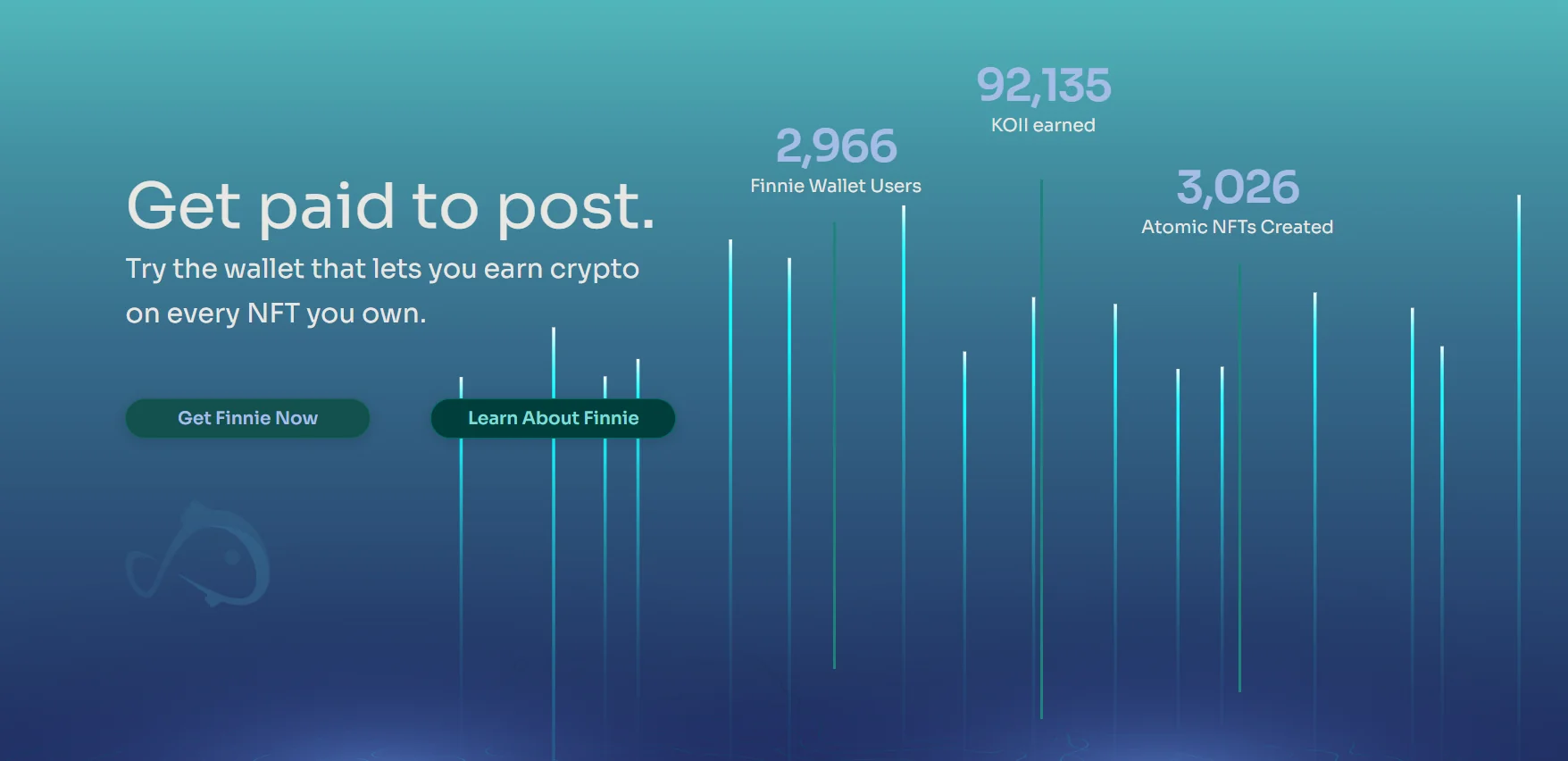
We’ll be launching on a handful of exchanges in mid to late September 2021. There’s this talk of trying to list on some of the larger ones. We’re working on bringing in a couple of key partners. The only hold up there is whether we can get more growth. If everybody wants to list on a larger exchange, we need you to get your Fannie Wallet. We’ve gotten about 2,000 in about a week and that’s doubled our numbers. We doubled our Twitter account as well. We’re in very good shape. It’s odd. We were almost in stealth mode until we suddenly started promoting and we went from like a couple of thousand followers to about 5,000 almost immediately.
Word on the street is there is an AirDrop coming and we all have AirDrops. What’s the scoop on the AirDrop campaign?
Tons of AirDrop. The number one way to get Koii tokens is to publish some content on Koi.rocks and get like a few hundred every day or two. If you want more Koii tokens and you’d like to cash in, we’re going to be doing an AirDrop with you guys for about $5,000 worth of Koii tokens along with some NFTs and other prizes. In about, a week or so we’re going to announce a number of other major AirDrops and other campaigns so people can get in on.
If you’re following us on Twitter, now is the time. We want the Koii Network to be very decentralized. People who are stakeholders in the community early on, we want to take on the role of being able to run the network, earning a bunch of tokens, running a node. We want this to be for you. Our node will be able to run on a smartphone. Ideally, this is where you can get your tokens now, and then you can set them up on your phone. You can do a yield farming sort of thing. You have that little savings account that keeps growing and every morning, you wake up and your phone was scraping the internet while you’re sleeping.
We had an opportunity to get a demo of your product. Hopefully, we’ll make it a little less intimidating to take your suggestion to get into this. What’s your advice for creators and potential creators that maybe have been apprehensive to get into the NFT side of things? I’m sure a lot of them come to you and they’re like, “I don’t know. Do people want this? Should I post it?” You have a blockchain education background. How do you have those conversations and what should those people be thinking in terms of going about this journey?
It all depends on motivation. I know of two main groups of people. There are the ones that find it technically intimidating, and then there are the other ones that are just thinking, “Why would I do this? Why does it matter? Whatever.” To the “Why does this matter?” group, the best thing about Arweave is that it’s permanent and it’s decentralized across thousands and thousands of computers. Once you put your media in there, there’s a very good chance that it will survive beyond my lifetime, and probably beyond all of our lifetimes. The goal is that Arweave will exist indefinitely into the future and it’s designed as an economic engine to achieve that goal. That means that you’re making a mark on history. If you do it with Koii, it costs a 1/10 of a penny to upload your files.
The second side of it would be if you don’t think people like your stuff and on that front, I would say check out my profile. I make all kinds of weird stuff for my NFTs. I just throw them out there. I sent my sister one. I made her piece of graphic art. I put it on an ice cream cake and I had it delivered to her for her birthday. That was fun because now she’s a part of history and she got this ice cream cake. It was a big exciting thing at the office.
It still could be if he wants to mint it.
That would be fascinating.
I hope you didn’t use Bitcoin to buy that pizza.
Putting in some elbow grease.
You’re Canadian, right Al?
Yeah, I grew up in Halifax.
I’m waiting for the hockey answer.
No Tim Hortons over there.
Breakfast cupcakes.
They had red velvet cupcakes.
That is very cool.
It’s like AT&T’s monopoly of the past.
There we go. Red velvet.
It’s going to work.
Thanks for sharing that with us.
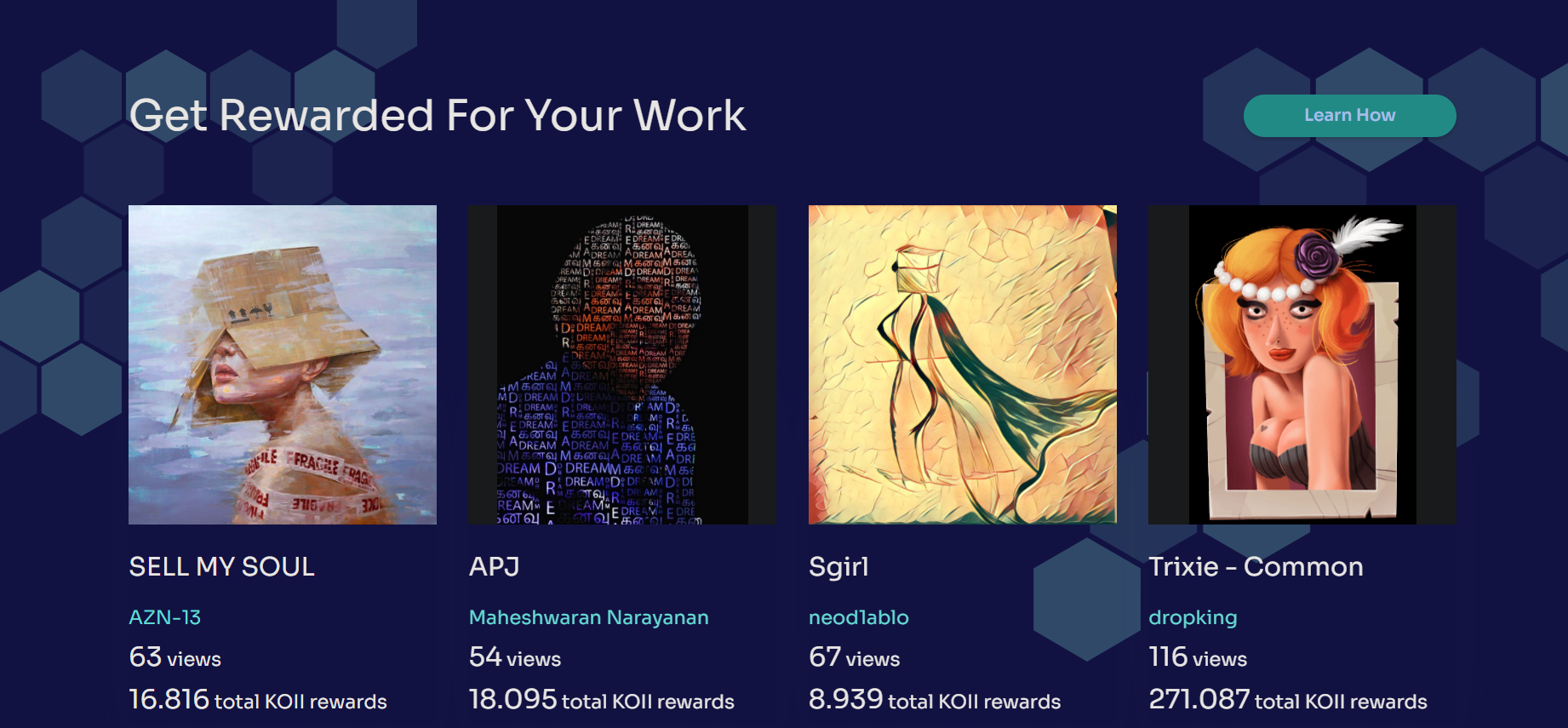
It’s fascinating. I love the creativity.
I love the pun too.
iTunes**, rate us and say something cool, and then go to EdgeOfNFT.comContact@EdgeOfNFT.com or tweet us at **EdgeOfNFT
Important Links:
-
Chrome Store – Finnie Wallet
-
Twitter – Koii Network
-
NFT artist pplpleasr – article by Fortune
-
Ellie Pritts – past episode
-
NFT Game Crosses Milestone: Over $1B In Sales – article by Yahoo! Finance
-
Yat Siu – past episode
-
Messi has an NFT of his own: One-of-a-kind art for a one-of-a-kind player – article by ESPN
-
Discord – Koii
-
Blog – Koii
-
iTunes – Edge of NFT Podcast
-
EdgeOfNFT – Twitter