Top Podcasts
Al Morris of Koii - A Scalable P2P Network Decentralizing The Web, Plus: Adobe Polygon Behance NFT, Fading NFT Hype, And More...
Today’s episode features Al Morris of Koii, A scalable peer-to-peer network that aims to help decentralize the web for the good of all. A lot has happened since we last checked in with Al. Listen in as co-hosts Eathan Janney, Jeff Kelley and Josh Kriger learn about Koii’s mission, and how it relates to promoting free speech and fairness. Stay tuned for quick hitters, where Al flips the script and asks our co-host Eathan this series of fun quick questions usually reserved for guests. Finally, catch the latest in NFT news. You’ll learn how Adobe is working with Polygon to integrate NFT into Behance. You’ll find out if the NFT hype could really be fading or if NFT energy has staying power. All this and more on today’s episode!
—
Listen to the podcast here
Al Morris of Koii – A Scalable P2P Network Decentralizing The Web, Plus: Adobe Polygon Behance NFT, Fading NFT Hype, And More…
This episode features Al Morris, Chief Architect and Cofounder of Koii.network, which stands for Knowledgeable Open and Infinite Internet. Koii is a protocol focused on infrastructure to bring true decentralization to all depths in the Web 3.0 space. Koii has a fully self-sustaining ecosystem driven by the Koii token. As an innovator and tech leader, building an operating system for decentralized digital storage, Al formed Koii.network in 2020 to broaden the range of possibilities for the future of Web 3.0 with an emphasis on creating decentralized storage systems as a way to create an unbiased and transparent network.
Al Cofounded Blockchain Institute Chicago, WeTeachBlockChain.org to help educate the public and promote the adoption, development and use of blockchain technology. Outside of his core responsibilities, Al is an Adviser at XYZ Technologies as well as other projects within the blockchain and crypto community. He is an avid NFT collector, which drove his passion for creating atomic and dynamic NFTs at Koii.network, the fundamental building block of fair community-owned internet. Al Morris, welcome back to the show.
Thanks, Ethan. That’s a hell of an intro. I appreciate it.
It is so great to have you back. We gave some background on Koii and what it is, but for our readers who aren’t familiar with it, in your own words, please share with them the story of Koii and how it came to be?
The short version of this story is we’re trying to solve this problem of speech on the internet. The internet is this incredible tool that allows us to transmit information around the world very quickly, but it’s mostly owned by a few major companies. As a result, most of the important information and nuances to the discussion tend to exist on private service.
We’re trying to provide the tools that will enable people to build a new generation of web products that are going to have all that information be public so that everybody has access to it. Hopefully, this will allow people to make better judgments about what they believe online. Hopefully, this means we can get out of the rhetoric cycle that we’re seeing around the world. It doesn’t matter where you are right now.
There’s a lot of craziness in the news. It seems like it accelerates every week over what was happening. We’re committed to working towards making that an easier and hopefully less mythical problem. Everybody sees this as something like that’s how speech has always been, but we think we can fix it. We’ve got 20, 30 people working around the clock trying to make this problem a little bit more tangible and pick away at one piece at a time.
It’s a big problem to solve and tackle, that’s for sure.
You guys have had an ambitious plan since the jump. Our first episode was in the 30s of the show. I’d love to learn a little bit more about how your vision has changed since we originally spoke and how these tracks that you’re laying now are impacted by what you’ve learned over the course of that time, and the industry has shaped your perspective?
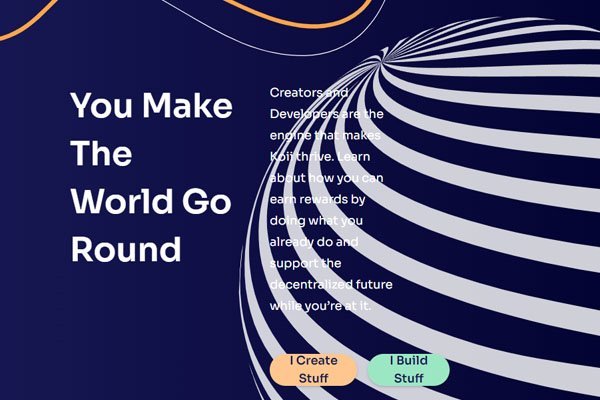
The first thing I’ll say is we realized that there’s a lot more out there than we knew about before. As we started to put together this toolkit for people, we’ve come across all kinds of products like decentralized UPNs, decentralized hosting, and all these toolkits that we didn’t know were there. We’ve been able to start integrating a lot of those things into this bouquet of toolkits that quite perform well. The best part of all of this and still the core of the ecosystem is that as a content creator or an app developer if your content gets attention, you get to mine the Koii token. Once you have these Koii tokens, you can use them to pay for all these other services. We provide this one-stop-shop for people who want to create something that’s going to change people’s minds.
**We’ve had lots of great discussions. One of my favorites was when we had a group discussion, talking about the creator economy and all that’s going on and tokenizing different forms of value. It’s great to have you back here. You have a very metatheoretical perspective on all this, which is always great to hear. We were all excited about having all the world’s information accessible online. **
It’s all there now, including all the BS. The problem is filtering it. Where do people’s attention go? As we alluded to before, it’s an issue. We’ve got lots of information. The attention goes from one thing to another, and you don’t always know where to put it. How do you view the state of what we might call the attention economy?
That’s a hard question. To give you a meta answer, how do you look at the attention economy? It’s all about capitalizing on attention like a commodity. We have wars that were fought of oil and gas extraction, but the next war is we fought over basically attention extraction. That’s probably where we’re headed. We have to keep people’s attention on one thing so that we can have a democracy that goes the direction that people want it to go. What we’re hopefully starting to see is that people are learning that they can fight this game and build things.
If you start a Shopify store and start selling a product, you’re selling an idea and trying to capture people’s attention. They come and buy from you instead of buying from Walmart. That’s part of the attention economy. All of these things are part of this. What we’re starting to notice now, which is exciting, is that a lot of people are motivated to start diverting attention from some of the crazy stuff towards some of the things that everybody shares that are more important. We’re getting a little bit closer every day, but people seem to be starting to wake up towards this, which is exciting.
As I look at it back in my lifetime, it’s like a counter evolution, a battle of resources you might see between two ecologies in biology or something where there have been generations that were surprised by the ability of corporations and parties to pinpoint how attention is garnered and do it in a very calculated way. The people who were affected by that didn’t necessarily know how to manage that or account for that, or battle it.
Sometimes the people who are creating those kinds of attention hacks couldn’t defend against it. As you’re indicating, there’s a generation that’s coming up where we’ve got enough information out there about this. It has been accessed enough, and people have that awakeness awareness that they want to do something about it. There are these tools to battle it.
There’s a conscious power that comes from being able to channel your attention to yourself. If you can prevent other people from diverting your attention, you have a little bit of a superpower. We’re starting to try and create tools that cater to that audience more so than anyone else.
When we look at the future of the attention economy, we know where we’re at now and some of the problems around it. You mentioned tools that Koii is developing to help address the problems underlying the attention economy. What does that future look like, say over the next year or so?
Hopefully, a lot less radical rhetoric would be great. Every time that there’s a conflict in the world or has a chance to pull on people’s heartstrings, there becomes almost an escalation of pulling on those heartstrings. Someone might have their heart in the right place trying to rally support for something they care about. Someone else comes along realizing that person has created a platform for themselves, and trust is still the stage.
You’ve got Kanye West bursting into the Oscars and yelling at Taylor Swift thing, but on a political agenda scale. I hope that people start to see this as what it is. They start seeing these arguments that people are making more as arguments vying for the attention of the masses, as opposed to rhetoric that’s meant to be taken seriously. If we take everything that a lot of these politicians are saying seriously, we will end up fighting so many wars in so many places. It’s terrifying.
In thinking about the dynamics of communication, you’re under the hood on a lot of this stuff. You’re seeing what’s happening on a lot of this. We hear stories of bots doing things, coordinated efforts to push one agenda or another. Do you see that as you work under the hood in this space? Is that part of the problem? Is it happening at a large scale, like the movie, The Social Dilemma, all those different elements to it? What’s your view on that? What’s happening behind the scenes?
I can only speak to the part that I’ve seen but having worked in ad networks and working in the digital marketing space for a while. You start to see that a lot of the people that are beating you with the game are doing so because they’re less ethical. There are a lot of people out there who are very good at the marketing game. They’re terrifying to go up against. From their perspective, they’re doing the right thing, but they might be undermining the social order on some level. They try to radicalize people and engage them with thoughts that potentially are fear and greed-motivated as opposed to something that brings people together.
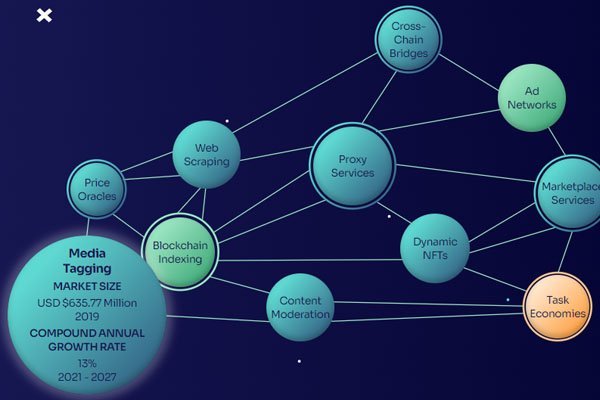
Decentralizing The Web: We’re trying to provide the tools that will enable people to build a new generation of web products that are going to have all that information be public so that everybody has access to it.
The exciting thing about this, though is that those arguments are easy to dispel. If you can identify them and show them to people, most people don’t like to be manipulated. They’re pretty quick to turn around and say that they don’t want to be part of this. The movie, The Social Dilemma, was a good one to bring up. For those that haven’t seen it, it’s on Netflix. It’s easy to access, but a lot of the early people from Facebook and Google have now quit and left their jobs and are outspoken critics of these systems. At least in Facebook’s case, they’re being basically investigated for election meddling in a lot of countries.
It’s not Facebook themselves, but it’s the platform that Facebook created that didn’t have certain safeguards in place. It made it easy for people to take advantage of. We hope that over time, more and more of these people will come out, more whistleblowers. Hopefully, that will lead to the public opinion shifting to be a little bit more critical of these platforms. It’s all a little step at a time. It doesn’t happen very quickly. You have to change a lot of hearts and minds.
As we think about the tools that you have in your arsenal, what do you have? What is the toolkit at Koii to help address some of these underlying issues?
We spent 2021 developing the core attention tracking system, which allows us to verify that you looked at something in a cryptographic way. That was the first piece of this puzzle, as we started to look at that more and try to scale it up to a global web adoption level, which for us, means hitting around 100 billion fruits of real traffic per day, being able to parse through all of those and come out with a list of things that receive traffic. That was the first step. We’ve put that work all in and built all of that technology stack. What we’ve built on top of that is a system of templates and actual kits.
Somebody who has very little developer experience can come to the system and deploy their own crowdfunding portal, social media app, social leaderboard, content system, messaging app, VPN, anything like this, trying to arm the rebels, so to speak, if we can take all these disenfranchised people who are upset about this and give them either a tool that somebody else has built that will allow them to engage or the tools to build those things themselves that can trigger some evolution from that.
As an example of this, since we started seeing what was happening on the ground in Ukraine, we developed a Snapchat-like toolkit that allows you to post decentralized storage. You take a quick video on your phone and can post it out to a bunch of decentralized storage networks and make sure it can’t get taken down. You can also earn some crypto for that.
It’s a nice way to make some money, document what’s going on, and make sure that this decentralized network of computers will take care of that for you. You never have to worry about the information being lost. You can also stay very private and pseudonymous in the process. There are a lot of these little pieces that we’re trying to put together for people.
Was that a spontaneous project that you developed based on what you felt was a need in the global landscape? Is that tied to some of the other major milestones that you already have coming up or tools that you built?
We call this tool kit the Mobile Toolkit for Koii. It’s called a progressive web app. You can install it without even going into an app store. We already have this as part of the stack we’ve been developing for a long time. As we put it together, we had an early prototype of it and saw what was happening over there. We saw the need to capture some of this content and be able to say like, “This firsthand account is real versus this one that made it not be,” and try to capture that nuance. We’ve started to deploy it with a number of our community members. We also have a very large community in Ukraine and Russia.
We’ve been trying to talk to those community members and see if there’s something that we can offer that might help. We can give money to lots of organizations working on that. We’re trying to help a few people with crowdfunding portals through different food banks and things like that. If we can provide something that fixes the speech problem as well, I think that has a lot of power to change things. Ultimately, those of us outside of that situation can’t say a lot that’s going to shift the narrative, but if we can help people there talk to each other, that might help.
You get the word out. These folks that are in your Discord and Telegram, and you’re communicating with Twitter. How do you go about marketing an app in such a dynamic environment as the case in Ukraine now?
In a hostile environment, it is very difficult. We had luckily a lot of people from our community that reached out to us asking if there were toolkits that they could use for this thing. As an example, with Telegram, the founder of Telegram is apparently fairly close with the Russian leadership. A lot of people were skeptical of using that service. Some people have moved over to Signal because of this. We had a lot of people asking us for tips on what they could do to communicate in a decentralized fashion that was going to be secure. We tried to accelerate the development and release of this toolkit in order to respond to those needs.
As a result of that, we are talking to a lot of people who we’ve been brought into contact with, who are contacts of these folks. We’re starting to interview a lot of different people in all kinds of places and see what we can do to make it easier for them. What we’re hoping to do in the next little while is to fund somebody who’s Ukrainian or Russian to build out an extended version of this. We had a grant pool that we’ve announced. Hopefully, we’ll get to put a lot of that money towards that initiative.
That leads me to my next question. What are the next major milestones for Koii? I saw Al briefly at East Denver between a lot of different meetings and interviews and whatnot. We shared a bad coffee together at the only place around where we could find any coffee. It was good to see you. What have you been cooking up while you’ve been on the road? What are you guys building?
We spent most of 2021 building a concept for all these systems that I’m describing. What we’re trying to do is to fine-tune the details to get to a global scale. One thing that we did was create our own layer one network that does payments settlements between our nodes. It means that now our nodes can take on a much larger amount of work than they would have previously been able to.
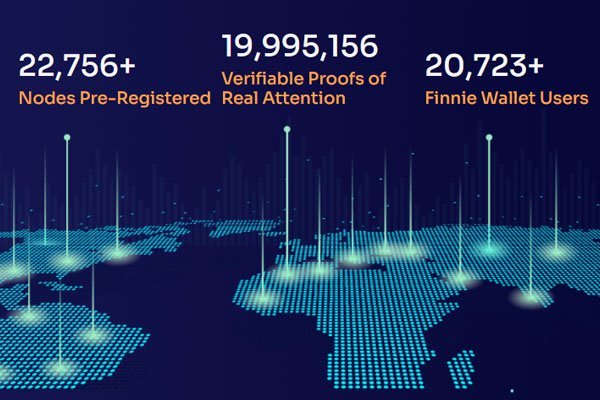
We can do things a lot faster than we could before. We’re up to about 2,000 transactions per second. That also means that as a result, we can track more attention. Instead of being able to track around 1 million to 2 million proofs of real traffic per day, which is our cap before, now we’re on the order of 100 billion.
We’re trying to extend the system to get ready for that influx of people coming in. At the same time, we’re also releasing these app toolkits that I’ve been talking about. A lot of those will hopefully help developers to onboard into the system. We’ve been building out a grants program. We’ve allocated a couple of million dollars towards grants. Those will all be going to projects that are built on top of this framework that I’m describing.
With regards to this framework, to what extent is it going to be compatible with developers that are building on some of the traditional social networks like Twitter, for example, versus building their own technology and networks? What’s your perspective on supporting those two different paradigms?
That’s one of the best things about Koii. We’ve been talking to folks like Google and Amazon about how we can make their services more well-integrated into Web 3.0. What we’re trying to do with these Koii nodes is that the Koii note can read from many different networks. It’s not just from our reading file plan, but also Ethereum and Bitcoin, and from a Web 2.0 API like Twitter. One of the main advantages of what we’ve built is that it’s able to have this interoperability.
As a side effect of that, we also can now track attention on YouTube or on a website or something like that. You can come to Koii and register content that’s not even stored on decentralized networks, which hopefully down the road means that you can start to monetize almost any piece of content anywhere on the internet using Koii.
We’ve been learning so much about this because we’re in Web 3.0 and media. We’re building a community and a conference. It’s incredible the opportunities here. People are doing this over and over, like organically rewarding people for being a part of the community and giving their attention. Attention itself can be a reward. People want to be seen. That’s part of why they want to be part of a community. It’s definitely the next wave rewarding that integration. The community is a big part of it too.
Decentralizing The Web: The internet is this incredible tool that allows us to transmit information around the world quickly, but a few major companies mostly own it. As a result, most of the important information and nuances to the discussion tend to exist on private service.
—
—
Hopefully, you’re good at layups then.
What kind of computer?
It is a Dell Alienware m15 R5.
What is the most recent thing that you sold?
What do you have your eye on prompt?
Yeah.
What a great coincidence.
Right after this, what are you up to?
Our Twitter is probably the best place. That’s @KoiiNetwork. You can also go to Koii.network, very similar, which is our website. You can sign up for our mailing list, where we have pretty good updates coming out regularly. Thanks again for having me on. It’s always great to round up the latest goings on in this space. Thank you, Eathan, for sharing your personal life with us.
Important Links
-
First Episode – Keith Montogomery on NFTs, what’s “mine,” & if NBA Top Shot is legit, plus: Coinbase IPO, a16z invests in Open Sea, John Cleese’s NFT Bridge, and the $500,000 NFT house.
-
@KoiiNetwork – Twitter
-
Spotify – Edge of NFT Podcast
-
iTunes – Edge of NFT Podcast
About Al Morris

After working in the automation and digital marketing sectors, Alex found his passion in decentralized and distributed systems. He leads technology at the Institute, and produces content and systems aimed at increasing privacy and autonomy for individuals online.